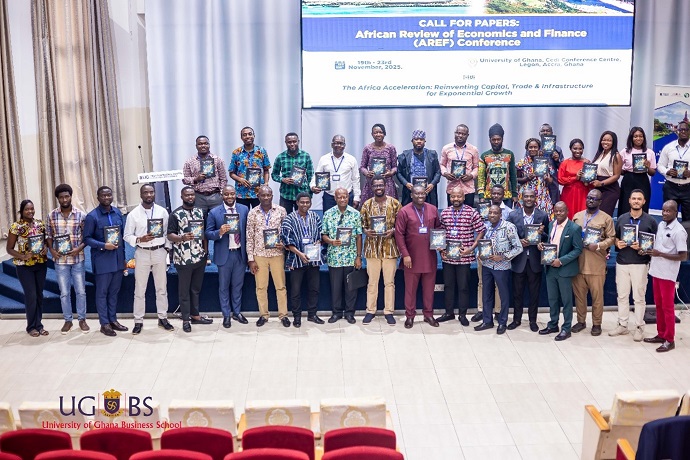
UG-BoG Chair in Finance and Economics Launches New Book on Africa’s Financial Future at the AREF Conference
At the 2025 Africa Review of Economics and Finance (AREF) Conference, the UG–Bank of Ghana Chair in Finance and Economics unveiled a groundbreaking book, From Cowries to Crypto: A Metanomic Tale of Money and Finance. Set within the deeply symbolic civilisation of the Pungu, with its capital city Telania, the book traces the long arc of monetary evolution from indigenous cowrie-based exchange to the digital frontiers of blockchain and cryptographic value. Told as an allegorical narrative, it reveals how Africa’s financial and natural endowments can form the basis of a new hybrid monetary architecture that blends resource-backed value, decentralised verification, and modern digital infrastructure.
Through the lived experiences of the Pungu, the story illustrates a central Metanomic principle: money must perform productive economic work by mobilising food, water, energy, labour, and technology rather than remaining trapped as an abstract accounting marker. The book presents a future in which African economies leverage verified assets, audited natural wealth, and transparent, citizen-verifiable systems to build prosperity from within. In doing so, it charts a visionary pathway for Africa’s financial renaissance, rooted in its own genius, harmonised with technology, and capable of accelerating the continent into a new era of sovereign development.
In his welcome address, Prof. Joseph Awetori Yaro, Provost of the College of Humanities, underscored the importance of interdisciplinarity in addressing Africa’s development challenges. He stressed that the continent’s progress requires contributions from economists, sociologists, philosophers, geographers, linguists, and other scholars whose collective knowledge forms a “living intellectual ecosystem.” Prof. Yaro highlighted the College’s partnership with the Institute of African Studies, the National Association of Traditionalists and Ancestral Venerators (NATAF), and the Nile Valley Multiversity in promoting indigenous knowledge systems. He called for renewed appreciation of Africa’s cultural heritage as a catalyst for sustainable development.
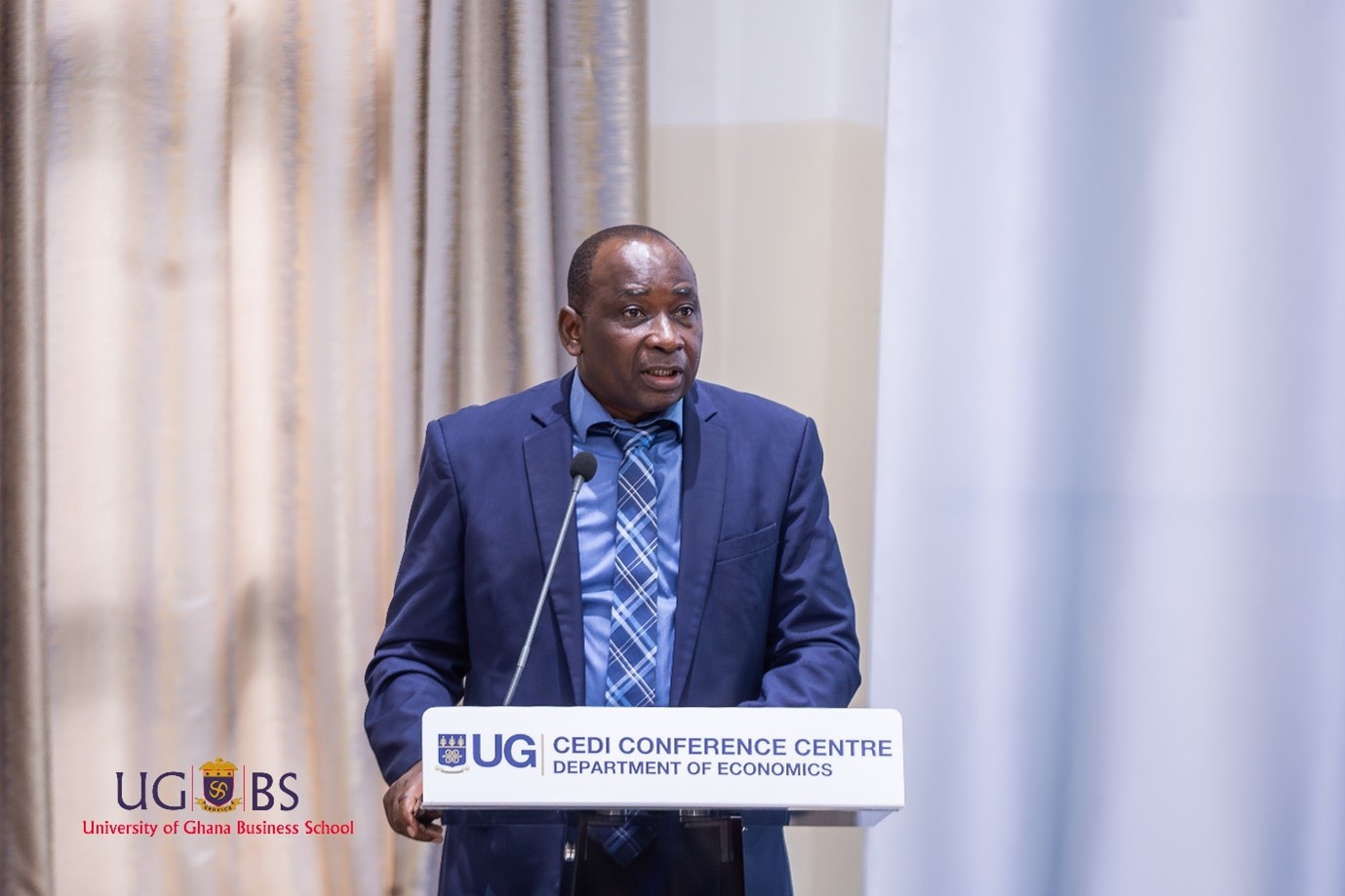
Delivering the opening remarks, Prof. Jones Odei-Mensah, the Conference Chair, unpacked the core elements of the conference theme. He explained the shift among African member states from negotiation to implementation of guided trade initiatives, referencing ongoing progress under Agenda 2063. Prof. Odei-Mensah emphasised that accelerating Africa’s developmental trajectory requires precision in three key areas: capital, trade, and infrastructure.
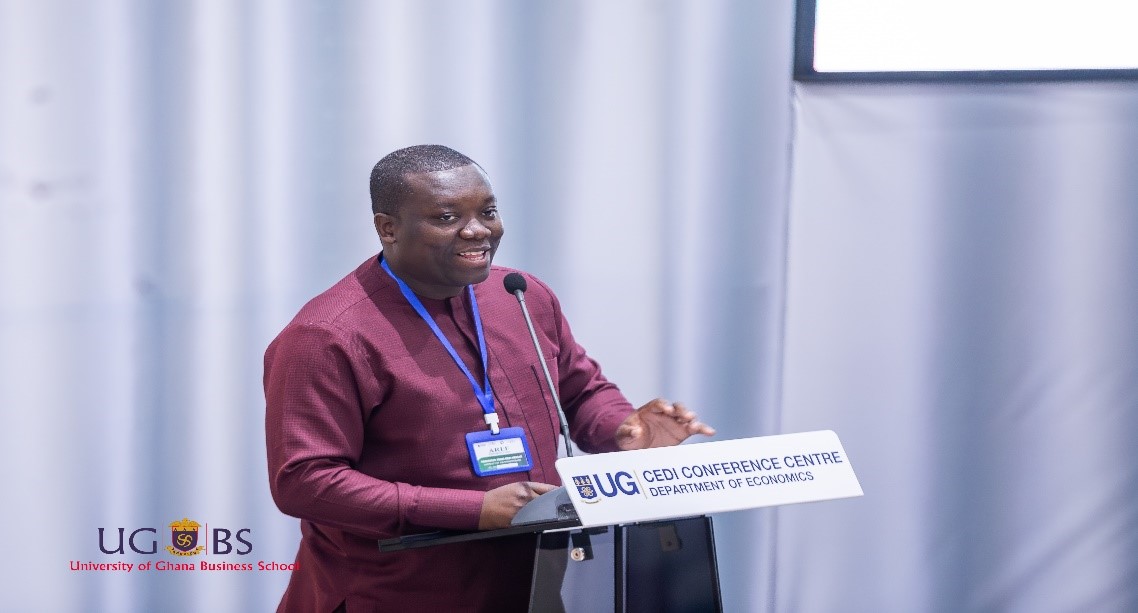
He called for a “rethinking of capital mobilisation on the continent, moving away from dependency on extraction and short-term financial flows towards long-term, private-sector-driven investment for climate-compatible and productive transformation.” On trade, he highlighted that the African Continental Free Trade Area (AfCFTA) represents more than tariff reductions, describing it as a liberalised market designed to strengthen regional value chains and collective bargaining power. However, he observed that implementation remains uneven, with logistical and financial bottlenecks slowing progress.
The first keynote address was delivered by Prof. Yegandi Imhotep Paul Alagidede, Bank of Ghana Chair in Finance and Economics, who set the intellectual tone for the conference with a profound exploration of “Africa Acceleration.” He defined acceleration as a decisive shift onto a new developmental trajectory,45 grounded in Africa’s structural wealth rather than its inherited constraints. Tracing the evolution of economic thought, he critiqued both orthodox and heterodox traditions for their inability to fully account for Africa’s realities. Prof. Alagidede introduced Omnidox, a framework he coined as a middle path that synthesises the useful strengths of both traditions while transcending them. As a higher-order Metanomic discipline, Omnidox elevates economics to a plane where consciousness, resources, and value systems co-evolve. Implementing it requires a minimum level of societal and institutional awareness. He argued that Africa needs a Metanomic architecture that monetises endogenous resources, circulates value internally, and asserts sovereign, original, and internally driven development rooted in African experience.
The second keynote speaker, Prof. Abena Oduro of the Department of Economics, delivered an incisive lecture on “The Africa We Want,” interrogating the very foundations of how progress is measured on the continent. She challenged Africa’s persistent overreliance on Gross Domestic Product (GDP), arguing that its narrow focus on market transactions obscures vast domains of economic life from unpaid care work and community labour to ecological services, cultural production, and the informal sector where most Africans actually live and work. Prof. Oduro advocated for a new statistical imagination that integrates human well-being, environmental stewardship, and social cohesion into national accounting systems. Achieving this requires bold fiscal and monetary reforms: budgeting that values social reproduction, taxation that strengthens equity, and monetary policy that aligns stability with inclusive development. Drawing on Agenda 2063, she emphasised that political will remains the decisive lever for transforming Africa’s aspirations into reality, insisting that only a more holistic, people-centred GDP framework can guide the continent toward the future it envisions.
A presentation on “From Dead Capital to Digital Assets: Operationalising Metanomics for Africa’s Financial Future” was delivered by Mr. Konstantin Kofi Addaquay of G-Wallet. He explained that G-Wallet is a government-partnered platform implementing Prof. Alagidede’s Resource-Based Monetary Sovereignty (RBMS) framework to convert illiquid assets into liquid digital capital under government oversight. Mr. Addaquay outlined the platform’s benefits, asset tokenisation process, and challenges, stating that Ghana is uniquely positioned to lead this transformative agenda.
The roundtable discussion on Resource-Based Monetary Sovereignty: Redesigning Digital Finance for Africa’s Real Economy brought together and practitioners to examine how Metanomic principles can reshape Africa’s digital financial landscape. Moderated under the Digital Finance, Cryptocurrencies & Alternative Payment Systems track, the panel featured Prof. Jones Odei-Mensah (Wits Business School), Dr. Emmanuel Joel Aikins Abakah (UGBS), Mr. Kofi Konstantin Addaquay (G-Wallet), and Mr. Kwadwo Botwe of the Bank of Ghana. Discussions centred on how resource tokenisation, endogenous currencies, and platforms like G-Wallet can anchor Africa’s financial systems in real value, enabling intra-African trade, infrastructure development, and monetary sovereignty. Prof. Odei-Mensah and Dr. Abakah emphasised the academic and policy implications of Metanomics, while Mr. Addaquay demonstrated emerging use-cases in digital trade facilitation.
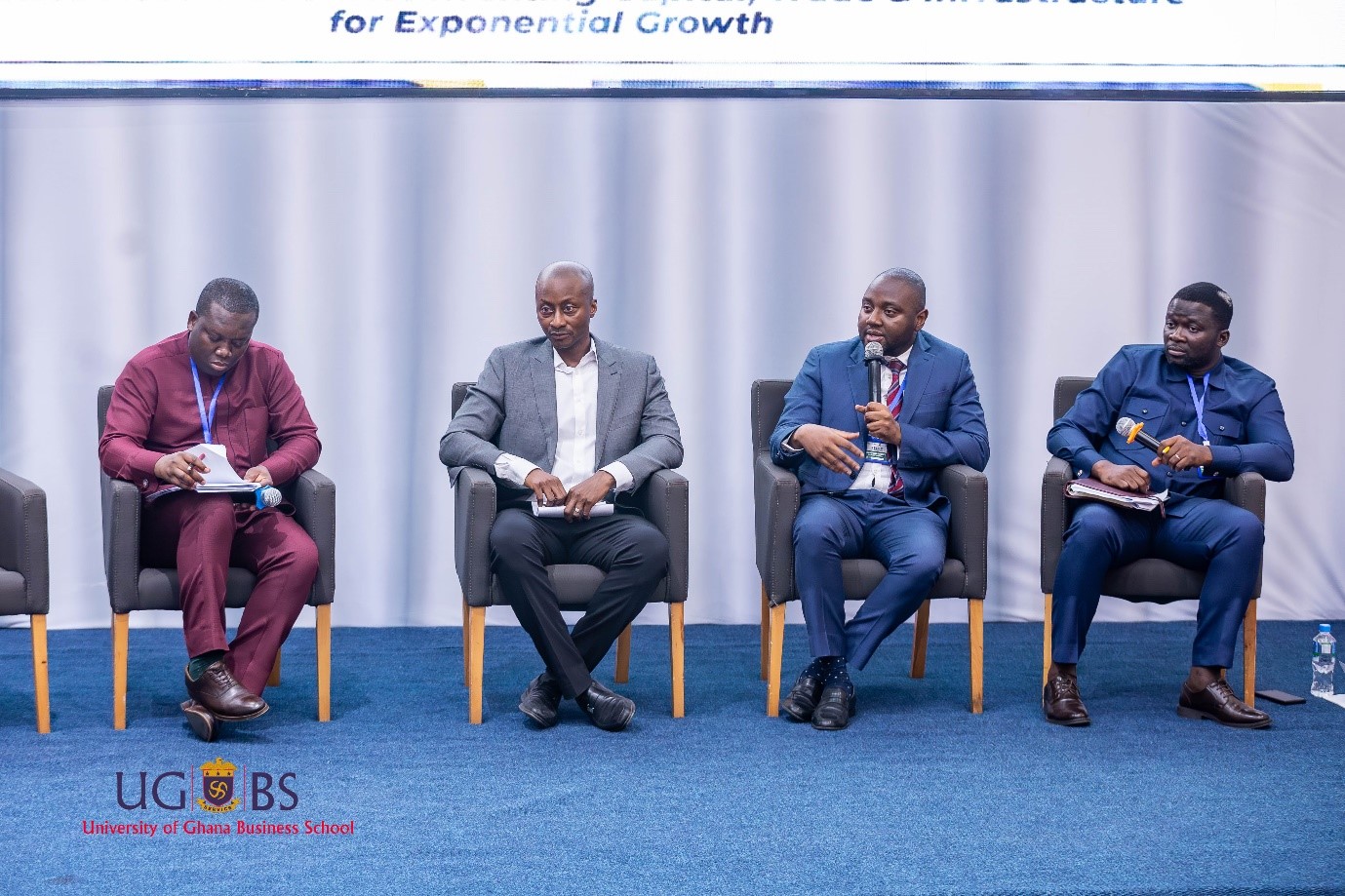
A major highlight was the intervention by Mr. Kwadwo Botwe, who addressed the regulatory dimensions of Africa’s fintech evolution. He acknowledged the persistent conundrum between encouraging rapid innovation and ensuring robust consumer protection. Mr. Botwe clarified that the Bank of Ghana’s forthcoming regulatory frameworks are designed not to stifle creativity but to safeguard users, strengthen trust, and create a stable environment in which innovation, especially in tokenised finance can flourish. His remarks underscored the importance of balanced, forward-looking regulation in realising Africa’s digital monetary future.