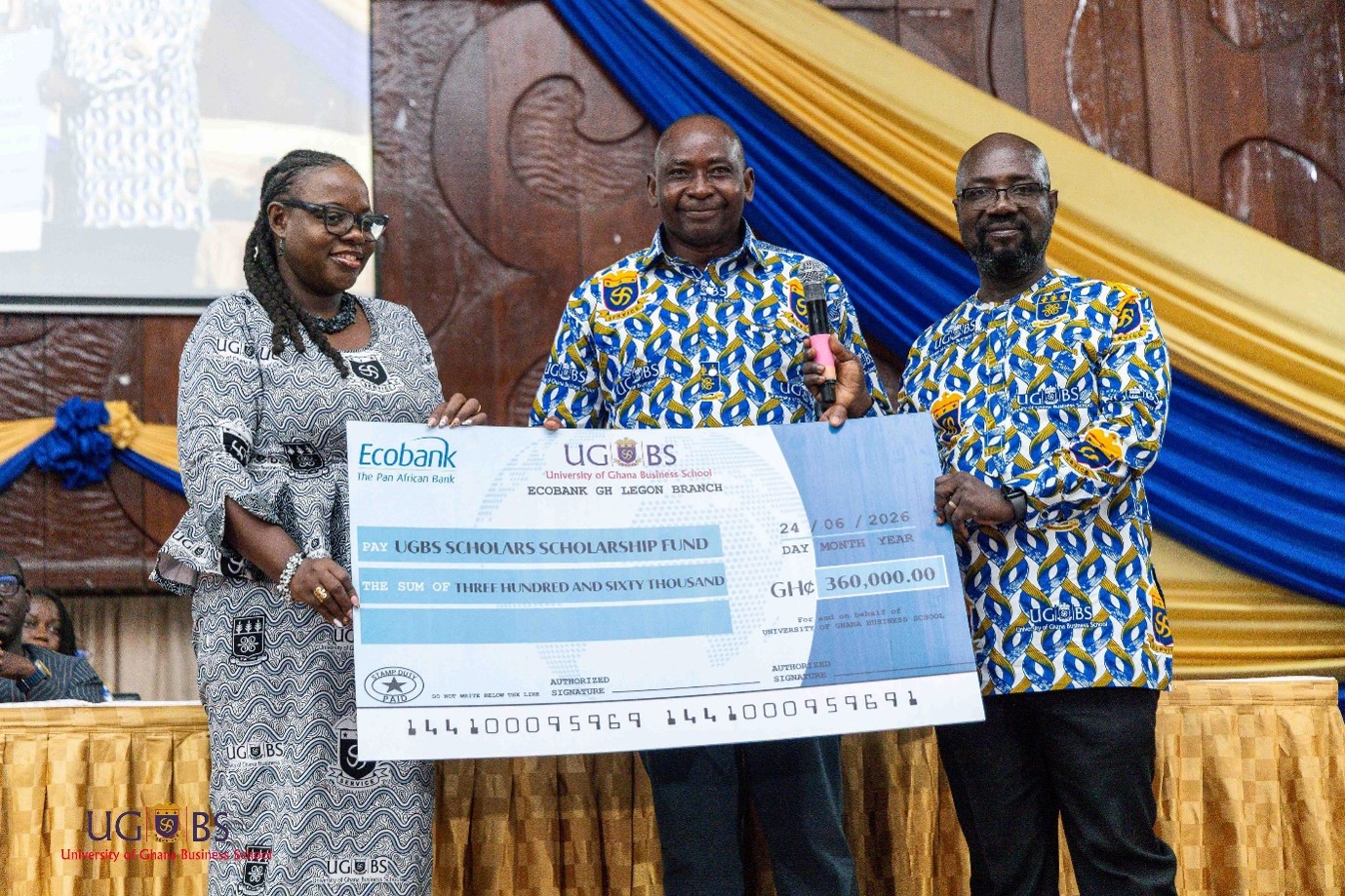
UGBS Launches New Scholarship Scheme, Commissions Student Experience Space and Faculty Lounge at Durbar of the 46th Management Week Celebration
The University of Ghana Business School (UGBS) held a durbar on 24th June 2026 to celebrate its 46th Management Day under the theme, “Developing Talent for a Digital and Sustainable Future: HR Strategies for Ghana and Beyond.” At the event, the Dean of UGBS, Prof. Ernest Yaw Tweneboah-Koduah, announced the launch of the UGBS Scholars' Scholarship Scheme, funded through the school’s internally generated funds, as well as the establishment of a new Student Experience Space and a newly created Senior Members’ Lounge. The Vice-Chancellor of the University of Ghana, Prof. Nana Aba Appiah Amfo, officially launched the scholarship scheme and commissioned the facilities after the durbar. The event was held at the R.S. Amegashie Auditorium and moderated by Dr. Lordina Amoah of the Department of Finance. It also featured the presentation of awards and recognition to the 1984 and 1985-alumni year groups for their continued support to UGBS. Highlights of the School’s achievements and strategic initiatives were also presented.
Delivering his address at the durbar, Prof. Ernest Yaw Tweneboah-Koduah called for renewed commitment to developing future-ready talent capable of responding to opportunities and disruptions within an increasingly digital and sustainability-driven world. He noted that the event was not only a long-standing tradition of the school but also an opportunity to examine the future of management education, the future of work, and the strategic role of human resource management in building resilient organisations and societies. According to him, digital technologies continue to transform the way people work, learn, communicate, lead, and create value, while global challenges such as climate change, environmental degradation, inequality, youth unemployment, skills mismatch, and social fragility demand innovative and people-centred solutions. He stressed that future success will not belong merely to organisations that acquire technology but to those that invest in developing people who can apply technology responsibly, ethically, creatively, and sustainably. He noted that over the years, UGBS has grown into one of the leading business schools in Ghana and the sub-region, producing graduates who continue to make meaningful contributions across business, banking, public administration, academia, entrepreneurship, civil society, and international organisations. Prof. Tweneboah-Koduah expressed appreciation to the Vice-Chancellor for her continued support and leadership, particularly for interventions that enabled the school to address financial constraints and sustain progress on key infrastructure projects.
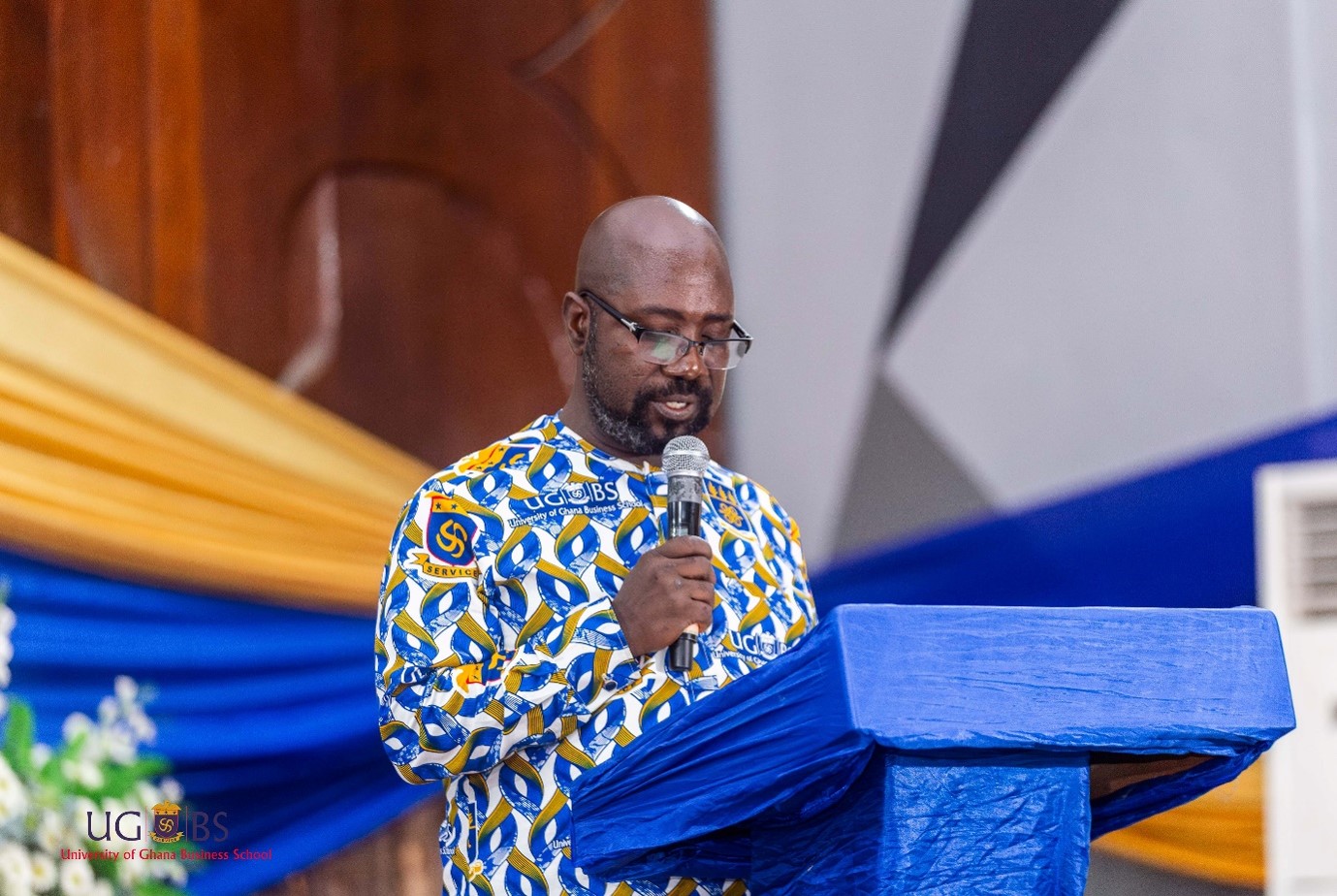
Prof. Tweneboah-Koduah delivering the state of the school address
Highlighting achievements recorded over the past year under the University’s strategic priorities; he announced the launch of the UGBS Scholars Scholarship Scheme. The initiative will initially support 20 Level 200 students with GH¢5,000 annually and is expected to expand progressively to benefit 60 students in subsequent years. He further revealed that the school has established a new UGBS Student Experience Space to provide students with an environment for relaxation and engagement outside lecture hours. In support of employee welfare and inclusion, Prof. Tweneboah-Koduah announced the establishment of dedicated junior and senior common rooms, a newly created Senior Members’ Lounge, and additional faculty office spaces. He also announced that Phase Two of the UGBS Graduate Building is approximately 80% complete and is expected to be handed over for commissioning by the first week of September 2026. Additional infrastructure developments highlighted included plans for an extra staircase for the Graduate Building to improve accessibility and safety, procurement of classroom furniture, provision of photocopiers to all departments, and the digitisation of student reference letter requests, with the online system reported to be approximately 95% complete. He further revealed that UGBS sponsored 24 University staff members at a cost of GH¢477,005 to pursue further education, including nine staff members from UGBS and fifteen from other University units.
On research and innovation, he disclosed that a UGBS-led team had secured the Africa Business and Society Partnership Research Grant under a five-year collaboration funded through the Danish Fellowship Centre’s Knowledge and Innovation Programme. The partnership brings together UGBS, Copenhagen Business School, the University of Nairobi, and the University of Johannesburg and will run from January 2026 to December 2030. He also noted efforts to strengthen research capacity through grantsmanship training for faculty members and postgraduate students across departments. The Dean reported significant progress toward AACSB accreditation for the UGBS Graduate School. He explained that the school had successfully completed multiple assessment stages and anticipates a review visit in 2027. He also announced that UGBS will host the Global Network for Advanced Management Deans and Directors Conference in 2028.
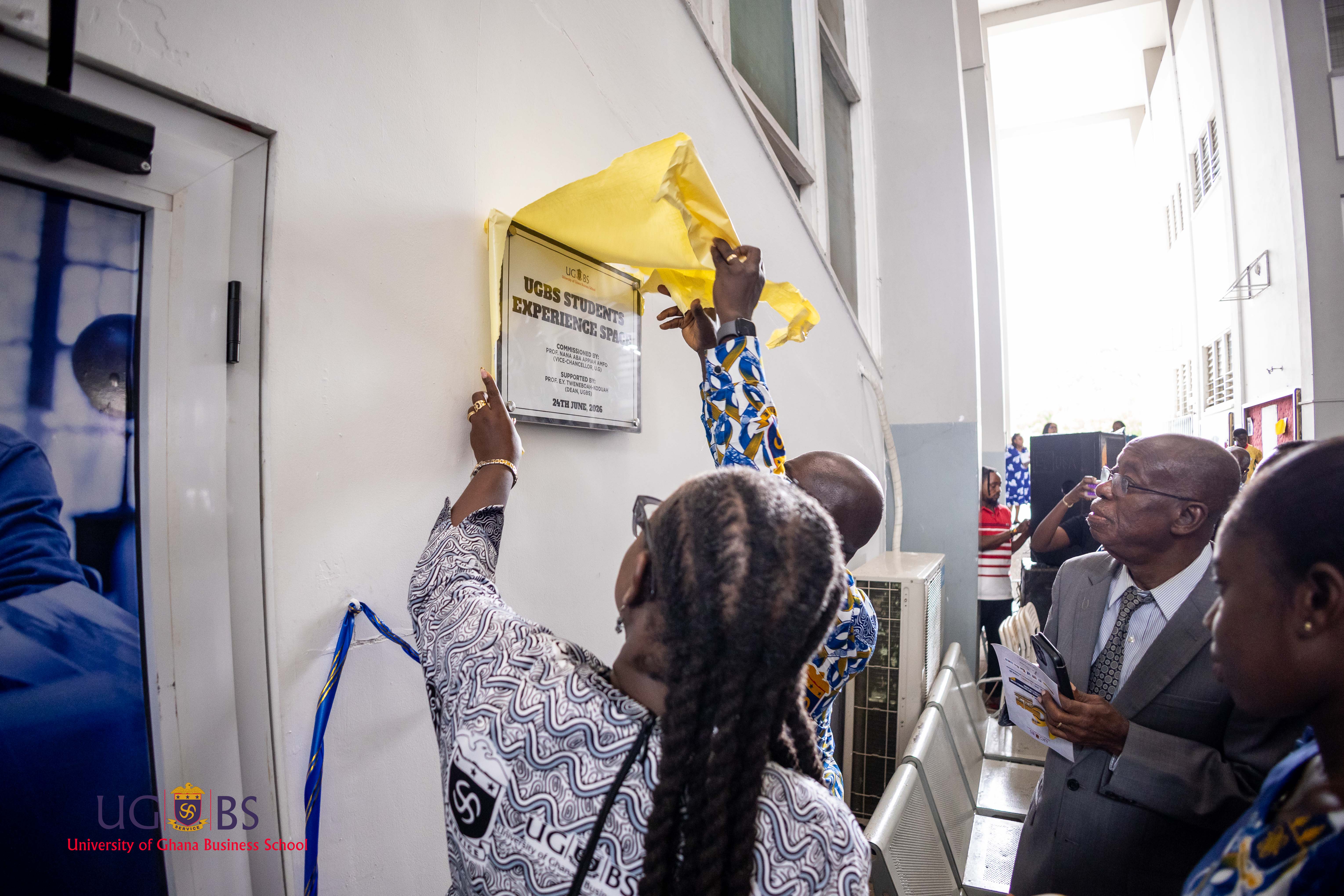
Commissioning of the UGBS Students Expericence Space
Prof. Tweneboah-Koduah highlighted the school’s growing industry engagement through initiatives such as the inaugural Employer Roundtable on Future Skills Needs held in November 2025, which is informing the upcoming Ghana Job Skills Report and curriculum reviews for undergraduate and MBA programmes. He further revealed that UGBS currently maintains Memoranda of Understanding with 50 universities globally and continues to strengthen student exchange opportunities through partnerships. On resource mobilisation and institutional sustainability, he announced a 42% increase in graduate student enrolment, contributions from alumni toward teaching and learning resources, receipt of 120 laptops under the Government’s Coders Programme, and revenue generated through executive education initiatives, which will support the acquisition of a 33-seater bus for the school. He also announced plans for the school to acquire two electric vehicles and two electric motorbikes to promote environmentally responsible operations. Concluding his address, Prof. Tweneboah-Koduah urged the UGBS community to remain committed to the school’s founding purpose by developing talent that can lead Ghana’s digital transformation, strengthen human-centred HR strategies, and produce graduates who understand that sustainability is not merely a concept but a responsibility.

Prof. Nana Aba Appiah Amfo delivering her speech at the UGBS 46th Management Week Durbar
Chairing the durbar, the Vice-Chancellor of the University of Ghana, Prof. Nana Aba Appiah Amfo, reaffirmed the University’s commitment to developing future-ready leaders capable of driving innovation and sustainable development in an increasingly digital world. She welcomed participants and commended UGBS for its continued leadership in management education, describing it as the leading business school in Ghana and West Africa. She also acknowledged the presence and continued support of alumni. Speaking on the theme, she noted that it was timely and relevant as organisations across the world continue to navigate rapid changes driven by artificial intelligence, digital technologies, and emerging innovations. She explained that these developments are transforming how people work, learn, communicate, and lead, while concerns around sustainability, inclusion, ethics, and social responsibility increasingly shape decision-making in both public and private institutions. According to her, the question is no longer whether the future will be digital, but who will shape that future and the values that will guide it.
Prof. Amfo emphasised that while technology remains a powerful enabler of development, meaningful progress ultimately depends on people. The most advanced technologies, she stated, are only as effective as the individuals who design, govern, and deploy them responsibly. Consequently, universities must go beyond producing graduates who can simply use technology and instead focus on developing leaders who can apply technology to solve real human challenges. She described talent development as one of the defining challenges of the current era and stressed that nations and institutions that will succeed in the future will not necessarily be those with the greatest natural resources but those capable of attracting, developing, retaining, and continuously reskilling talent. Prof. Amfo also explained that HR leadership has evolved beyond administrative functions to become central to organisational success. She described HR professionals as architects of organisational culture, drivers of innovation, stewards of ethical leadership, and strategic partners in national development. Addressing students, she encouraged them to move beyond obtaining degrees and embrace lifelong learning while building digital competencies alongside critical thinking, creativity, adaptability, ethical judgement, and emotional intelligence. She also encouraged faculty and staff to continue producing knowledge that informs policy, strengthens institutions, drives innovation, and improves lives.
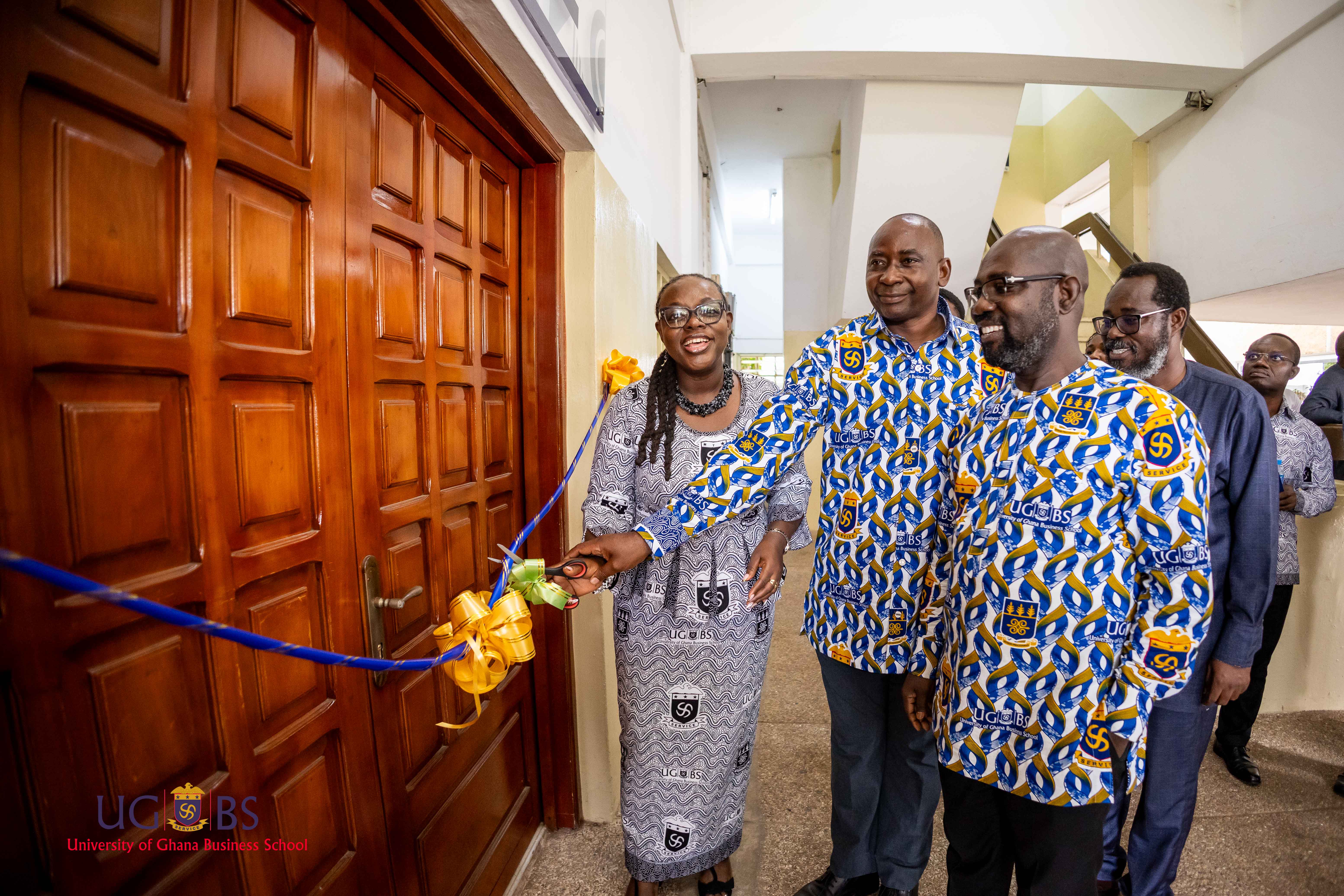
Commissioning of the Faculty Lounge
Delivering the keynote address on behalf of the Minister for Communication, Digital Technology and Innovation, Hon. Samuel Nartey George, Mr. Emmanuel Ofori, Director in charge of the Innovations Directorate at the Ministry, emphasised the critical importance of human capital development in preparing Ghana for a rapidly evolving digital future. He commended the Department of Organisation and Human Resource Management and the University of Ghana Business School (UGBS) for sustaining Management Week as a platform that fosters intellectual engagement, industry collaboration and national dialogue on leadership, management and development. Mr. Ofori observed that the world is undergoing a major transformation driven by digital innovation, artificial intelligence (AI), automation, robotics, big data, cloud computing and other emerging technologies that are reshaping industries and redefining job roles globally. He noted that organisations are increasingly restructuring and rethinking the skills required for competitiveness and sustainability. He further highlighted that Ghana’s youthful population presents a significant opportunity to position the country within the global digital economy, stressing that this potential can only be realised through deliberate investment in human capital development.
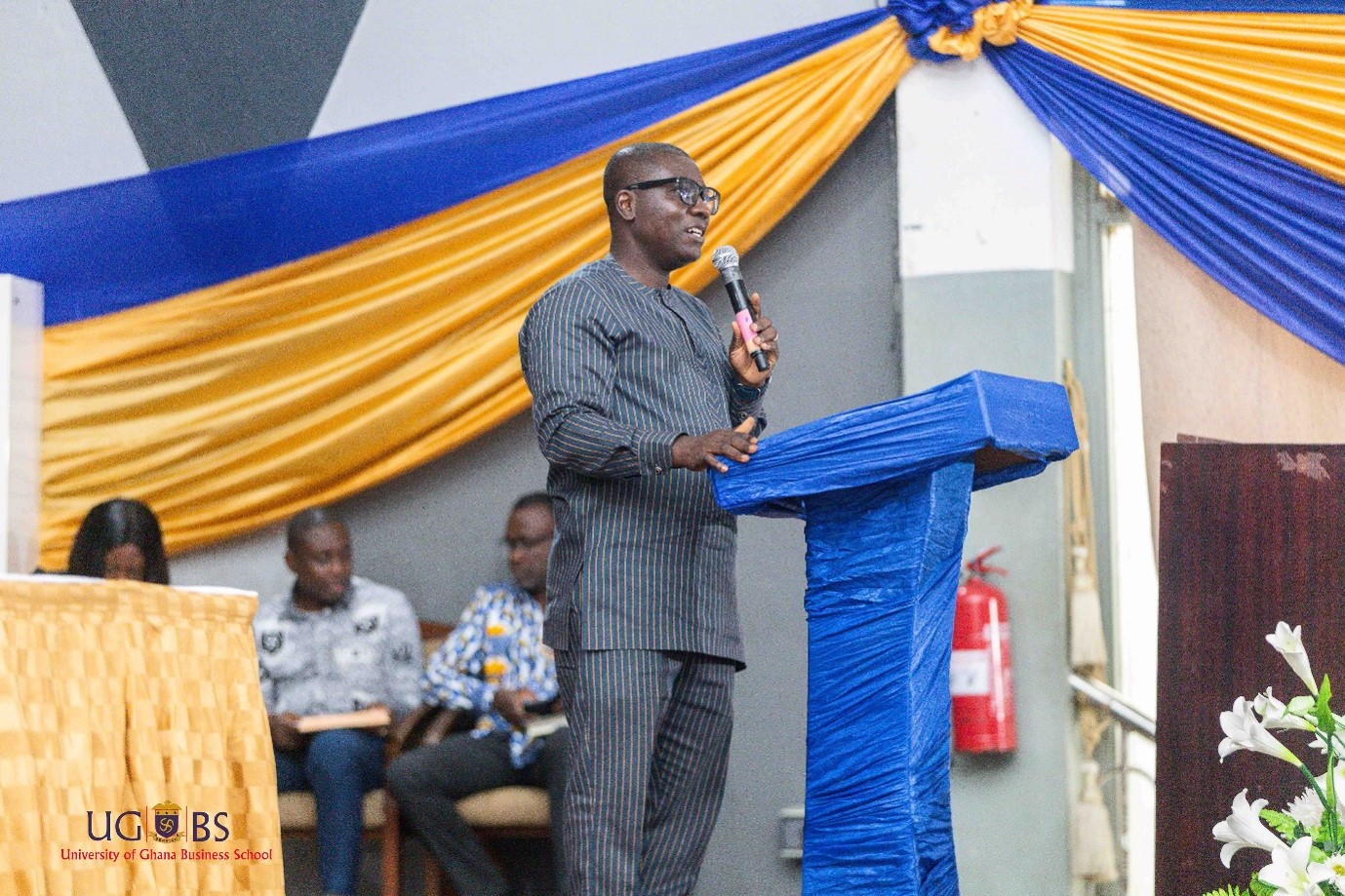
Mr. Emmanuel Ofori, addressing attendees at the UGBS 46th Management Week Durbar
Citing remarks by H.E. John Dramani Mahama, he observed that successful economies are not necessarily those with abundant natural resources but those that consistently invest in research, technology, innovation and people. He stressed that Ghana’s greatest asset lies in the intelligence, creativity and knowledge of its people, adding that talent development for a digital future is a national imperative. According to him, digital transformation is fundamentally about people, as technology only provides tools while progress depends on human vision, creativity, leadership and innovation. He urged educational institutions to redesign curricula to reflect the realities of the digital economy and equip students with practical and future-oriented skills. Mr. Ofori further highlighted government initiatives aimed at strengthening talent development, including the flagship One Billion Coders Programme, which seeks to build digital skills and attract investment into Ghana. He encouraged students to move beyond theoretical learning and acquire competencies in emerging fields such as artificial intelligence, data science and data analytics, emphasising the growing importance of data-driven decision-making. He also referenced the National AI Strategy launched in April 2026, which is intended to guide Ghana’s digital transformation agenda and promote responsible AI adoption.
On inclusion and sustainability, he stressed that digital advancement must benefit all segments of society, including women, persons with disabilities, rural communities and marginalised groups. He further noted the need for innovation to be guided by ethics, accountability and responsible leadership, particularly in addressing challenges such as privacy, misinformation, cybersecurity, fairness and human dignity. He added that the Ministry is strengthening policy frameworks and enabling legislation to mitigate technological risks while supporting national development. Drawing inspiration from the University anthem, he urged them to let their work speak for itself and value teamwork and collaboration. He concluded by urging students not to aspire only to be job seekers but to become problem solvers, innovators, entrepreneurs and transformational leaders. He also called on HR professionals and organisational leaders to prioritise talent development as a strategic investment, noting that organisational success in the future will depend on the ability to attract, develop, motivate and retain human capital.
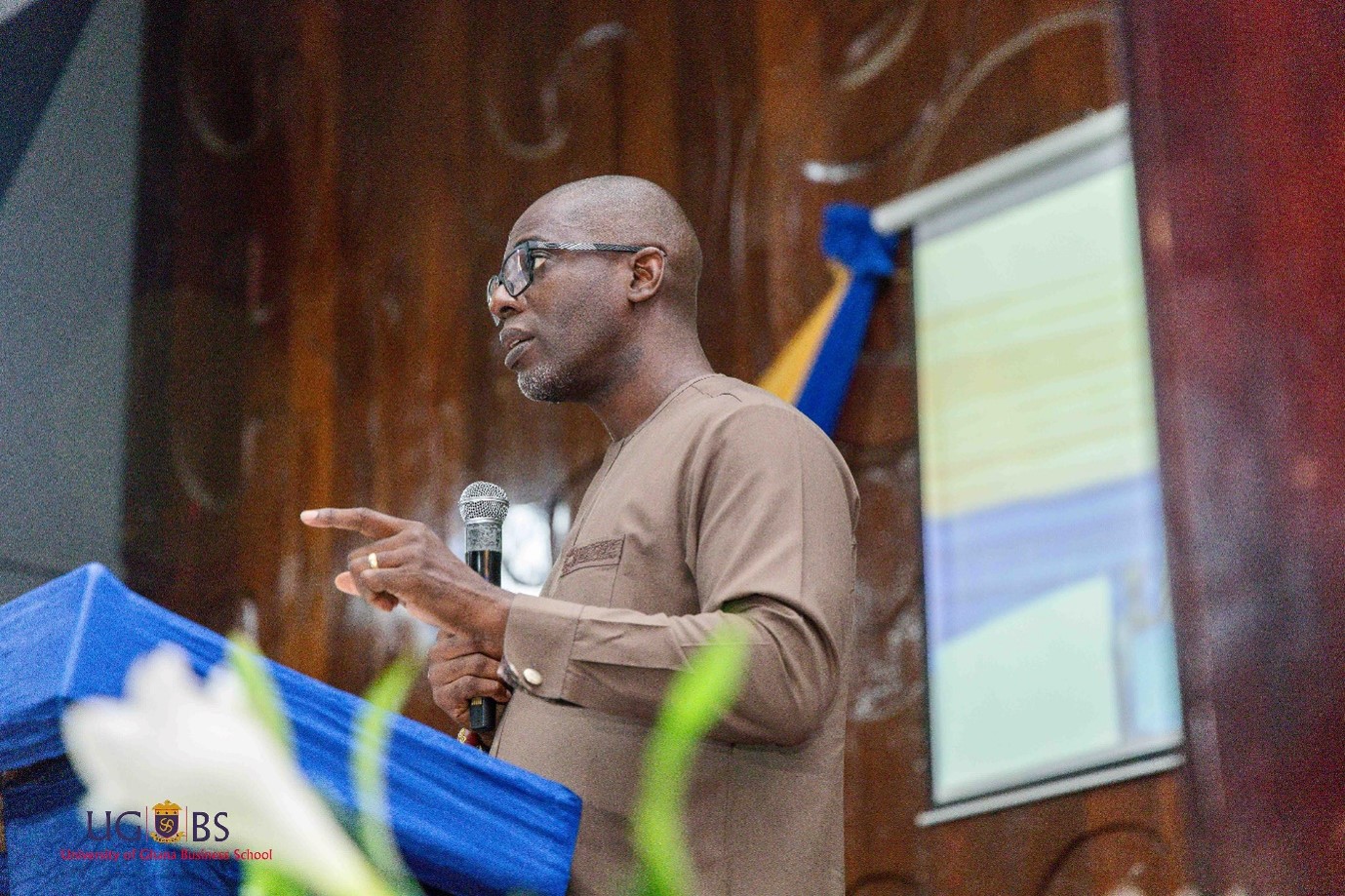
Mr. Kofi Dadzie advising attendees at the UGBS 46th Management Week Durbar
Guest speaker Mr. Kofi Dadzie, Consultant and Advisor in Emerging Technology Strategy and Risk Governance, challenged participants to rethink talent development in an era increasingly shaped by artificial intelligence (AI). He noted that society is moving beyond digital transformation into what he described as an “intelligence outbreak,” where AI is reshaping knowledge, work, enterprise, and leadership. He encouraged students and future professionals not to compete with machines in tasks AI can perform faster, but to focus on uniquely human strengths such as critical thinking, judgment, problem framing, creativity, ethics, and decision-making. According to him, the future workforce will be defined not by the ability to retrieve information but by the ability to ask better questions and make responsible choices.
Referencing Ghana’s National AI Strategy and its emphasis on developing local AI capacity and data infrastructure, he stressed that technology should serve to amplify human capital rather than replace it. He argued that Human Resource Management has become central to shaping the future of work by ensuring technology augments employees instead of excluding them. Mr. Dadzie also highlighted concerns about labour-saving technologies contributing to economic growth without corresponding job creation and called for intentional policies around retraining, dignified work, and inclusive transitions for workers. He urged students to move beyond employability and embrace entrepreneurship and innovation, encouraging graduates to become creators of AI-enabled businesses rather than only consumers of technology. He concluded by urging business leaders, HR professionals, policymakers, and students to pursue productivity while safeguarding human dignity, inclusion, and meaningful work, emphasising that the leadership challenge for Ghana is not determining which skills AI cannot affect, but deciding how society chooses to use technology to advance human progress.
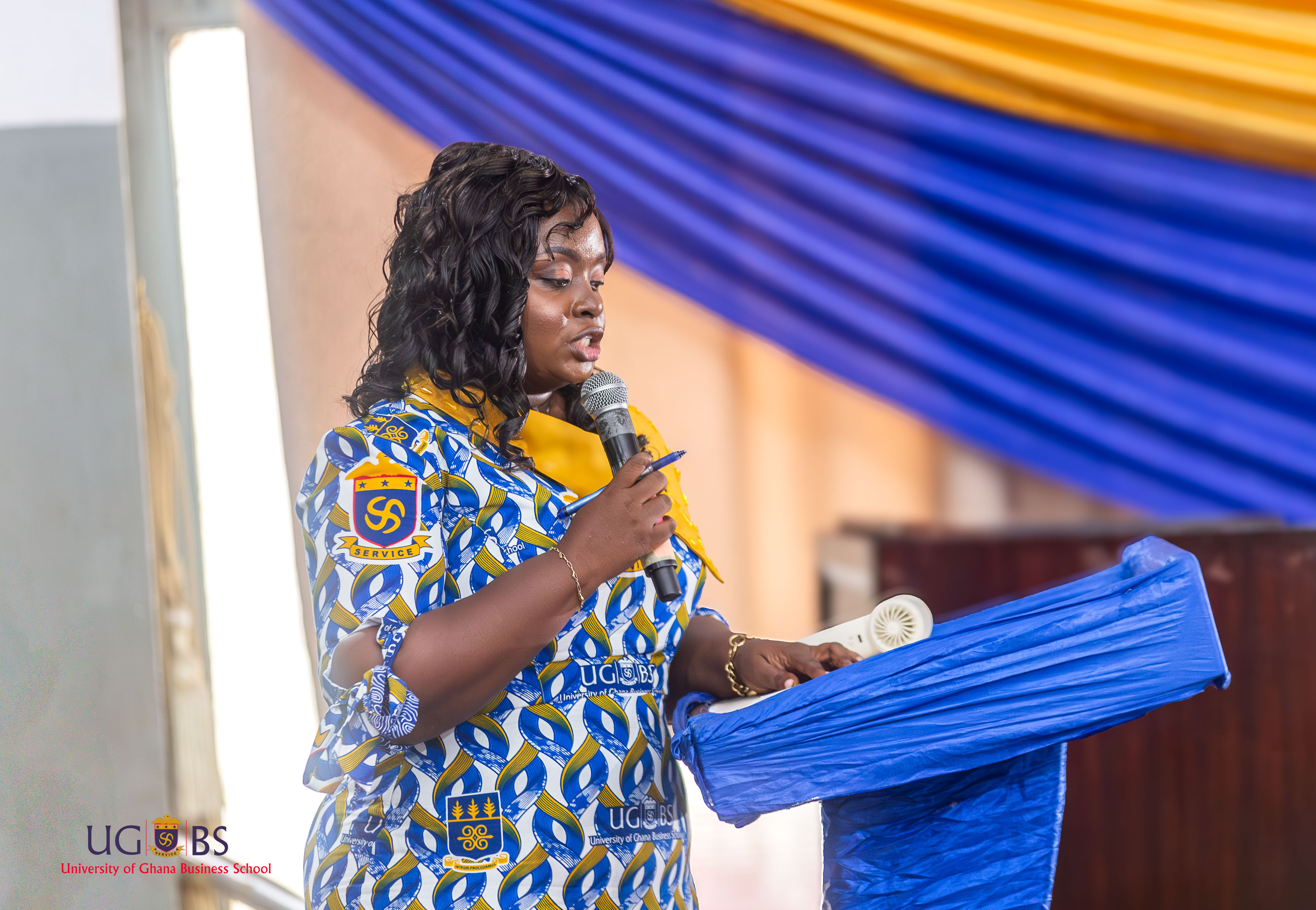
Prof. Agyapomaa Gyeke-Dako giving details of the UGBS Schorlars' Scholarship Scheme
Delivering details of the scholarship scheme, Prof. Agyapomaa Gyeke-Dako of the UGBS Department of Finance explained that the UGBS Scholars' Scholarship Scheme is guided by a vision of equity, opportunity, and transformation. She stated that the programme was designed with three objectives: to support brilliant students facing financial challenges so that talent is not limited by circumstance; to provide mentorship that guides, inspires, and nurtures students; and to create internship opportunities that expose beneficiaries to real-world experiences and open pathways to careers and leadership. “This fellowship is more than support; it is a pathway. It is a chance to learn from mentors who have walked the road before you, gain practical skills through internships, and grow into leaders who shape the future. We believe in your brilliance and are committed to helping you turn that brilliance into impact,” she said. She expressed appreciation to the Dean and Management of UGBS, and the scholarship board for championing the initiative.
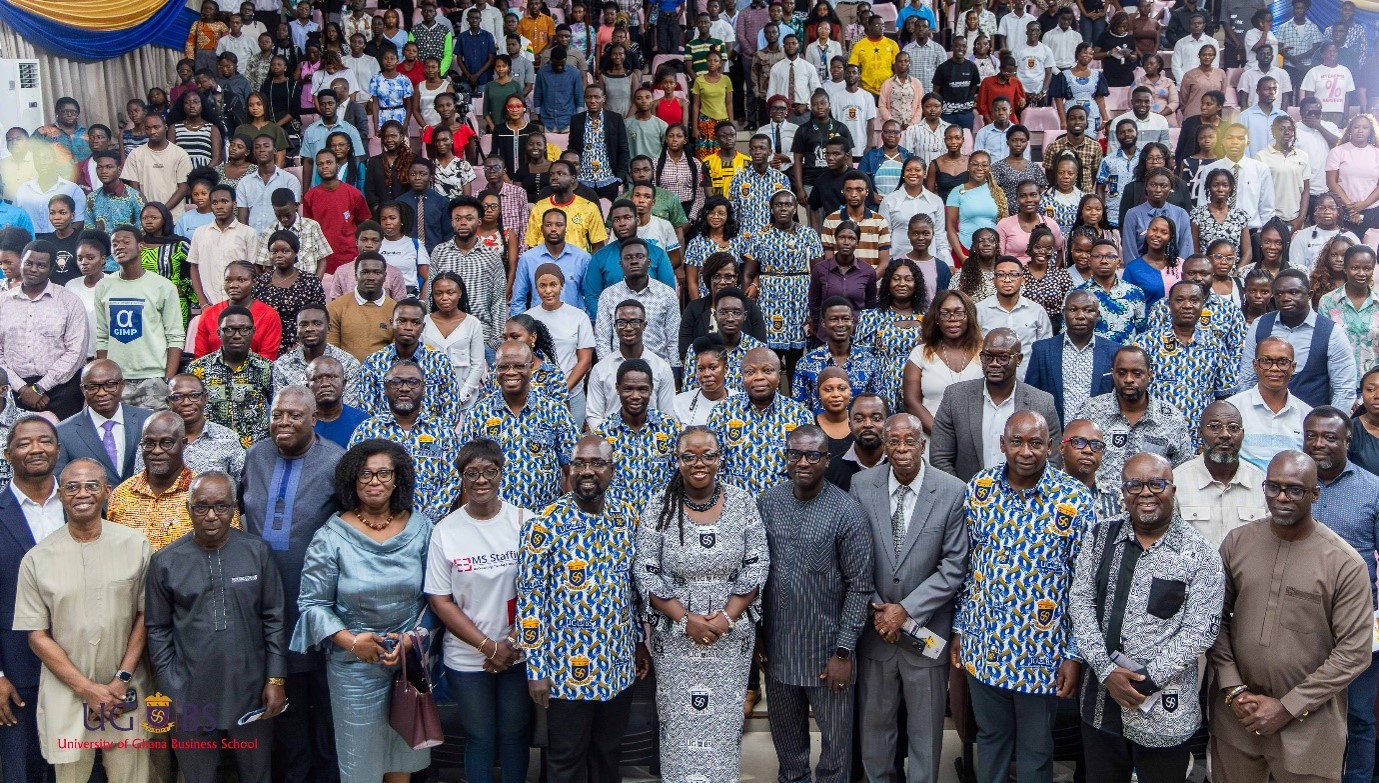
Picture taken after the 46th Management Week Durbar