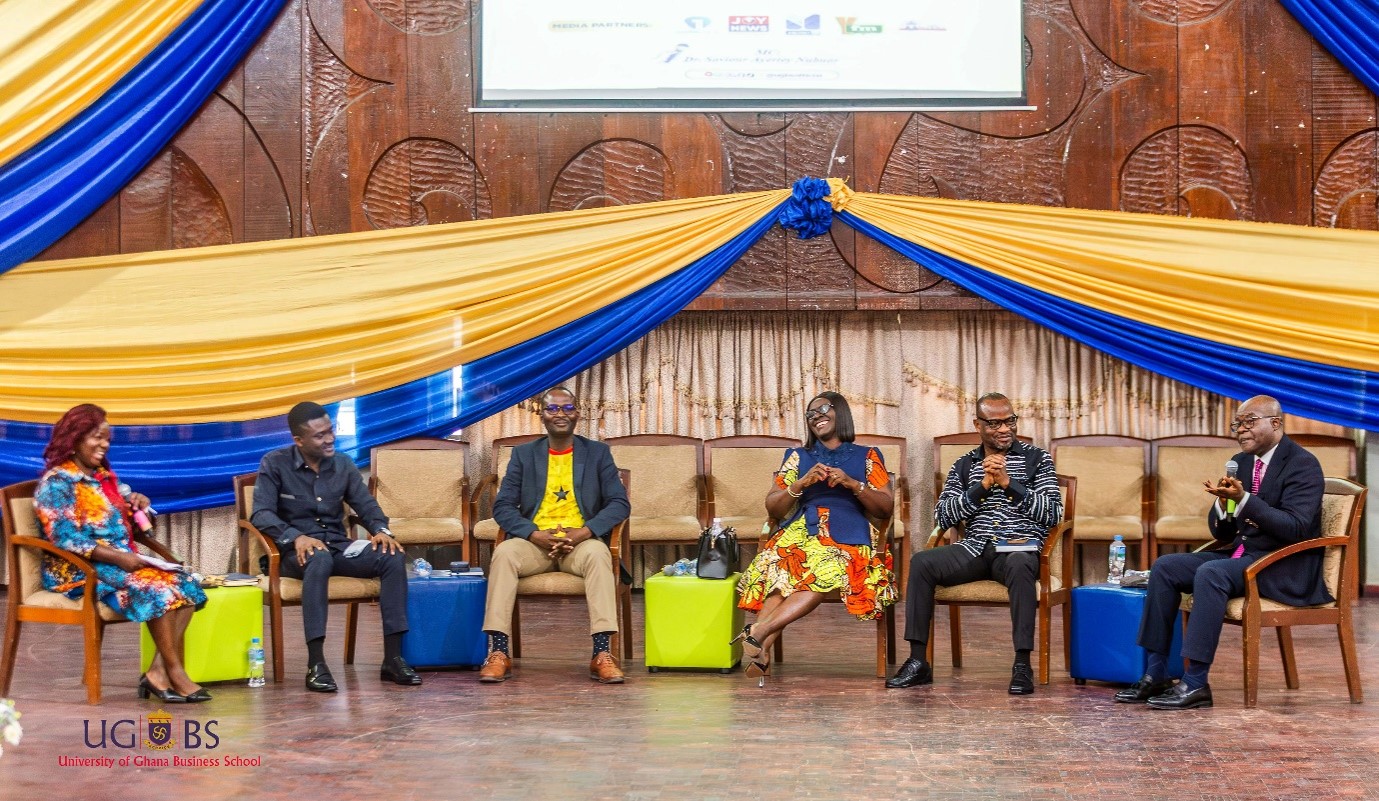
UGBS Management Week Day 2 Advances Conversations on Digital Work and Ethical Leadership
Day two of the University of Ghana Business School (UGBS) 46th Management Week Celebration continued with engaging panel discussions featuring industry leaders, academics, professionals and student representatives who explored emerging issues in digital work, employee well-being, inclusion and ethical organisational leadership. The first panel session, moderated by Ms. Lydia Quayson from the University of Ghana focused on digital work, employee well-being and inclusion, with speakers sharing perspectives on creating healthier and more inclusive work environments amid evolving digital transformation.
Mr. Samuel N.K Agbenyega from the National Labour Commission highlighted the need to extend occupational safety and health measures to remote workers, noting that employee protection should not be limited to traditional office spaces. He stressed that establishing clear workplace conditions of service for remote and digital workers can foster inclusion and improve employee experience. He further discussed how government can promote equal access and inclusion in workplaces through in-service training opportunities and the availability of funding targeted at people living in remote areas and persons with disabilities. Mr. Mark Kwame Kumordzi-Ablo, Senior People and Culture Business Partner at Stanbic Bank Ghana, discussed how Human Resource leaders can leverage digital tools to support operations while protecting employee privacy. He noted that workplace monitoring tools should not necessarily be viewed as surveillance but rather as mechanisms for ensuring accountability and productivity. According to him, employees should understand the purpose of such systems and avoid concerns while striving to maintain a healthy balance between work and personal life. He also discussed approaches organisations can adopt to promote inclusion within hybrid work environments.
Prof. Daniel Ofori, a professor of Management at the Department of Organisation and Human Resource Management, UGBS spoke on the importance of organisations providing quality products and supportive work environments while expecting employees to deliver their best performance. Reflecting on the changing nature of work, he explained that before digitalisation, there was automation. He explained how both developments have shaped modern workplaces. According to him, employee satisfaction remains central to organisational success, stating that a productive employee is often a happy employee. He discussed some of the challenges associated with digitalisation and outlined measures organisations can adopt to improve employee productivity and performance. Prof. Ofori also spoke about the importance of preparing students adequately before entering the workforce and indicated that this remains a priority for UGBS. He noted that although some students may perceive the school’s efforts as demanding, the objective is to equip them with the skills and readiness required for professional success.
Mrs. Margaret Titus-Glover, Lead HR Consultant at MS Staffing contributed to the discussion by highlighting employers’ interests and strategies used to make work easier and more efficient. She discussed work management and redistribution practices, employee well-being and the use of structured templates to simplify tasks, reduce pressure and support employees’ mental health. She explained that while digital technologies improve efficiency, they also have the potential to affect mental health and therefore require effective management. Mrs. Titus-Glover outlined strategies for strengthening employee engagement, including adopting hybrid work models, being intentional about communication even when employees work remotely, encouraging managers to hold one-on-one engagements instead of relying solely on emails, providing adequate IT infrastructure and recognising and celebrating employee milestones. Representing students, Mr. Gideon Ohene addressed concerns around mental health among students preparing to enter the world of work. He encouraged fellow students to focus on contributing meaningfully to organisations and supporting companies to achieve their goals rather than concentrating solely on personal gain.
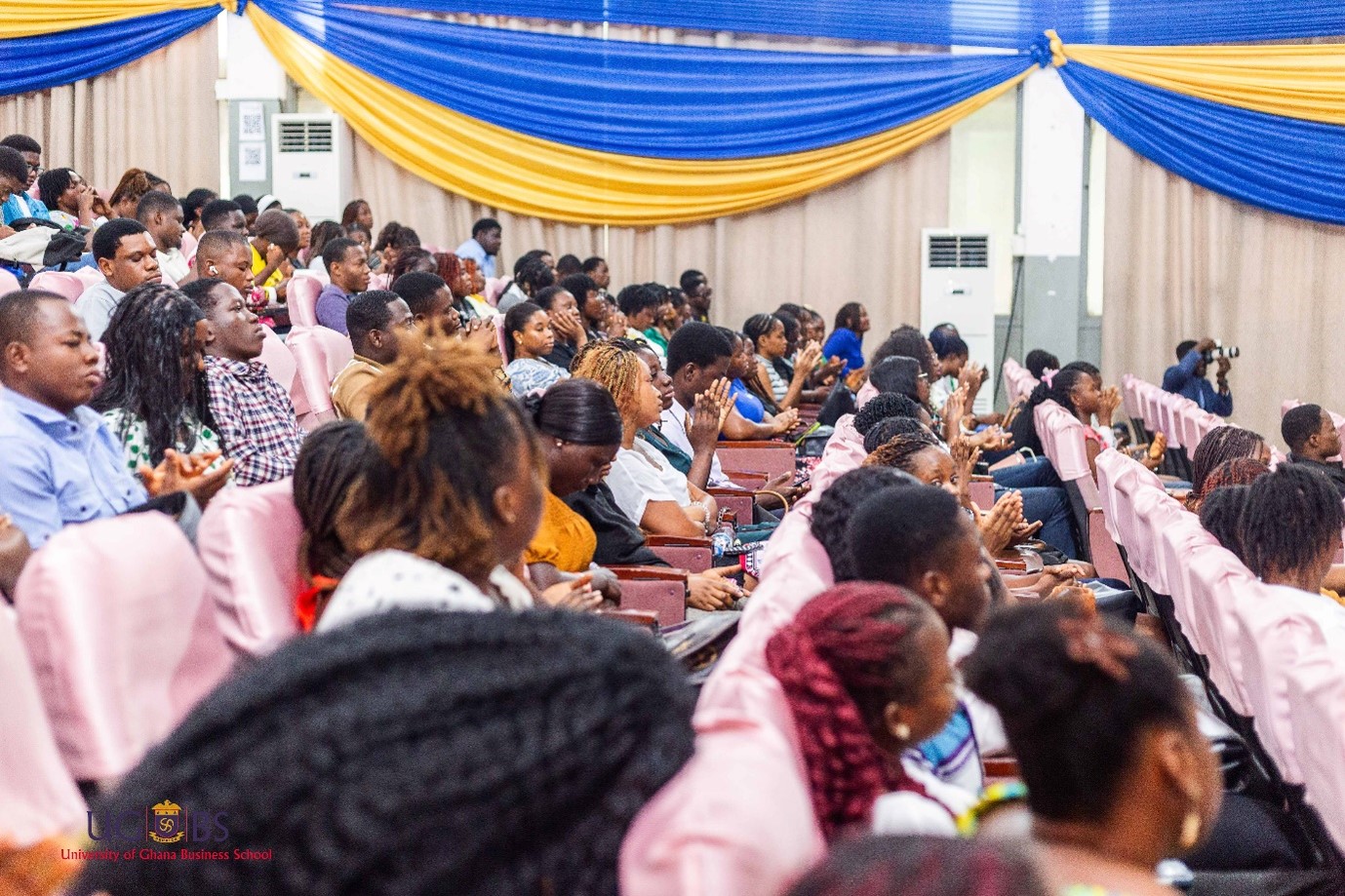
Cross- section of the UGBS 46th Management Week Day 2
The second panel session, moderated by Mr. Edward Asare, a UGBS alumnus, focused on digital leadership for ethical organisations. Dr. Irene Stella Agyenim-Boateng- Vice Chairman of the Public Services Commission of Ghana, discussed the role of government in promoting responsible digital practices across organisations. She noted that technology and sustainability should be viewed as collaborators rather than competitors. According to her, technology can drive positive outcomes when supported by effective policies and regulations. She emphasised the responsibility of government as an enforcer of regulations to ensure compliance and cautioned against allowing technology to erode cultural values. She noted that organisational policies should align with broader national policies to facilitate effective implementation and governance. Dr. Agyenim-Boateng further advocated for policies that support and retain talented young professionals while enabling them to balance productive careers and family life. She also encouraged HR professionals to adopt a more human-centred approach and occasionally place themselves in the position of employees while carrying out their responsibilities.

Dr. Irene Stella Agyenim-Boateng and Maame Adjoa Jehu-Appiah at the UGBS 46th Management Week Celebration
Speaking on HR responsibility and ethical workplace practices, Maame Adjoa Jehu-Appiah from the Jospong Group of Companies emphasised the need for HR professionals to help employees continuously learn, relearn and understand organisational values and practices. She also discussed how HR can integrate sustainability into organisational culture by being intentional, creating awareness, developing policies around everyday sustainability practices, encouraging peer learning and allowing employees time to rest and recharge. Addressing students, she stated that organisations increasingly prioritise attitude and practical skills over certifications alone. She encouraged students to take advantage of the opportunities available at UGBS and continue developing themselves to become valuable contributors to organisations and national development.
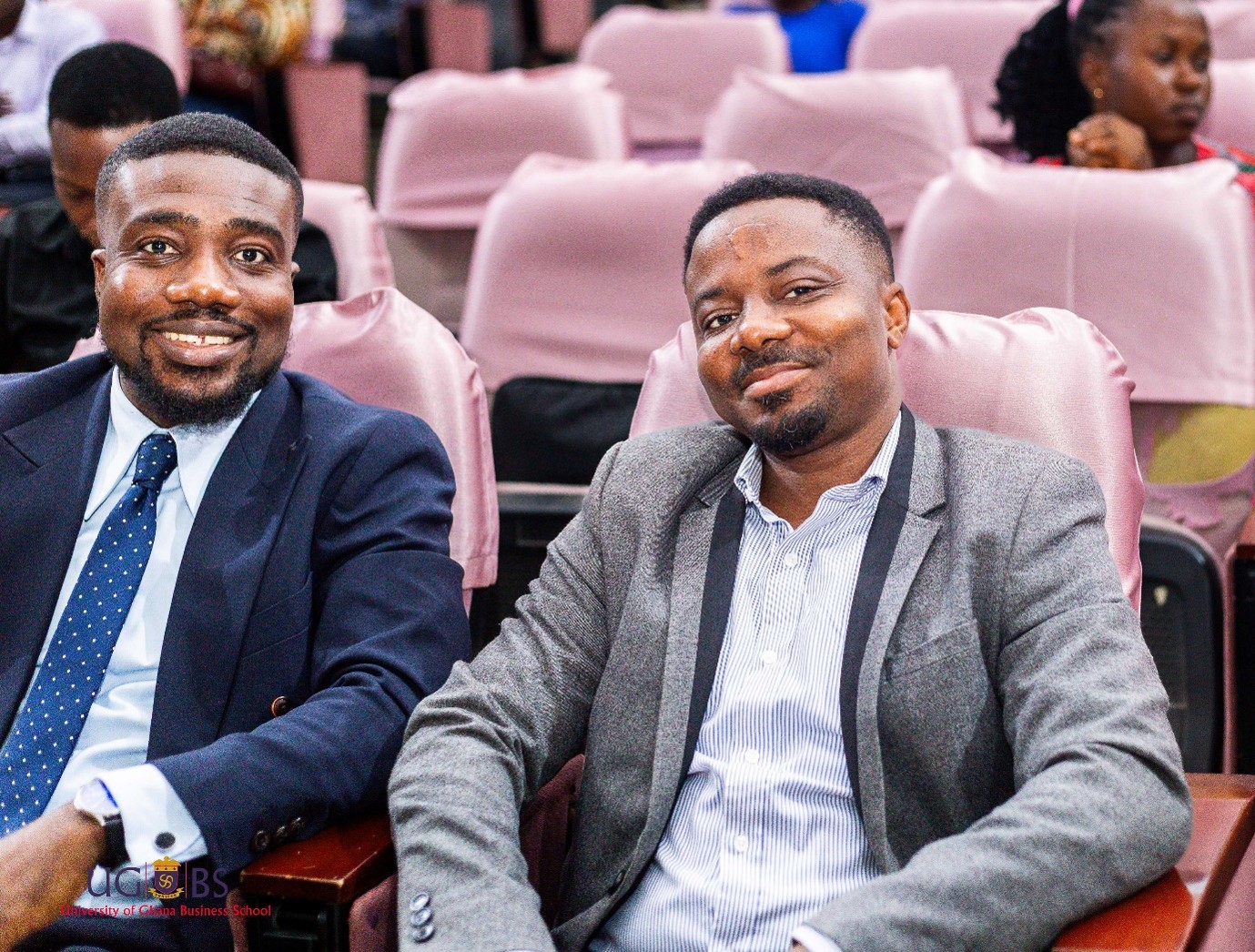
Mr. Edward Asare and Prof. Raphael Odoom at the UGBS 46th Management Week Celebration
Prof. Raphael Odoom, an Associate Professor of Marketing at UGBS, discussed the influence of leadership and education on individual development and career outcomes. He addressed the concept of digital footprints and educated students on the importance of maintaining effectiveness without overreliance on Artificial Intelligence (AI). He also spoke about the ethical use of technology by government and academia and how such technologies should be applied responsibly. Prof. Odoom explained UGBS’ student development approach and encouraged students to cultivate the ability to learn and work independently without AI tools. He advised students to distinguish themselves from other graduates competing for similar opportunities and reflected on how upbringing and personal values can influence employee attitudes. He concluded by reminding participants that everyone, including individuals, students and educators, has a shared responsibility because every action has broader implications.
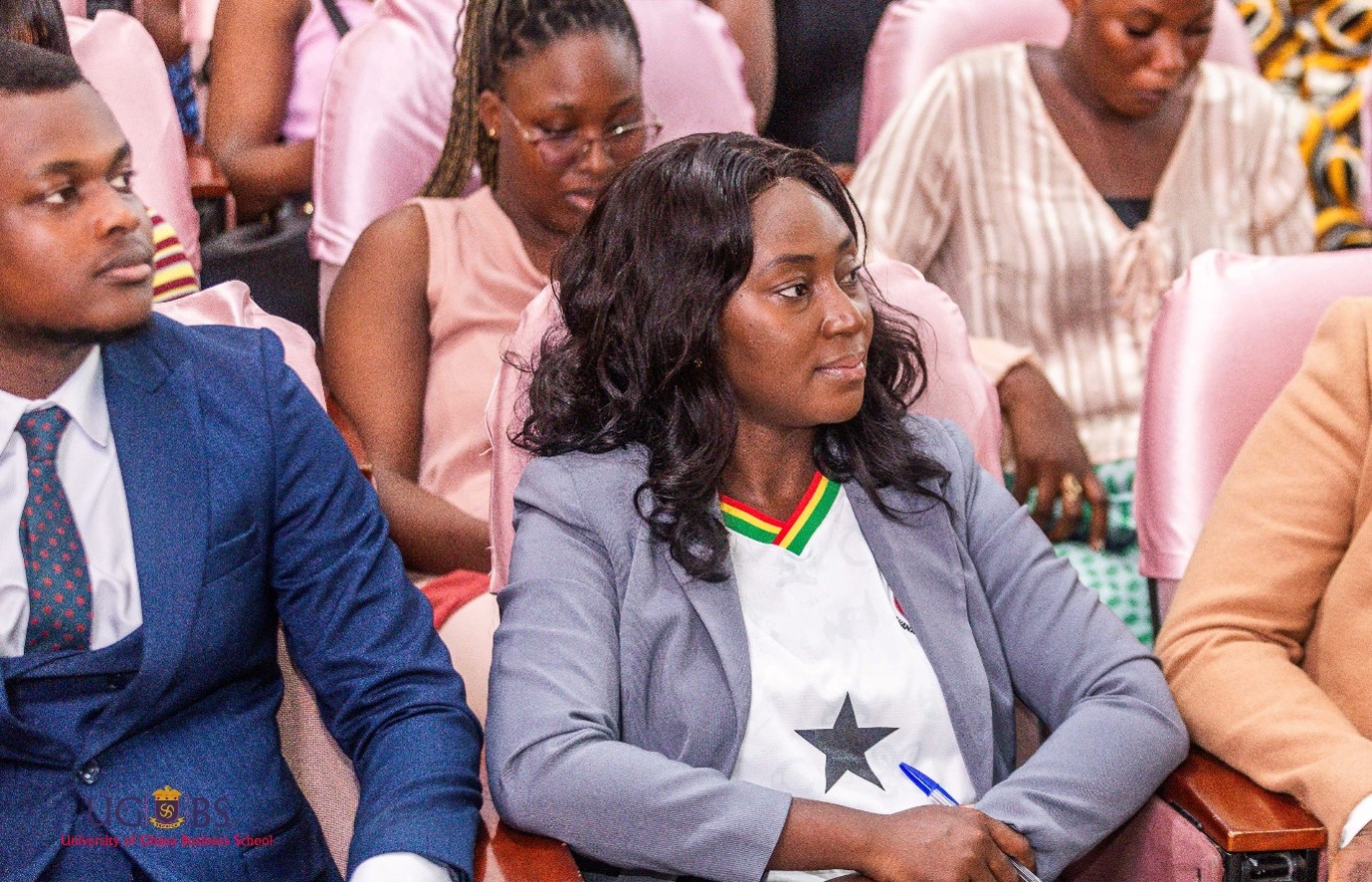
Mr. Nkonimadom Yeboah and some attendees at the UGBS 46th Management Week Celebration
Student representative Mr. Nkonimadom Yeboah discussed the accessibility of digital platforms and the opportunities available to young people. He encouraged students to be intentional about the consistency and visibility of the personal brands they build online. He further advised young professionals to continuously develop digital skills and create value for themselves. He challenged students to pursue innovative ideas capable of placing Africa on the global map instead of depending entirely on AI, noting that such efforts could help address concerns about Africa’s representation globally. The sessions concluded with a question-and-answer session where students engaged effectively with the industry leaders, academics, and professionals.