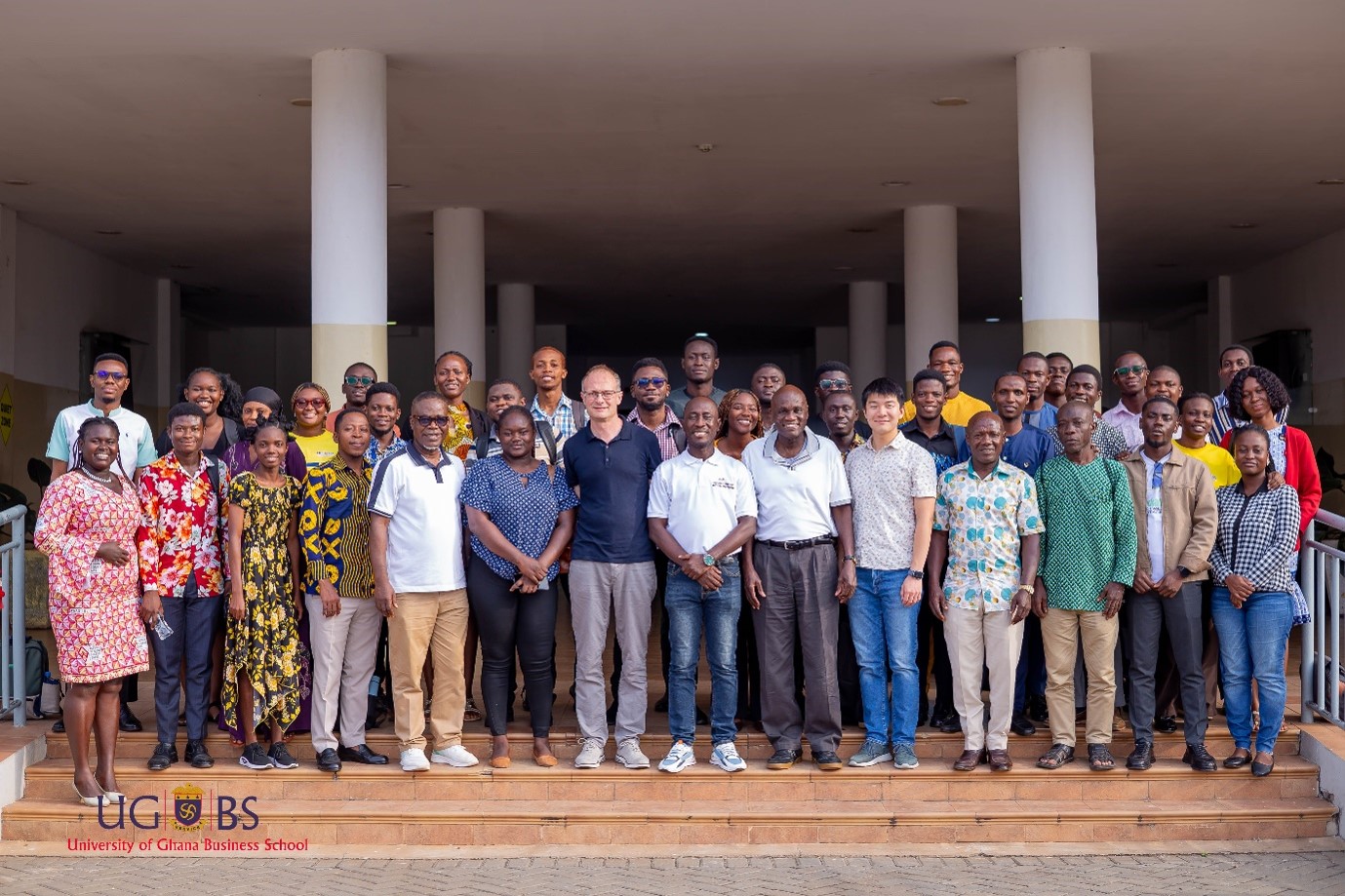
Department of Accounting Hosts 2026 Summer School
The Department of Accounting at the University of Ghana Business School (UGBS), in collaboration with the Accounting and Development Forum (ADF), has hosted the 2026 Summer School on Accounting Research (SSAR), bringing together accounting researchers and students from several institutions, including the University of Ghana, University of Cape Coast, University of Professional Studies, Accra, Kwame Nkrumah University of Science and Technology, Takoradi Technical University and a foreign delegate from Morrocco. Held from 12th to 14th August 2026, the Summer School provided participants with practical and theoretical insights into accounting research, causal inference, firm financing, regulation and the relationship between accounting and economic development. The three-day programme featured sessions led by scholars including Prof. Alex K. Dontoh of Stern School of Business, New York University; Prof. Hans B. Christensen of the University of Chicago Booth School of Business; Prof. Godfred Matthew Yaw Owusu, Head of the Department of Accounting, UGBS; Dr. Fred A. Asante of the Smeal College of Business, Pennsylvania State University; and Mr. Samuel Chang, an Ernest R. Wish Fellow and PhD Candidate at the University of Chicago. According to Prof. Owusu the summer school was designed to equip participants with tools needed to strengthen research and examine accounting issues within broader economic and institutional settings.
The first day focused on “Parallel Worlds: Difference-in-Differences and Panel Data,” facilitated by Mr. Samuel Chang and Prof. Hans B. Christensen. The session introduced participants to causal inference and the challenge of establishing what would have happened to an individual, firm or institution in the absence of a particular intervention. Using the Bank of Ghana's 2017–2019 banking sector clean-up as a running case, the facilitators examined the effects of bank resolutions on firms that depended on the affected banks. The discussion considered the hypothetical question of what would have happened to the same firm if its bank had not been resolved. Participants were introduced to the role of control groups in causal research and how randomisation can make comparisons between treated and control groups credible. The discussion then moved to Difference-in-Differences (DiD), including the mechanics of DiD regression, two-way fixed effects and the assumptions required when treatment is not randomly assigned.
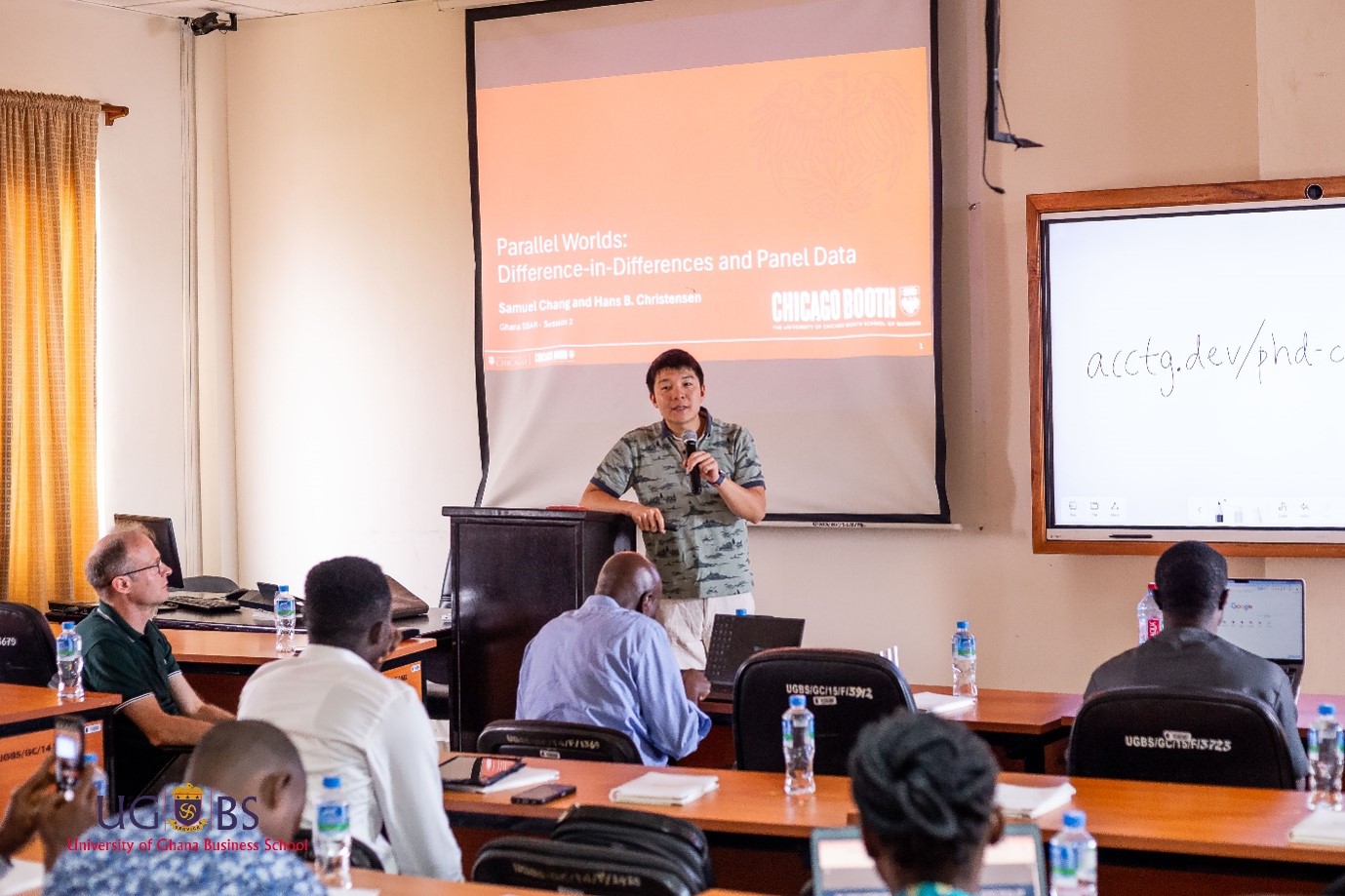
Mr. Samuel Chang lecturing at the 2026 SSAR
Attention was given to the parallel-trends assumption, staggered treatment timing, spillovers and anticipation effects. Participants were also introduced to the application of DiD techniques in Stata. The programme further examined causal inference approaches involving unobserved confounders, instrumental variables and regression discontinuity designs. Discussions later turned to accounting human capital in Sub-Saharan Africa and the role of accounting beyond its traditional capital-market function. The lectures considered the characteristics of accounting education and the accounting profession in the region, while encouraging participants to examine accounting-related questions within the broader institutional and economic realities of developing economies. Prof. Hans B. Christensen also led a session on how Global North regulations can affect firms and communities in developing countries, focusing on extraterritorial supply-chain regulation. Participants examined three major enforcement mechanisms: disclosure mandates, due diligence obligations and market-access restrictions. Examples included the European Union's sustainability reporting and due diligence frameworks, the UK Modern Slavery Act, the US Uyghur Forced Labor Prevention Act and the EU Deforestation Regulation. The session examined the concept of regulatory substitution, through which countries seek to influence conduct in developing economies by regulating firms that have access to their markets rather than directly regulating activities in foreign jurisdictions.
While such regulation can address environmental damage, forced labour and corruption where host-country enforcement is weak, participants also considered its potential drawbacks. These included compliance costs for developing-country firms, the risk of global buyers excluding African suppliers and concerns that regulations developed in the Global North may not adequately reflect local conditions. The discussion therefore framed an important research question: “Under what conditions does extraterritorial regulation improve outcomes in developing countries, and when might it instead reinforce existing economic inequalities?” The Summer School also focused on how researchers can move from narrow research questions to broader economic questions with wider relevance. Participants were encouraged to develop research questions that are feasible, interesting, novel, ethical and relevant. The facilitators emphasised the importance of problematisation questioning assumptions that are often taken for granted as a pathway to developing original research ideas. Using mandatory e-invoicing as an example, participants considered how a narrow question about whether e-invoicing encourages informal suppliers to formalise could be reframed as a broader question about whether formality propagates through supply chains. The discussions also positioned Ghana and West Africa as important settings for research, particularly because of the region's large informal sector and distinctive institutional environment.
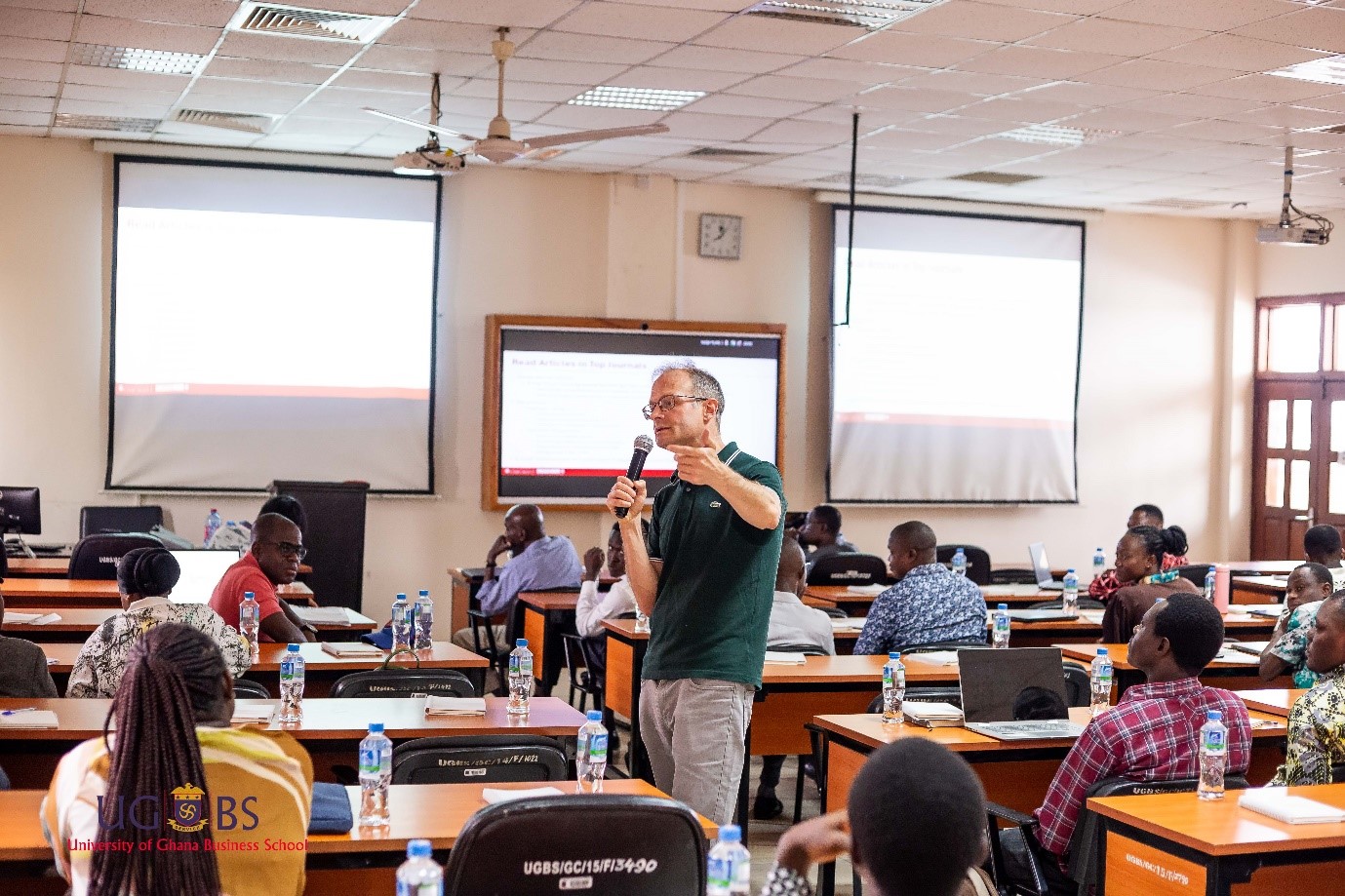
Prof. Hans B. Christensen engaging participants
On the final day, discussions focused on “How Do Firms in Developing Countries Obtain External Financing?” The session examined the roles of institutions, information, relationships and regulation in shaping firms' access to external finance. Participants engaged with existing research evidence and were introduced to potential research questions that could be pursued within the field. The session also considered “How to Regulate Firms in Developing Countries: Institutional Possibilities and the Case of Ghana”. The session examined why regulatory and legal systems transplanted from one country to another may not produce the same outcomes. Drawing on existing research, participants discussed how heavier entry regulation can be associated with larger unofficial economies, procedural formalism can increase costs and delays without necessarily improving justice, and stringent labour regulations can contribute to informality and unemployment. The discussion emphasised the need to consider indigenous institutional and cultural contexts when designing or adopting regulations for developing countries.
A key component of the Summer School was the opportunity for participants to present their research work and receive feedback from the facilitators and fellow participants. The presentations provided a platform for participants to test their research ideas, engage with alternative perspectives and refine their approaches to research questions and methodology. The three-day programme concluded with the presentation of certificates to participants.
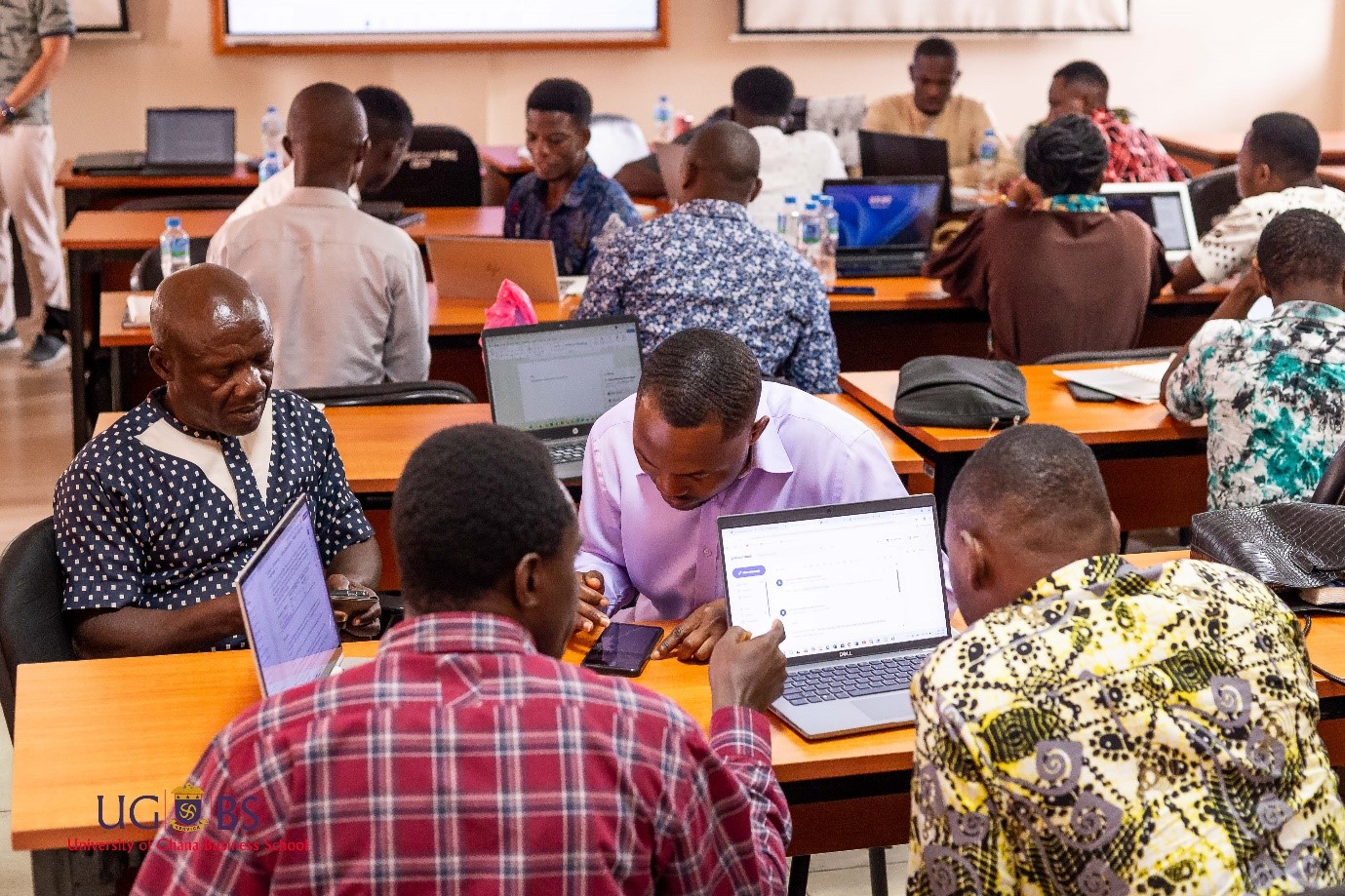
Participants engaging in a team discussion