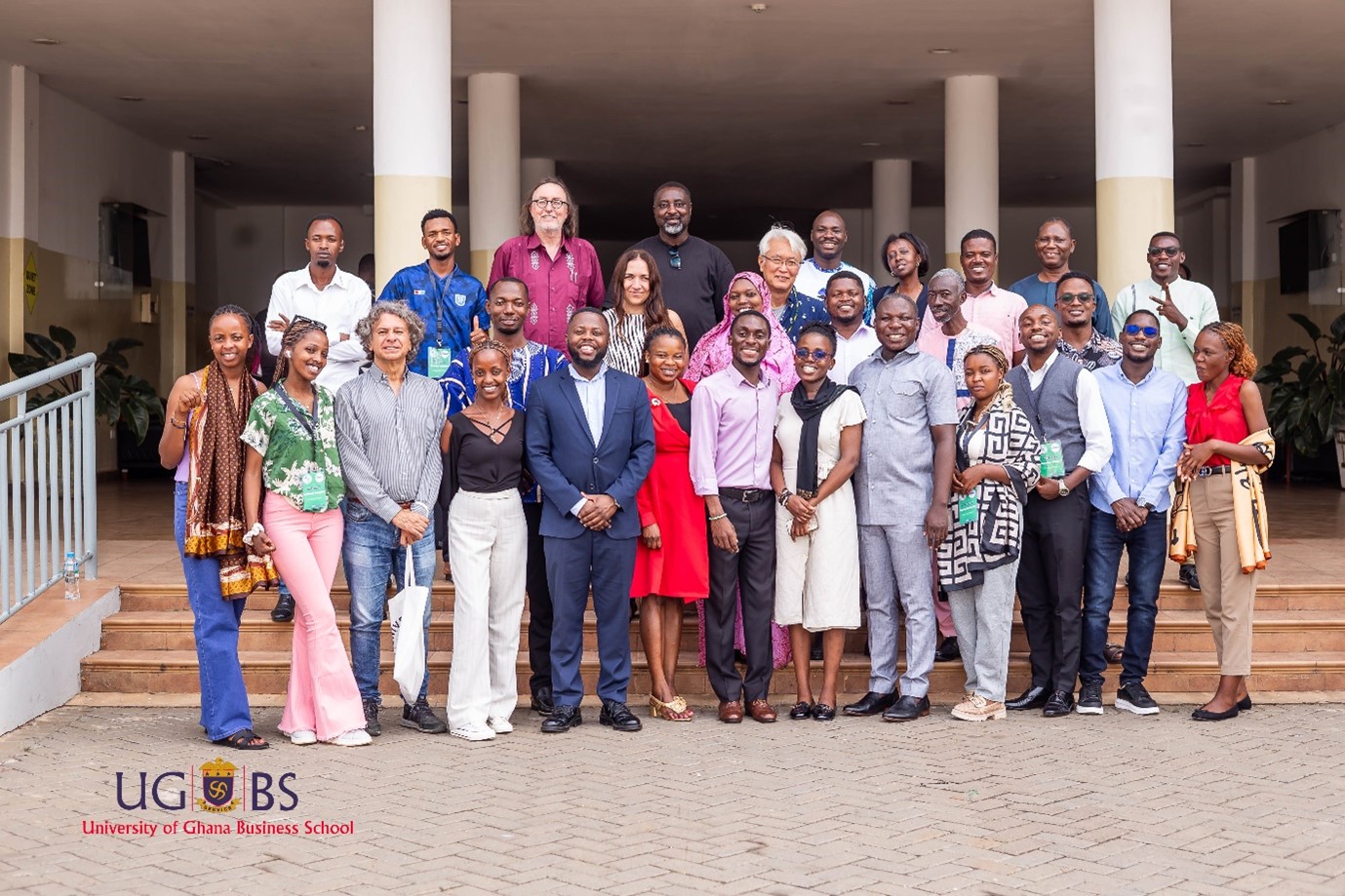
CONMAT Project Continues at UGBS Following Implementation in Rwanda and Partner Institutions
The University of Ghana, Legon officially commenced activities under the Strengthening Conflict Management and Transformation Studies in Africa (CONMAT) Project on 19th February 2026. This multi-country academic initiative across Africa has already been implemented at the University of Rwanda and the Protestant University of Rwanda. The project is co-funded by the European Union and promotes international academic cooperation between African and European institutions. CONMAT was won by Prof. James Kwame Mensah, Prof. Justice N. Bawole, Prof. Albert Ahenkan, Prof. Lily Yarney, Dr. Charles Amo-Agyemang and Mr. Yaw Tsen Yeboah.
As part of the exchange programme under the CONMAT Project, participants at UG engaged in a series of academic presentations and experiential learning sessions held at UGBS Graduate Campus. The sessions were moderated by Prof. James Kwame Mensah of UGBS and featured faculty from partner institutions. The programme commenced with engaging sessions on Conflict Analysis and Transformation, led by Prof. Kazuyuki Sasaki and Mr. Rodrigue Elie Icishatse from the Protestant University of Rwanda. The sessions introduced students to the core concepts of conflict, violence and peace, and explored conflict transformation as a strategic approach to peacebuilding.
Earlier, the UG team comprising Prof. James Kwame Mensah, Prof. Emmanuel Assiamah-Yeboah and Dr. Charles Amo-Agyemang, and three students travelled to participate in the CONMAT project at University of Rwanda in Kigali and the Protestant University of Rwanda in Huye from 9th to 17th February 2026. The team returned to Ghana on the 18th February with the team from the two Rwandan Universities and their students as well as Professors from the University of Applied Sciences in Vienna and Universidad de Las Palmas de Gran Canaria in Spain. At the end of the three days in University of Ghana, the team then moved to University of Business and Integrated Development Studies, Wa where the final session of the capacity building will be held.
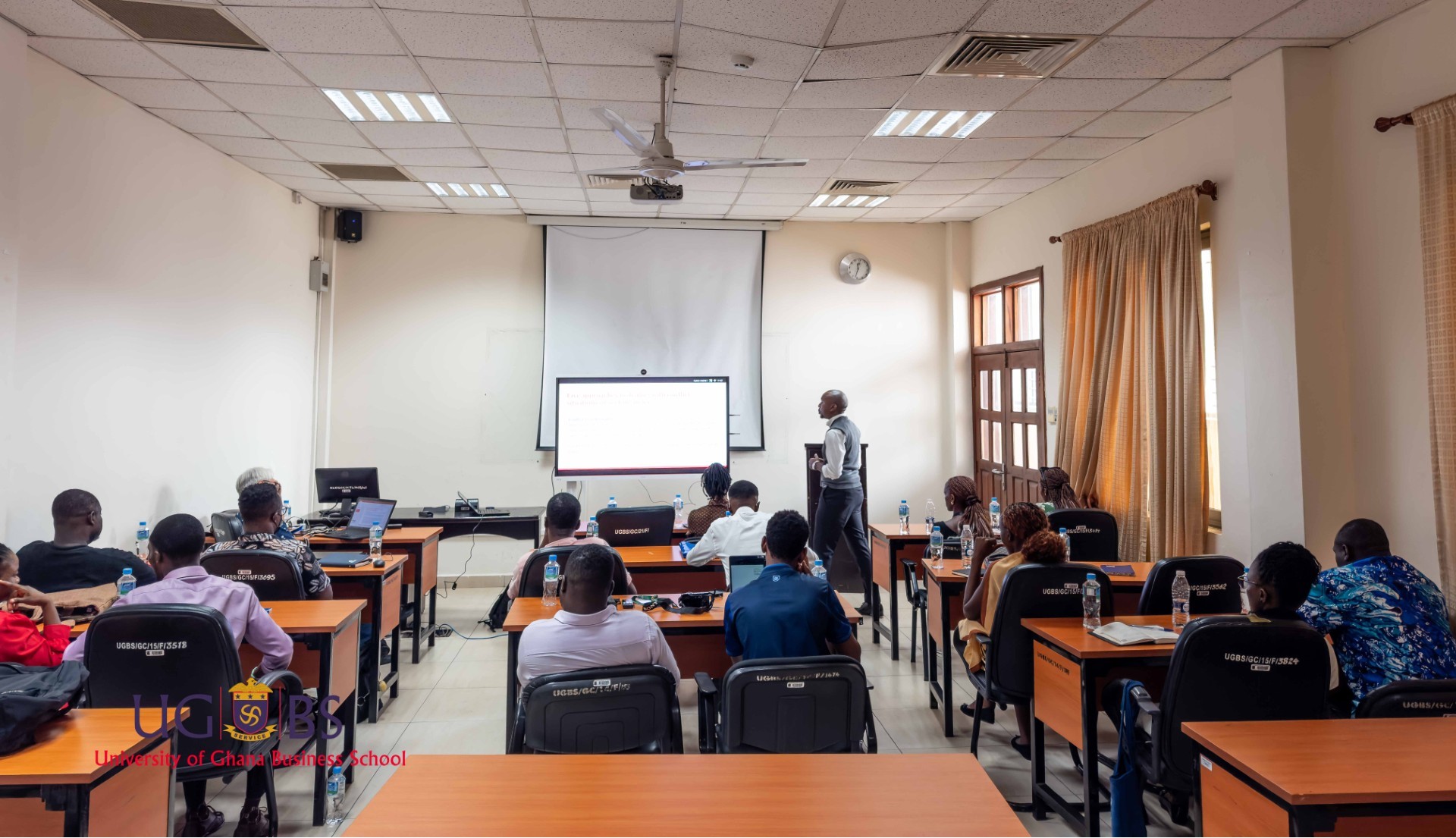
During Prof. Kazuyuki Sasaki and Mr. Rodrigue Elie Icishatse’s presentation
The objectives of the course were to equip students with an understanding of the major features of conflict including causes, actors, and dynamics, and to examine the kind of peace sought through conflict transformation. By the end of the sessions, participants were expected to apply basic conflict analysis tools to real-world conflicts and develop strategies aimed at sustainable conflict transformation. Discussions examined the nexus between conflict, violence, and peace as the foundation of conflict analysis. Participants also explored the progression of conflict, shifts in power relations, and the distinction between destructive and constructive behaviours and attitudes. Further deliberations covered peace prevention, conflict settlement and management, and resolution, providing a comprehensive understanding of conflict transformation processes.
Dr. Juan Manuel Santana Pérez from the Universidad de Las Palmas de Gran Canaria (Spain) delivered a presentation on Everyday Political Negotiation and Peacebuilding in Africa: Shifting the Lens from State-led Agreements to the Lived Realities of Daily Peace in Rwanda and Ghana. His lecture offered a comprehensive examination of how peace is produced, navigated, and sustained within communities. He analysed negotiated orders, the historical landscape of ethnic interventions, and the ways in which localised conflicts can escalate to national levels if not effectively addressed.
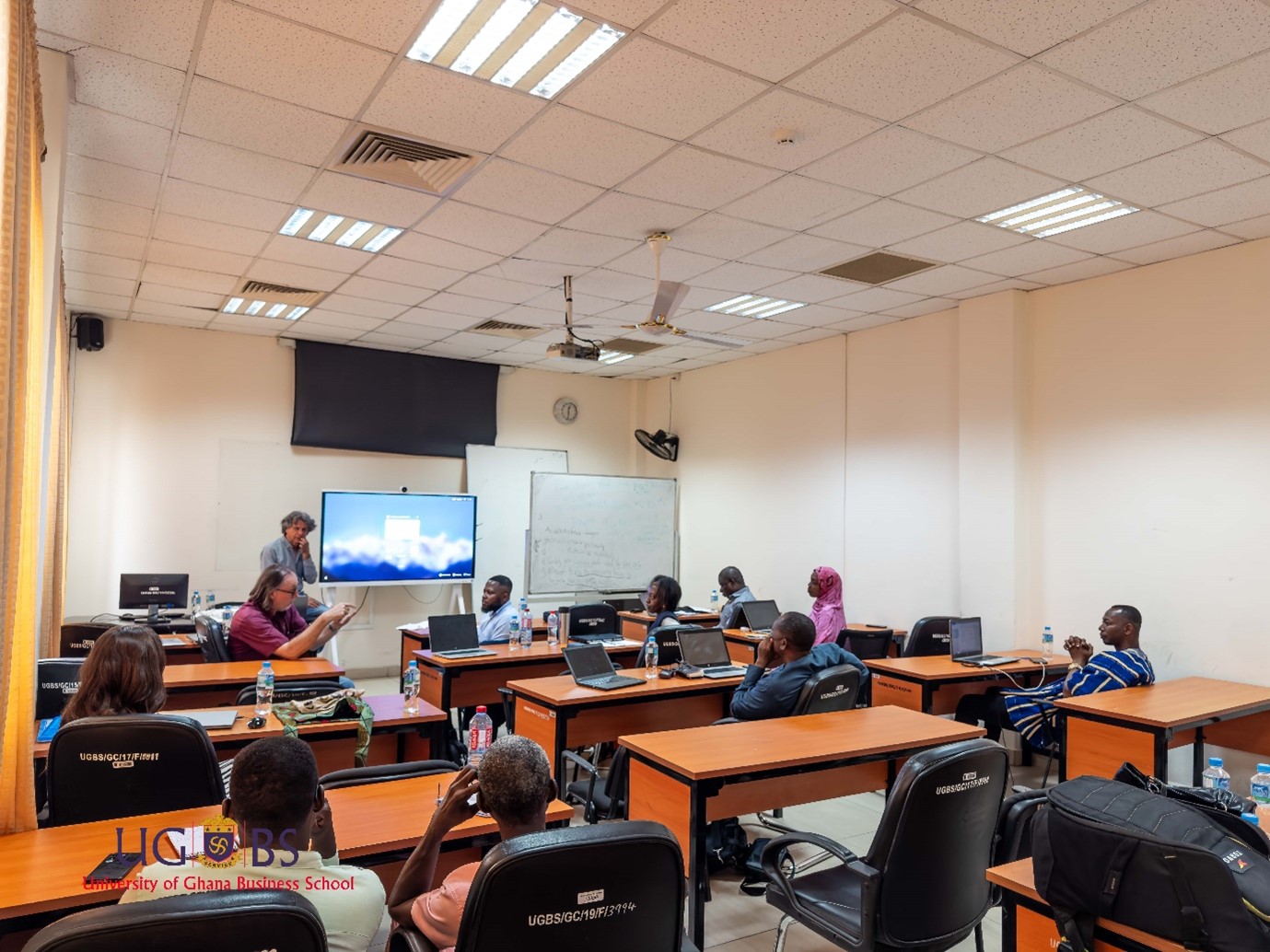
During Dr. Juan Manuel Santana Pérez’s presentation
The exchange programme also included a community engagement visit to a local slum area, where participants observed how traditional and democratically elected authorities collaborate to prevent violence and strengthen social cohesion in Ghana. The team further visited the Kwame Nkrumah Memorial Park to reflect on the legacy of Kwame Nkrumah, Ghana’s first President and a leading figure in Africa’s independence movement. In Rwanda, the team visited the reconciliation village in Kanyonza and Nyanza to interact with perpetrators and survivals of the Rwanda genocide to gather firsthand information on practical reconciliation strategies.
The initiative which seeks to strengthen the capacities of African partner universities in the field of conflict management and transformation studies. It provides staff and students with in-depth knowledge and analytical tools while encouraging critical reflection on conflict dynamics within diverse socio-political contexts. The project supports the further development and internationalisation of existing curricula, integration of updated teaching materials into academic programmes, and the delivery of joint digital learning and multimedia courses, including participatory video techniques. The outcomes of the project will be presented at two final conferences in Accra and Kigali. Upon completion, a comprehensive handbook for teachers will be produced, addressing cross-cultural, intercultural, and gender-specific perspectives in conflict studies.
The project partners are the University of Ghana and University of Business and Integrated Development Studies while the Rwandan universities are the Protestant University of Rwanda and the University of Rwanda. The European project partner is the University of Applied Sciences in Vienna and Universidad de Las Palmas de Gran Canaria, Spain. The project commenced in January 2025 and expected to end in December 2027.