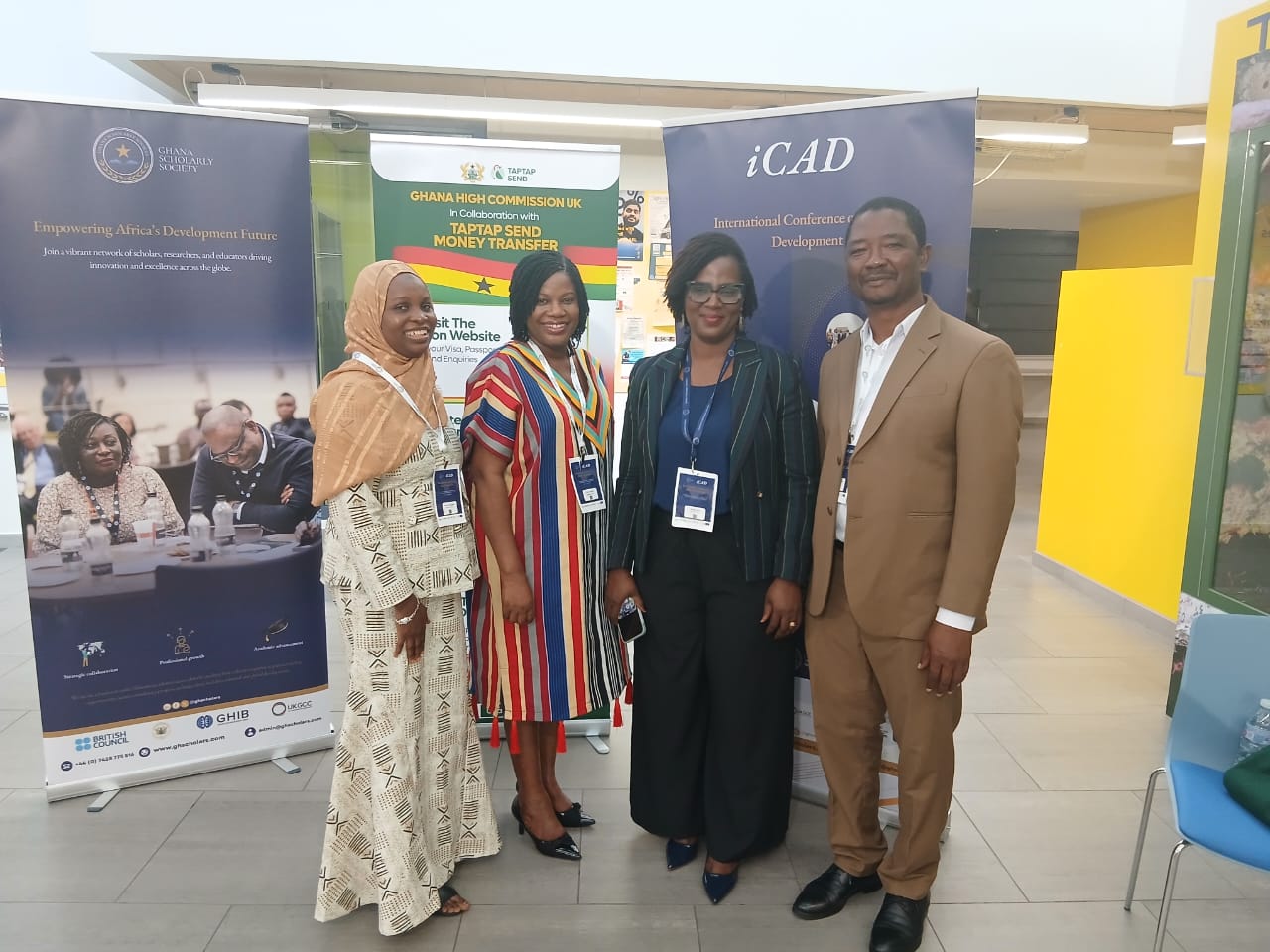
UGBS Faculty Participate in International Conference on African Development at Anglia Ruskin University, Cambridge
Four faculty members from the Department of Marketing and Entrepreneurship at the University of Ghana Business School (UGBS), participated in the International Conference on African Development (ICAD) held from 17th to 19th June 2026 at Anglia Ruskin University in Cambridge, United Kingdom. The Department was represented by Prof. Mahmoud Abdulai Mahmoud (Head of the Department), Dr. Matilda Adams, Dr. Victoria Mann, and Dr. Aidatu Abubakari. Organised under the theme “Green Transitions and Inclusive Industrialisation in Africa: Theory to Policy and Practice,” the conference brought together academics, researchers, development practitioners, and policy-focused scholars to engage in critical discussions on Africa’s sustainable development, green transitions, inclusive industrialisation, and the role of research in shaping policy and practice. Their participation reflected the school’s commitment to international research visibility, scholarly engagement, and contribution to policy-relevant conversations on Africa’s development.
Prof. Mahmoud Abdulai Mahmoud presented a paper titled “Young Consumers’ Behaviour towards Climate-Aligned SMEs in Ghana: A Qualitative Study.” The study explored young Ghanaian consumers’ inclination towards the products and services of climate-aligned small and medium-sized enterprises. Using focus group discussions, the study provided insights into how young consumers understand, evaluate, and respond to climate-conscious businesses. His presentation contributed to broader discussions on sustainable consumption, youth markets, and the role of Small and Medium-sized Enterprises (SMEs) in advancing Ghana’s green transition.
Dr. Matilda Adams shared findings from a paper she co-authored with Prof. Ernest Yaw Tweneboah-Koduah titled “Examining the Determinants of Residential Greening Intention among Urban Households in Ghana.” The paper examined the factors influencing the willingness of urban households to adopt residential greening practices. Given growing concerns around urbanisation, environmental degradation, heat stress, and declining green spaces in Ghanaian cities, the study offered timely insights into how households can be encouraged to integrate greening practices into their residential spaces. The presentation contributed to discussions on pro-environmental behaviour, sustainable urban living, and household-level climate action.
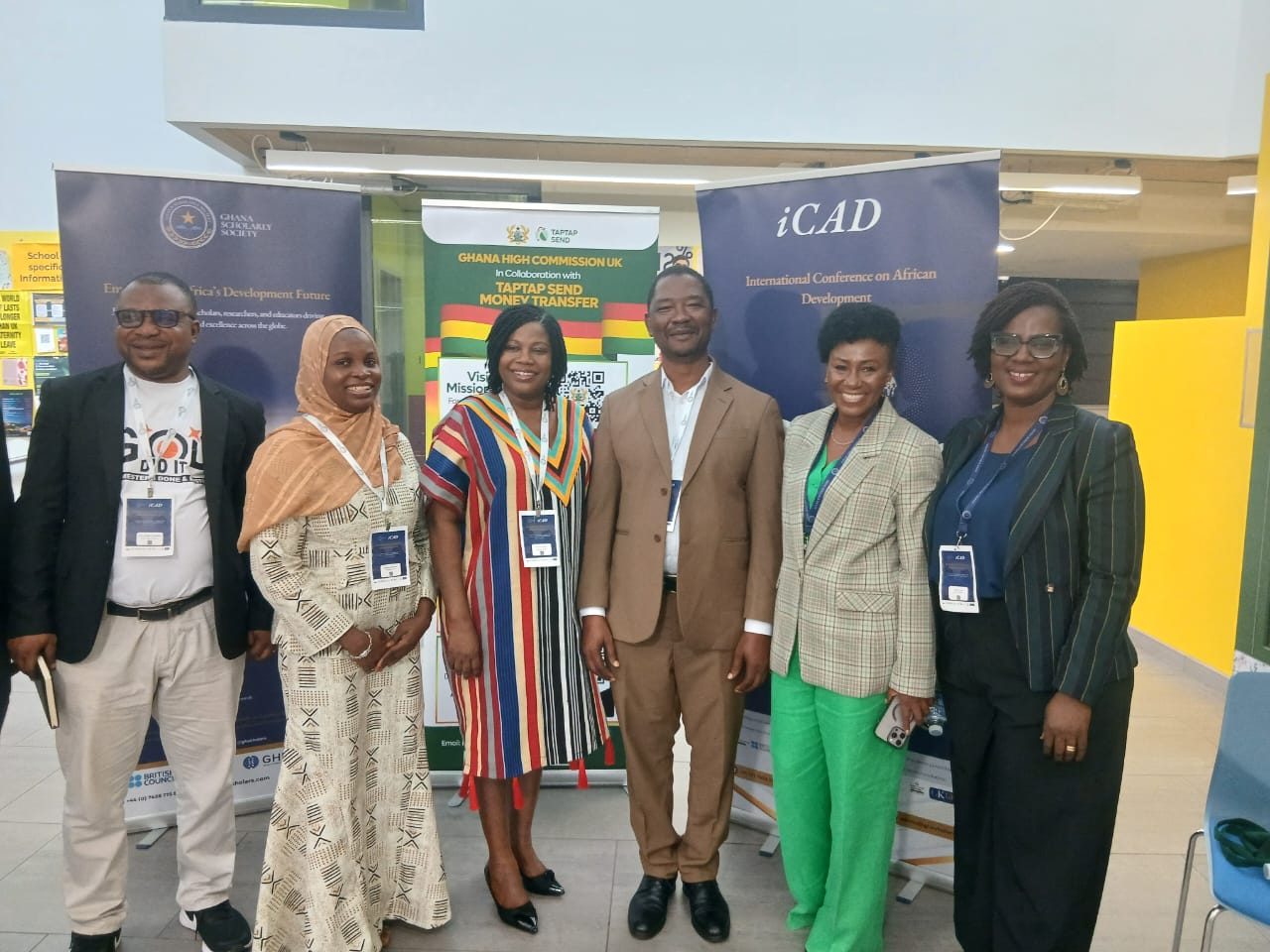
UGBS Faculty members at the International Conference on African Development (ICAD)
Dr. Victoria Mann presented a paper co-authored with Dr. Priscilla Ottuo, Dr. Matilda Adams, Mr. Ernest Tulasi, Mr. Noah Akeliasoore and Paapa Adjabeng titled “Investigating the Mediating Role of Organisational Culture on Open Innovation and Green Product Development among Manufacturing SMEs in Ghana.” The paper examined how organisational culture shapes the relationship between open innovation and green product development. The study highlighted how manufacturing SMEs can leverage innovation, knowledge sharing, and supportive organisational cultures to develop environmentally responsible products. Her presentation added an important organisational and entrepreneurial perspective to the conversation on green industrialisation in Africa.
Dr. Aidatu Abubakari presented a paper examining household attitudinal and cognitive readiness for food waste management apps in Ghana. The study focused on the extent to which households are prepared, both in attitude and knowledge, to adopt digital solutions for managing food waste. The paper addressed an important sustainability issue in the context of food security, waste reduction, and digital innovation, demonstrating how technology-based interventions can support more responsible household consumption and waste management practices. Beyond the individual paper presentations, the conference provided a platform for academic exchange, networking, and collaboration. The faculty members engaged with scholars and practitioners from different institutions and disciplines, creating opportunities for future research partnerships and interdisciplinary conversations. Their participation demonstrated the Department’s commitment to producing research that is contextually relevant, policy-oriented, and responsive to the development needs of Ghana and the wider African continent.