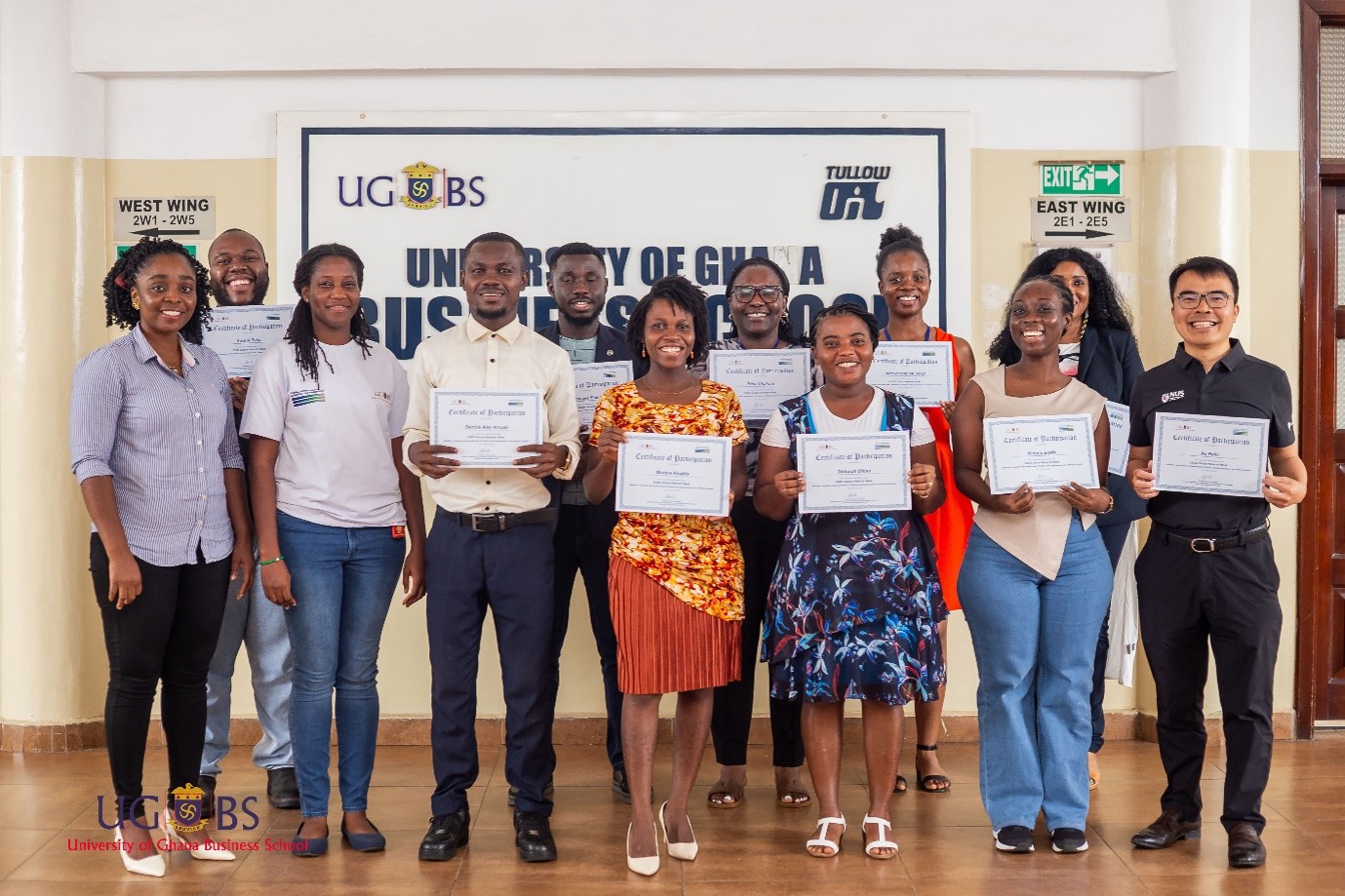
UGBS International Relations Unit Hosts the EMBA June GNW Programme
The International Relations Unit of the University of Ghana Business School (UGBS) successfully hosted the Executive Master of Business Administration June Global Network Week (EMBA June GNW) programme from 15th to 19th June 2026. The week-long programme, organised under the leadership of Prof. Elikplimi K. Agbloyor and the International Relations Unit team, brought together participants from the United States of America, Zambia, China and Ghana for an engaging academic and cultural experience focused on inclusion, equity, leadership and governance. This Global Network for Advanced Management (GNAM) programme was facilitated by Dr. Millicent Wiafe-Kwagyan, a lecturer at UGBS, who welcomed participants during the opening session and introduced them to the GNAM programme.
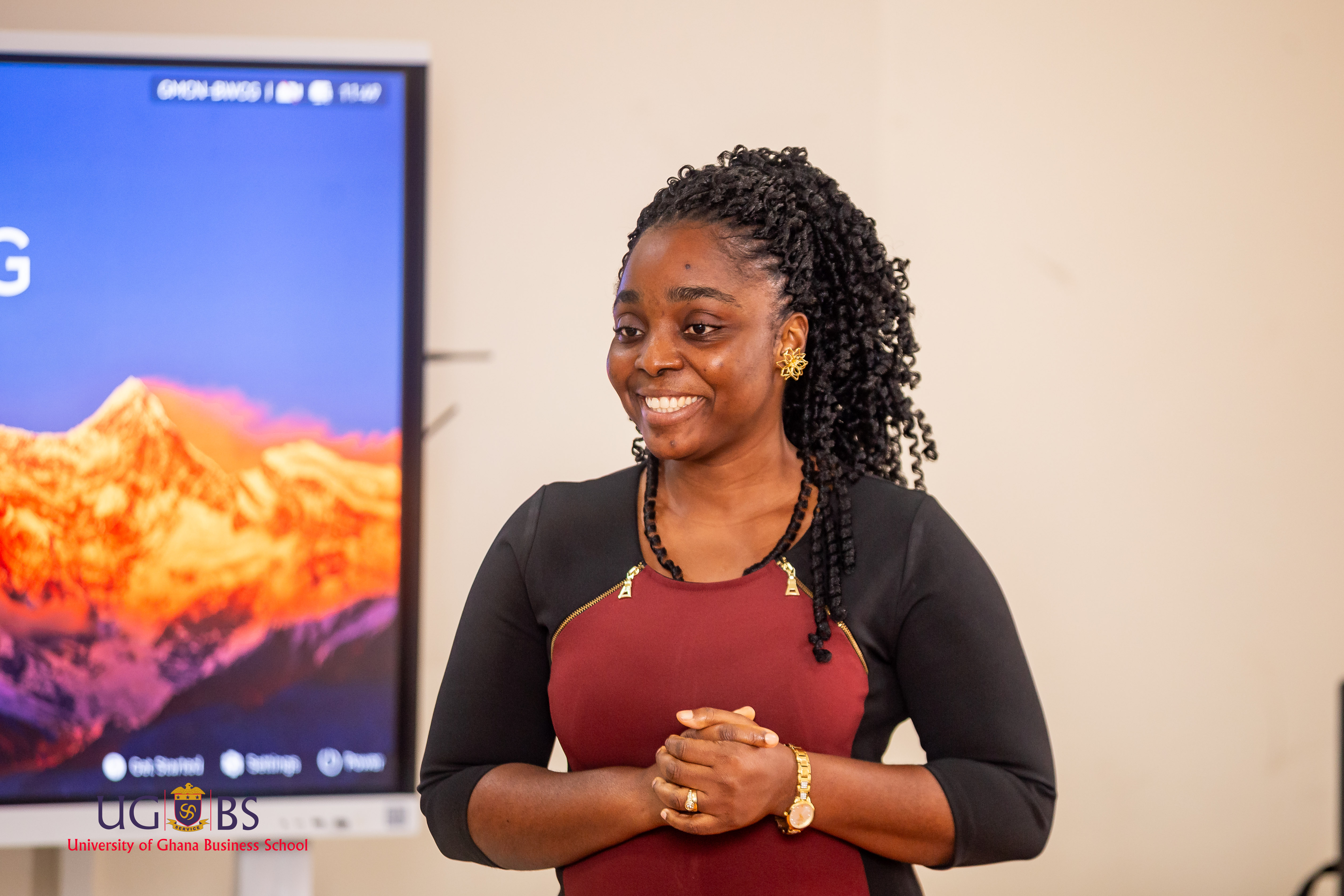
Dr. Wiafe-Kwagyan Welcoming Participants
Dr. Wiafe-Kwagyan provided participants with an overview of Ghana, highlighting its sixteen regions, political stability and notable tourist attractions. She also introduced the University of Ghana as the first university in Ghana and described UGBS as one of the leading business schools in West Africa. Participants were taken through the seven academic departments within UGBS and were taught a few native expressions to assist them in interacting with Ghanaians during their stay. She encouraged participants to immerse themselves in Ghana’s culture and experience the country’s hospitality, noting that Ghana remains one of the most peaceful countries in Africa.
As part of the academic sessions, Dr. Wiafe-Kwagyan delivered a presentation on “Understanding Inclusion and Leadership: Concepts and Frameworks.” Through interactive discussions, participants shared personal experiences to deepen their understanding of inclusion and the role of leadership in fostering inclusive environments. She identified access, participation, empowerment and belonging as the four pillars of inclusion and guided participants through discussions on diversity, equity and inclusion from an African perspective. The session explored the importance of inclusion in driving organisational growth and established that inclusive leadership improves team performance, fosters innovation and builds trust within organisations. Dr. Wiafe-Kwagyan also discussed barriers to inclusion, categorising them into individual, organisational and structural barriers. Through practical organisational scenarios, participants examined the challenges associated with exclusion and gained a greater appreciation for the importance of inclusive leadership in contemporary institutions.
The session continued with discussions on organisational leadership and equity models. Participants examined the distinction between equality and equity, learning that equality ensures everyone receives the same resources, while equity focuses on distributing resources according to individual needs. They also studied various models of fairness, including the Social Justice Leadership Model, Transformational Leadership and Equity, and the Equity Maturity Model. Further discussions centred on key indicators for measuring equity within organisations, including gender representation, promotion rates, pay equity and employee satisfaction. Participants were encouraged to recognise equity as a core organisational value and work towards embedding it into organisational culture.
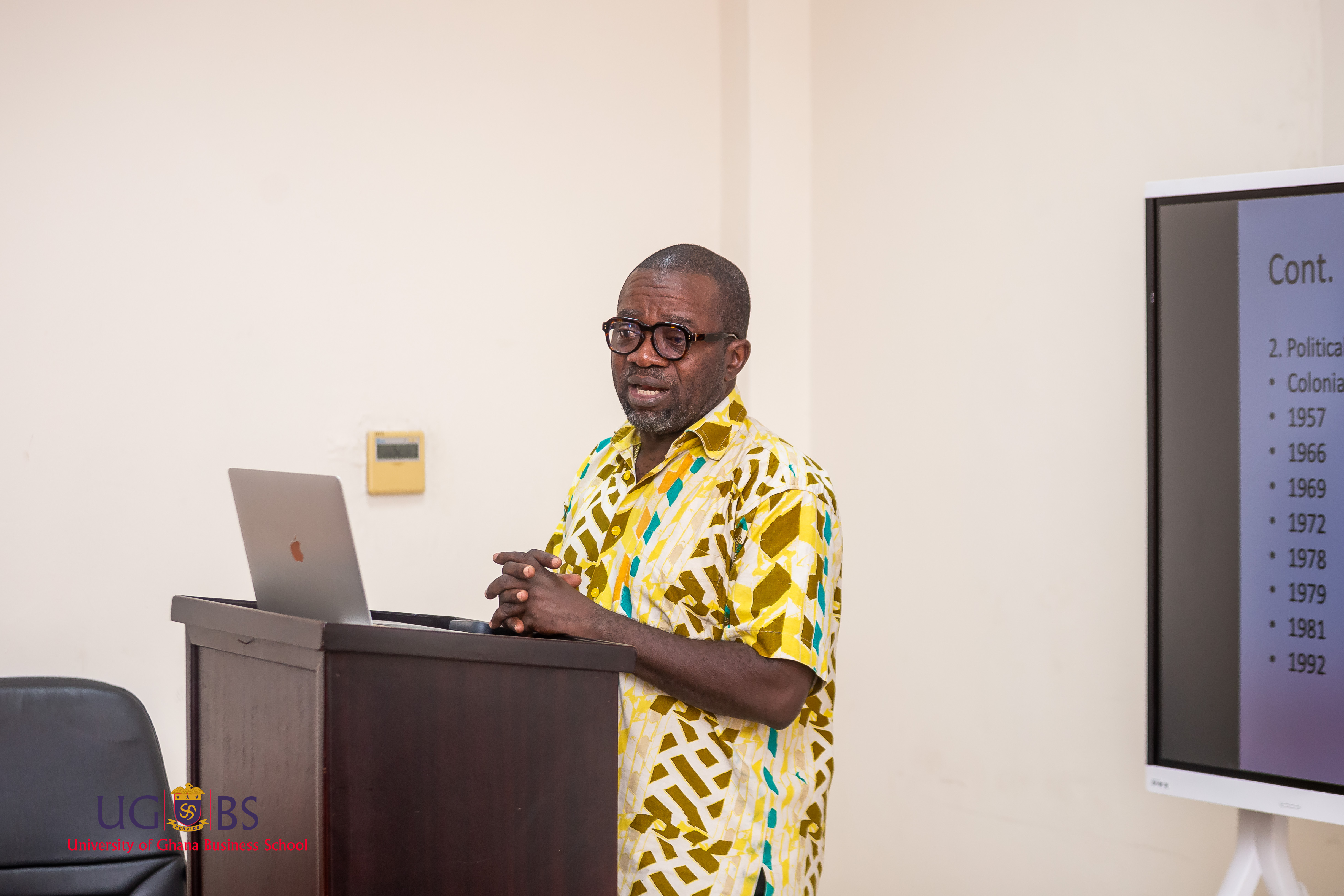
Dr. Kwame Asah-Asante facilitating one of the sessions
Another resource person, Dr. Kwame Asah-Asante of the Department of Political Science, University of Ghana, facilitated a session on “Political Leadership, Power and Representation in Ghana.” Dr. Asah-Asante traced Ghana’s political development from the pre-colonial era, discussing indigenous tribes and traditional governance systems among the country’s major ethnic groups before colonial rule. He examined issues relating to the representation of women in Parliament, legislative institutions, the judiciary, vulnerable groups and the executive arm of government. Discussions also focused on uneven representation, gender disparities in political appointments, associated implications, prevailing challenges and possible pathways for improvement. He further addressed the importance of accountability in governance, stressing the need for public officials to remain accountable to citizens and continually renew their mandate through effective service delivery. He highlighted the importance of allowing institutions of accountability to function independently and encouraged participants to strengthen civil society engagement to promote democratic governance.
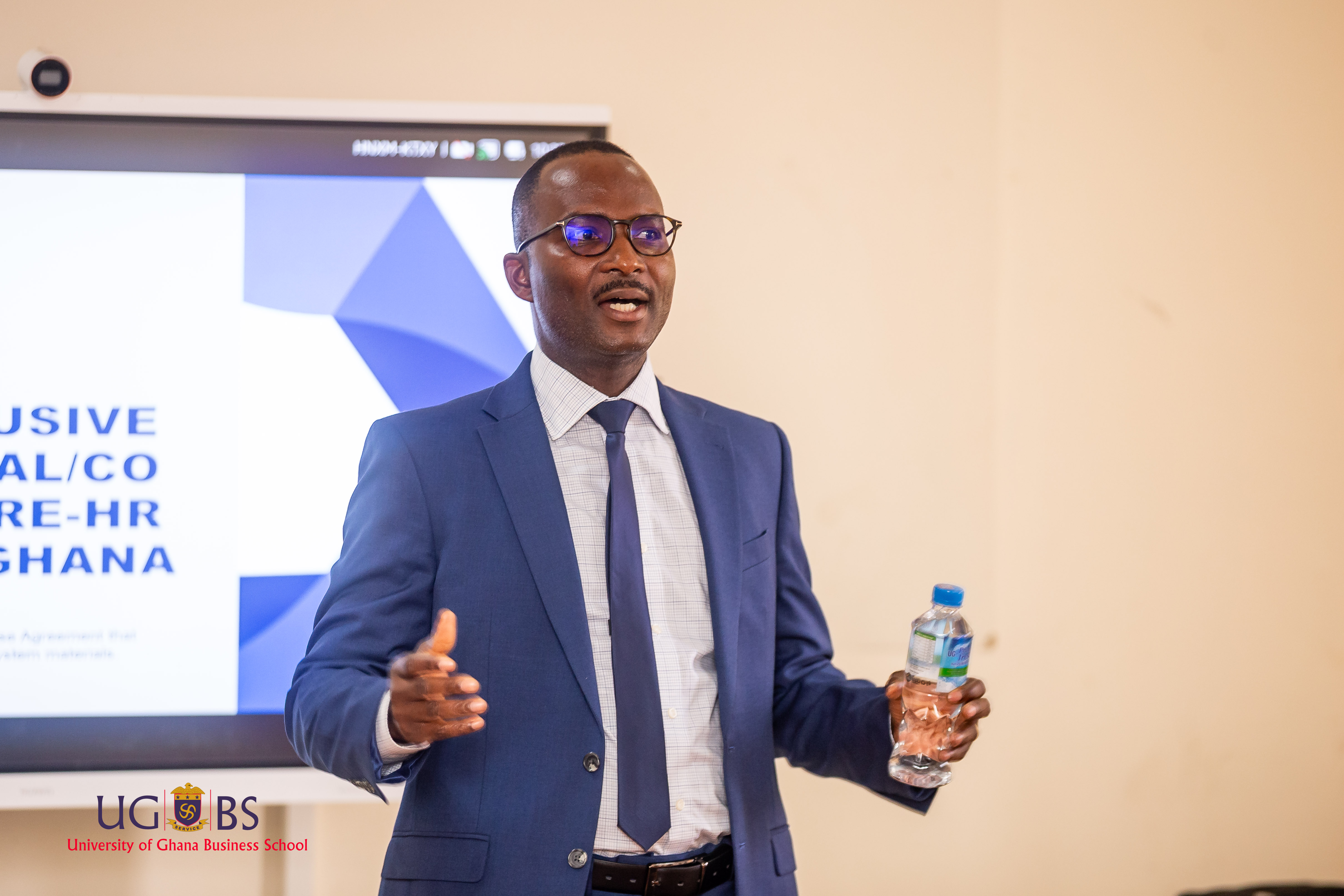
Mr. Mark Kumordzi-Ablo engaging participants
Participants also benefited from a presentation by Mr. Mark Kumordzi-Ablo, Senior People and Culture Business Partner at Stanbic Bank Ghana, on “Building Inclusive Organisational/Corporate Governance and Cultural Practices in Ghana.” Mr. Kumordzi-Ablo discussed the global state of gender equity and shared insights from Ghana’s 2025 Board Diversity Index, noting that women occupied 25% of board seats among listed companies in Ghana, representing a 1% increase from 2024. He highlighted efforts by multinational organisations to increase female representation and promote inclusive workplace practices. According to him, an inclusive mindset is the knowledge, skills and abilities required to create work environments where individuals are treated fairly and respectfully, have equal access to opportunities and resources, and experience a sense of belonging. Such environments, he explained, promote collaboration, understanding and a shared sense of purpose across diverse boundaries while contributing to organisational success.
The session examined various forms of diversity, including legacy diversity, experiential diversity and thought diversity, and explored their relevance to organisational effectiveness. Participants learned that inclusion occurs when organisational cultures recognise and appreciate the talents, skills and perspectives of all individuals, making them feel valued, supported and welcomed. Mr. Kumordzi-Ablo explained the importance of leadership commitment, executive sponsorship, unconscious bias training, mentorship and psychological safety in achieving diversity and inclusion goals. He also discussed conscious and unconscious bias, their manifestations and strategies for addressing them within organisations. Additional diversity and inclusion concerns such as impostor syndrome, invisible disabilities, cultural taxation and cover-up behaviours were explored. The session further highlighted workplace solutions that support inclusion, including caregiver support options, flexible work policies, paid leave arrangements, quiet or prayer rooms, lactation rooms and culturally inclusive dress codes. Mr. Kumordzi-Ablo noted that many employees increasingly prioritise workplace flexibility alongside compensation. Participants were encouraged to remain open to acquiring new skills beyond their formal educational backgrounds to enhance career growth and adaptability.
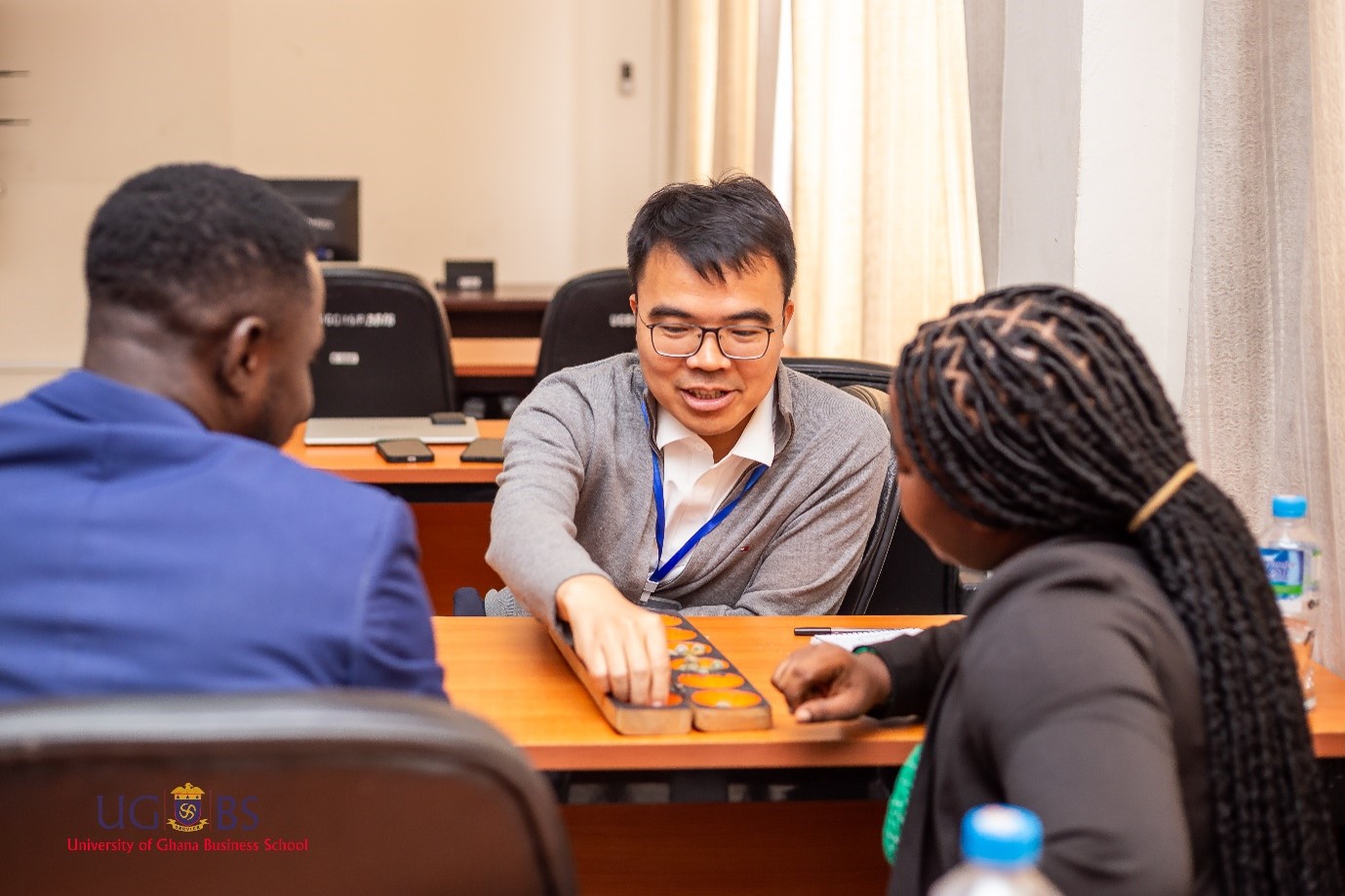
Some participants learning indeginuos Ghanaian games
Another presentation was delivered by Mr. Precious Gyau, SPHRi, HR Consultant, on “Diversity, Equality, Inclusion and Belonging: A Strategic Advantage.” Mr. Gyau explained that the twenty-first-century business environment is characterised by rapid technological advancements, demographic shifts, global competition, evolving stakeholder expectations and increasing organisational complexity. Within this context, Diversity, Equity, Inclusion and Belonging (DEIB) has emerged as a critical strategic capability. He noted that while diversity initiatives were historically driven by legal compliance and social justice considerations, organisations now increasingly recognise DEIB as a key driver of innovation, organisational performance, talent management, customer engagement and organisational resilience. Consequently, DEIB has evolved from being primarily an ethical concern to a strategic business imperative. The session explored approaches to measuring DEIB as a strategic value. Participants learned about input metrics, process metrics, outcome metrics, and impact metrics. Mr. Gyau encouraged participants to treat DEIB as a strategic imperative, adapt inclusion initiatives to local realities, focus on meaningful measurement, draw upon indigenous knowledge and values, make leadership commitment visible and measurable, and pursue systemic organisational change.
As part of the experiential learning component of the programme, participants visited the Parliament of Ghana to observe parliamentary proceedings and gain a deeper understanding of the role Parliament plays in promoting inclusive governance, representation and equity within political institutions. The cohort also paid a courtesy call on the Ministry of Gender, Children and Social Protection, where officials engaged participants on the Ministry’s mandate and its role in advancing gender equality, disability inclusion and social protection initiatives in Ghana. Discussions highlighted the Ministry’s efforts to improve the wellbeing of vulnerable populations and ensure the full participation of all citizens in national development. Participants learned about the Persons with Disabilities Act and its role in promoting inclusion in national development processes, policy design and decision-making. The team also discussed the Affirmative Action Act and its contribution to promoting gender equity in both public and private sector workplaces. Officials explained that Ghana’s social protection framework incorporates shock-responsive mechanisms that enable the rapid deployment of resources during crises such as economic downturns, natural disasters and public health emergencies. These mechanisms strengthen system resilience and ensure that vulnerable populations receive timely support when needed.
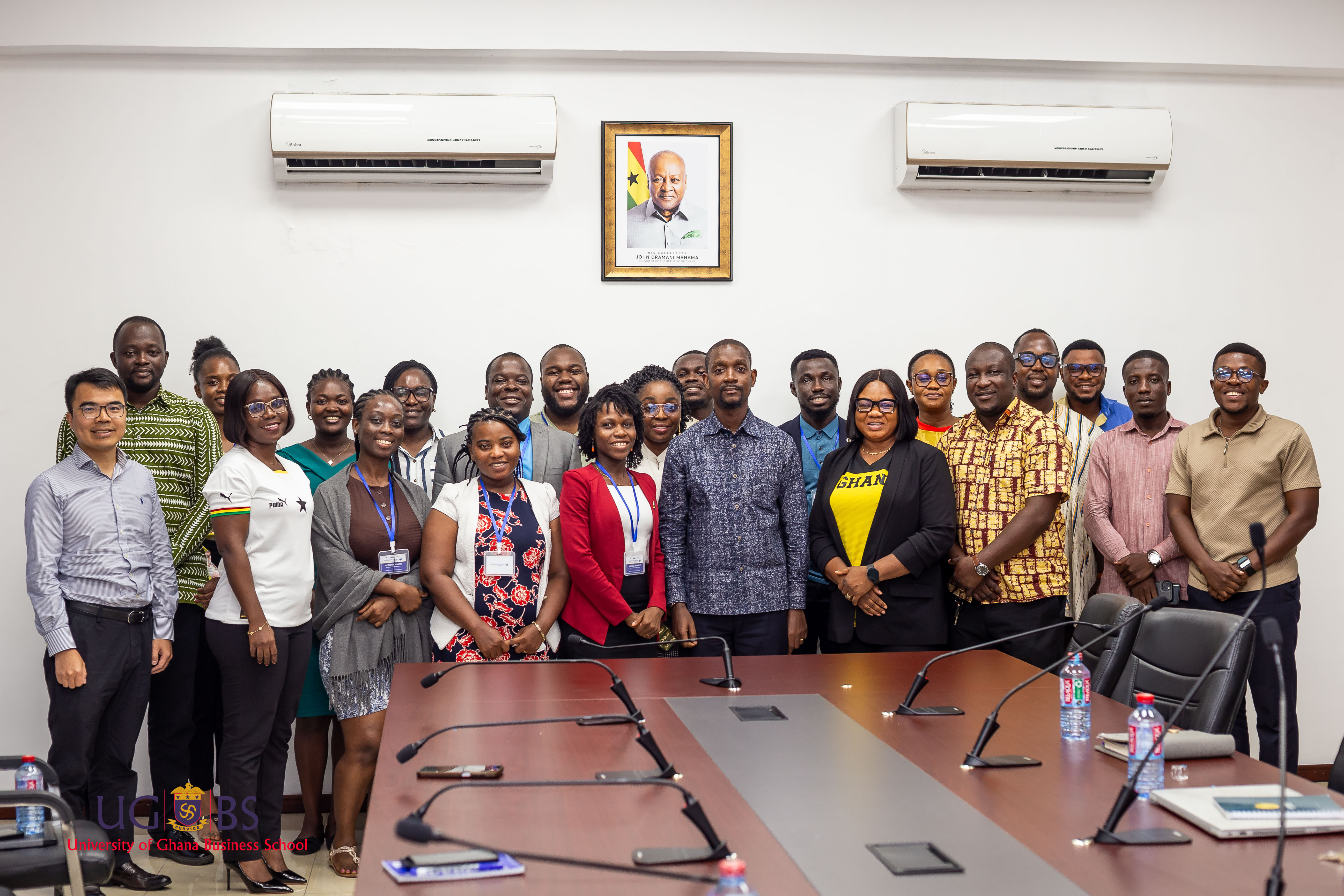
Participants at Ministry of Gender, Children and Social protection
To deepen their appreciation of Ghana’s cultural heritage, participants visited the Kwame Nkrumah Memorial Park and Mausoleum, the Accra Arts Centre and Makola Market. These visits provided opportunities to learn about Ghana’s history, arts, culture and significant historical events that have been preserved for future generations. Another day of the programme featured reflection sessions moderated by Dr. Wiafe-Kwagyan. Participants engaged in group discussions and presentations, sharing experiences, lessons learned and key takeaways from the programme’s academic sessions and site visits. The programme concluded with a certificate presentation ceremony to recognise participants’ successful completion of the course. To round off the experience, participants embarked on an educational tour at the in the Greater Accra Region. During the visit, they explored the reserve’s natural environment, observed wildlife, learned about its historical significance and participated in hiking activities.
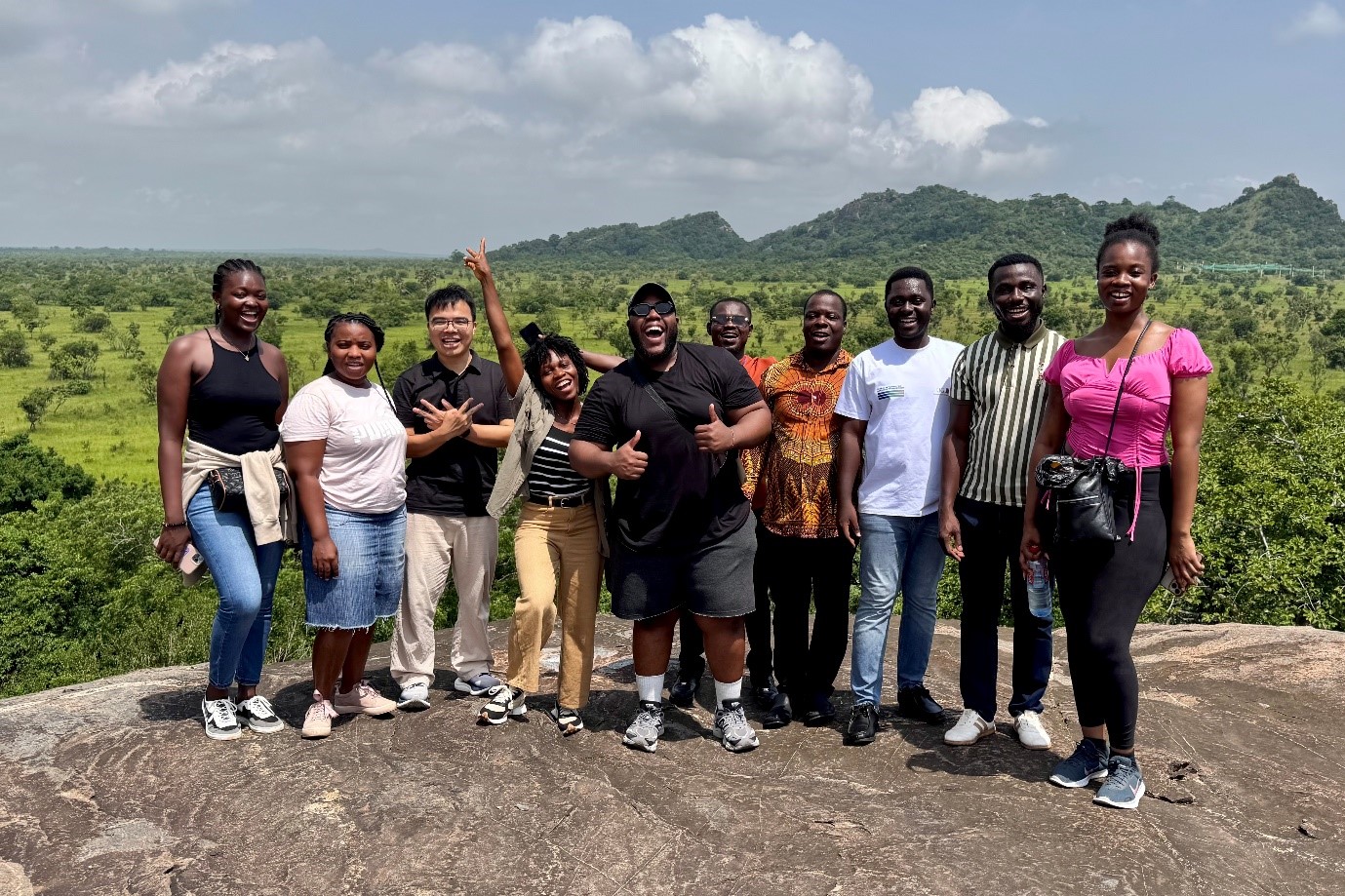
Hiking at the Shai Hills Resource Reserve