UGBS PhD Programmes Unit Research Seminar Examines Exchange Rate Volatility and Ghana’s Used Vehicle Parts Trade
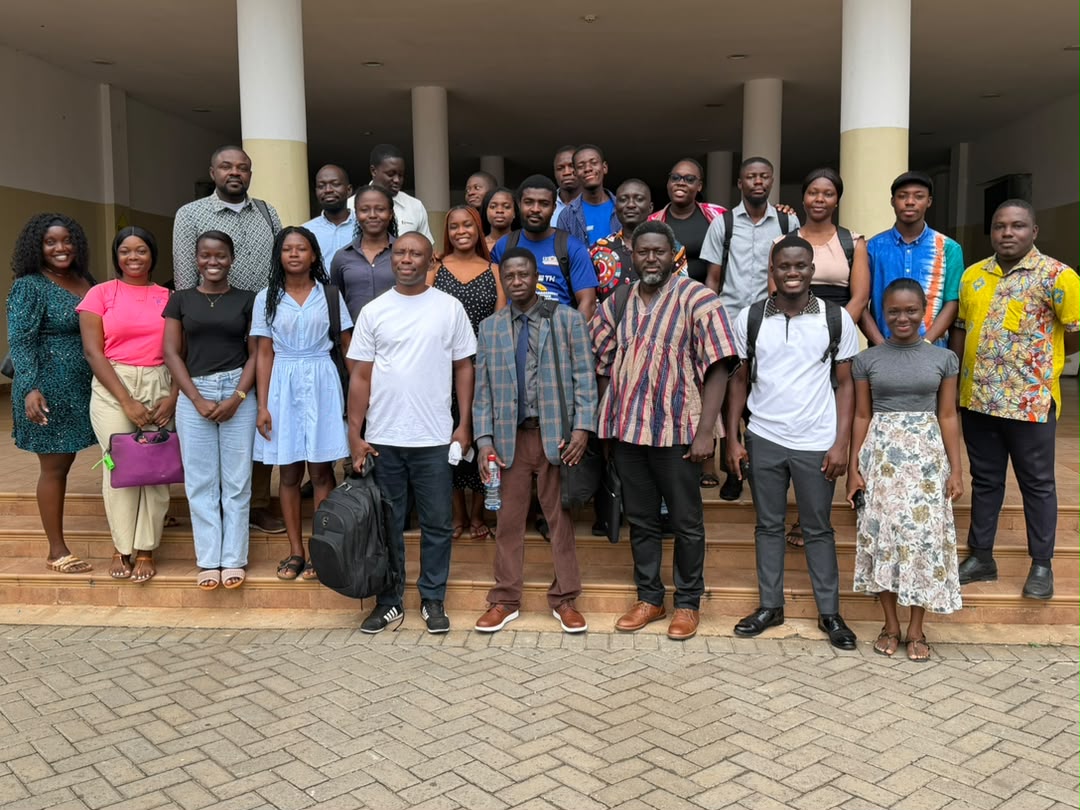
The PhD Programmes Unit of the University of Ghana Business School (UGBS) hosted a Research Seminar on 22nd July 2026, at the UGBS Graduate Building. The seminar was coordinated by Dr. Baah Kusi Aye of the Department of Finance and brought together MPhil and PhD candidates for an engaging session on contemporary research and doctoral scholarship. The seminar featured Prof. Alhassan Ndekugri, Associate Professor of Global Business and Transportation at SUNY Maritime College, State University of New York, USA. He presented a study titled “Investigating the Effects of Foreign Exchange Rate Fluctuation on Ocean Shipment and Sales of Used Vehicle Parts in the Cities of Accra and Kumasi.”
Drawing on both primary and secondary data, Prof. Alhassan Ndekugri examined how exchange rate movements influence the importation and pricing of used vehicle parts in Ghana’s two largest automobile spare parts markets. His presentation highlighted the implications of currency volatility for importers, traders, and consumers, while demonstrating the practical relevance of research to business and public policy. The presentation sparked an insightful discussion as research candidates critically engaged with the study’s design, methodology, and findings. Participants first sought clarification on the study’s delimitations, emphasising the importance of clearly defining the geographical, product, and industry boundaries within which the findings should be interpreted. Attention then shifted to the analytical approach. Participants asked whether regression analysis had been employed to establish the relationship between exchange rate fluctuations and the outcomes under investigation, and whether statistical software such as STATA had been used in the estimation process. These questions underscored the emphasis placed on methodological rigour and appropriate econometric techniques in doctoral research.
One of the most thought-provoking discussions centred on price behaviour in Ghana’s used vehicle parts market. Participants questioned why retail prices often rise quickly when the Ghana cedi depreciates but rarely decline when the currency strengthens. The discussion explored possible explanations, including inventory acquired at previous exchange rates, expectations of future currency depreciation, and limited competition among dealers holding scarce stock. The exchange highlighted the phenomenon of asymmetric exchange rate pass-through, where increases in import costs are transmitted to consumer prices more readily than decreases. The seminar also addressed issues relating to data quality and research validity. Participants expressed concern about the relatively low response rate to the questionnaire survey and discussed its potential implications for non-response bias and the statistical power of empirical analyses.
Beyond the specific study, the seminar provided valuable learning opportunities for MPhil and PhD candidates preparing for their research journeys. The discussions illustrated the importance of defining clear research boundaries, selecting appropriate empirical methods, developing theoretically grounded explanations for observed market behaviour, and responding confidently to methodological critiques. Dr. Baah Kusi in his closing remarks encouraged students to participate fully in the research workshops organised by the PhD Programmes Unit.