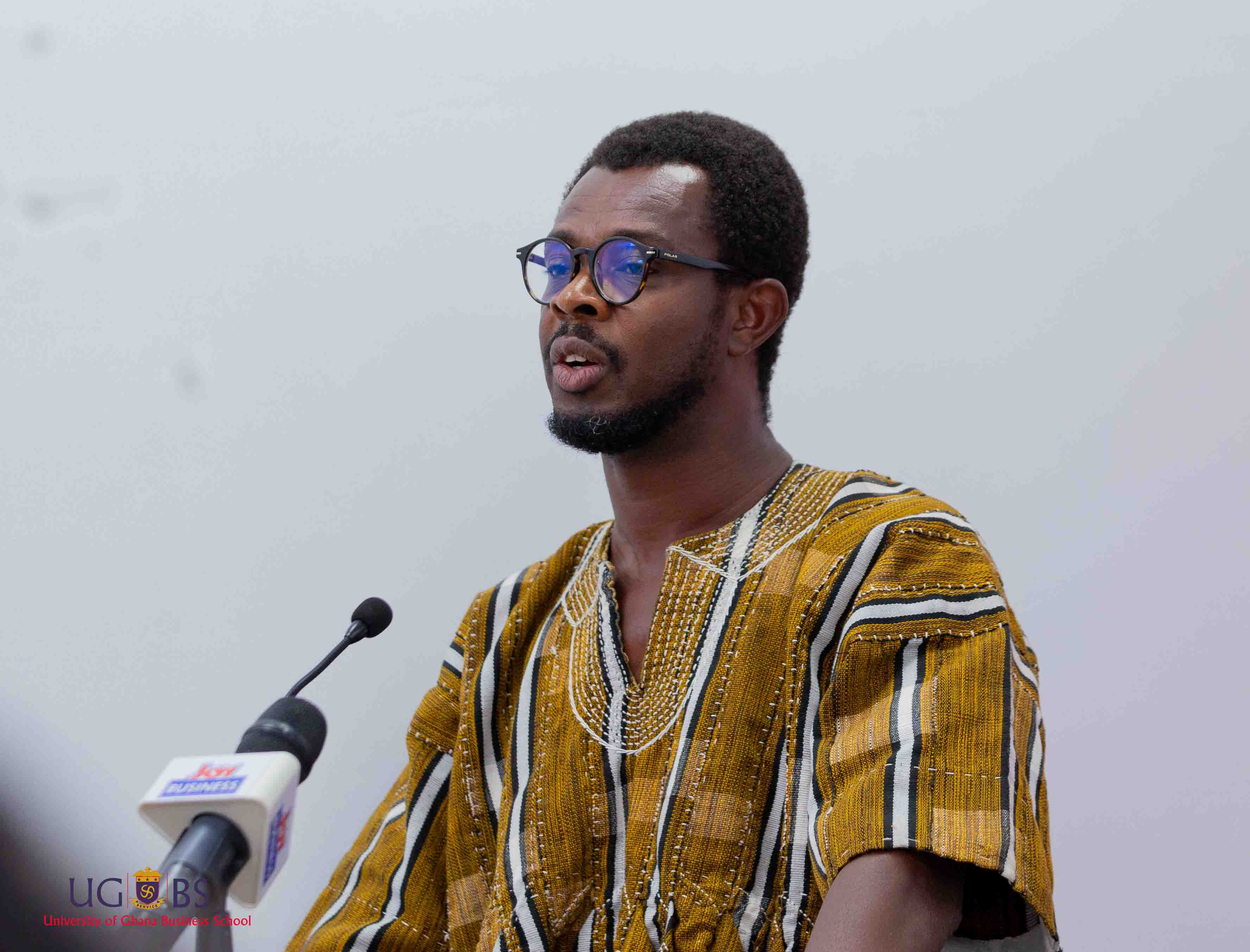
Prof. Paul Alagidede of UGBS Delivers Public Lecture on Reconstructing Ghana’s Monetary Architecture
The Bank of Ghana Chair for Finance and Economics at the University of Ghana (UG), Prof. Paul I. Y. Alagidede, has delivered a public lecture on “Rich in Gold, Poor in Liquidity: Omnidox and the Reconstruction of Ghana’s Monetary Architecture”, at the Centre for Policy Scrutiny (CPS) on 19th January 2026. The lecture was organised by the Centre as part of its public policy engagement series, sought to shed light on Ghana’s persistent macroeconomic challenges and explore alternative pathways for sustainable economic development. Prof. Alagidede explained that his work is aimed at providing a conceptual and policy framework for individuals and institutions with the capacity to contribute to national development.
In his presentation, Prof. Alagidede examined Ghana’s economic development trajectory since independence through three broad stages of economic thought: orthodox, heterodox and Omnidox economics. According to him, while the orthodox and heterodox approaches have contributed to some level of progress, neither has succeeded in fundamentally transforming the economy. This, he argued, has resulted in what he described as the “paradox of scarcity in the midst of progress”, an economy that records growth on paper but remains chronically constrained by liquidity shortages.
He further discussed alternative development pathways for Ghana, emphasising the need to harness domestic capital, natural wealth and institutional reforms to strengthen economic resilience. Prof. Alagidede noted that Ghana’s development challenge is deeply rooted in the limitations of existing knowledge systems, calling for a reimagination of development beyond conventional economic thinking. He advocated for a broader measurement of economic activity, urging the country to account for unpaid care work, domestic labour and minor informal incomes as part of national output to expand the Gross Domestic Product (GDP). He also explained that “gold” should be understood beyond the mineral resource, encompassing red, yellow and green wealth, representing the country’s full spectrum of natural and productive assets that serve as stores of national value.
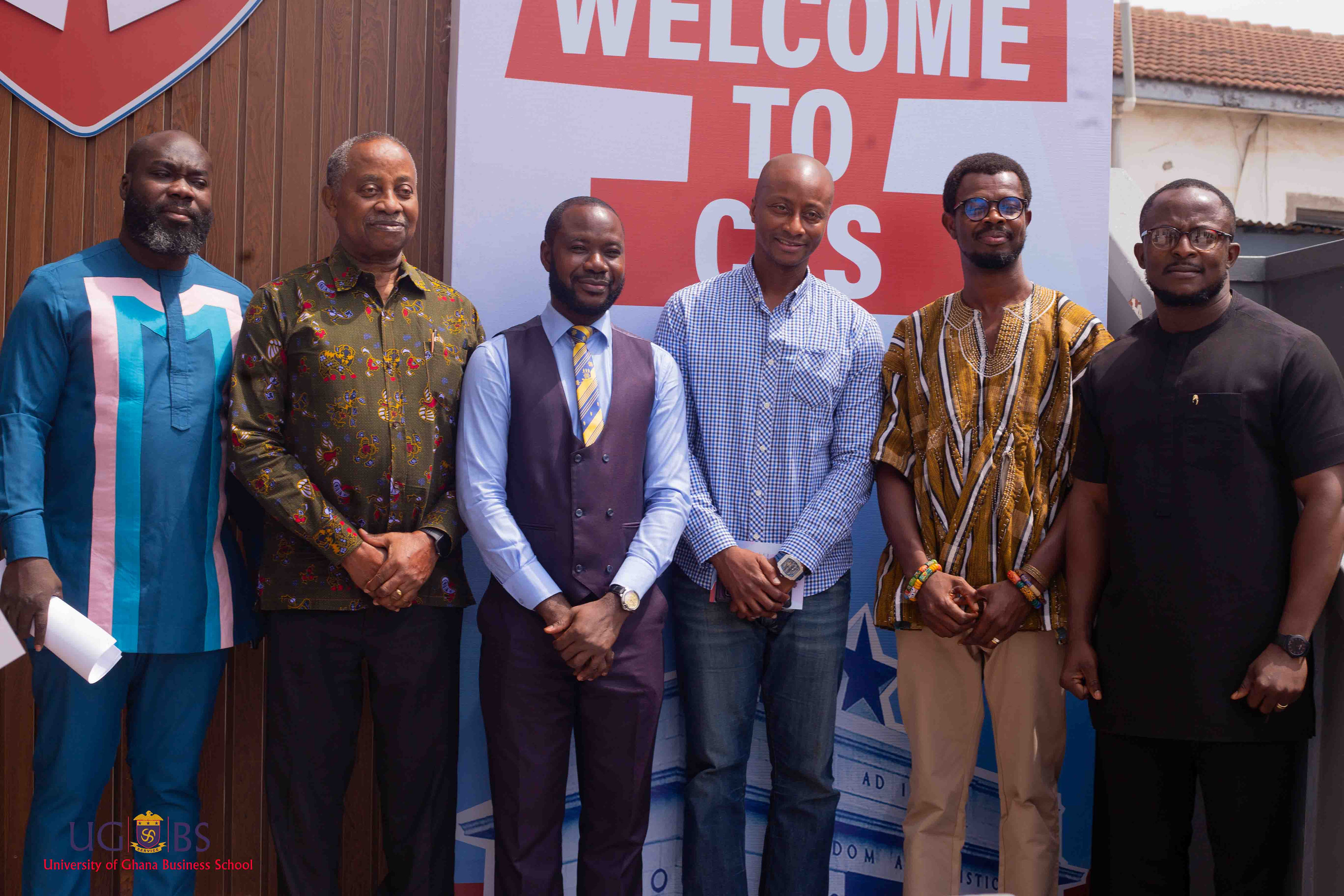
Group picture taken after the lecture
Prof. Alagidede outlined key policy levers for building a sovereign monetary and financial architecture, including the need for the Ghana Statistical Service to move beyond the “visible canopy” of formal market transactions to capture the deeper roots of the economy, estimated to be about 21% larger than official records, by incorporating unpaid care work, the informal economy and indigenous knowledge systems. He further called on the Bank of Ghana to shift from “importing credibility” through external programmes to anchoring monetary credibility in domestic assets, while urging the Ministry of Finance to move beyond managing fiscal flows such as taxes and debt towards managing the national balance sheet.
Concluding his lecture, Prof. Alagidede stated that Ghana stands at a crossroads “where Indigenous Intelligence meets Global Algebra.” He noted that initiatives such as Natural Capital Treasuries and Sovereign Tokenisation represent more than accounting reforms, but a reclaiming of national sovereignty over wealth. He stressed that Ghana is not a poor nation, but rather “a wealthy nation in a temporary state of amnesia,” calling on policymakers and citizens to recognise the country’s vast resources, including the over US$10 billion harvested in the previous year, and declare an end to what he termed the era of perceived poverty.
In his remarks, the Executive Director of the Centre for Policy Scrutiny, Dr. Adu Owusu Sarkodie, described CPS as a new generation think tank dedicated to promoting high-quality research and advocacy to influence public policy in Ghana. Since its establishment five months ago, he noted that the Centre has conducted major policy reviews on the 24-hour economy, the 2026 Budget Statement and Economic Policy of the Government of Ghana, and terrorism in the Middle East and Africa.
Dr. Sarkodie explained that the Centre complements its research reviews with public fora to solicit ideas from key stakeholders and contribute meaningfully to national policy discourse. He indicated that the lecture marked the fourth event in the Centre’s public engagement series, noting that the forum on Rich in Gold, Poor in Liquidity provided an important platform to brainstorm solutions to Ghana’s development challenges. He further commended Prof. Alagidede for his scholarly contribution, describing the lecture and the accompanying article as offering a more structural diagnosis of Ghana’s macroeconomic vulnerabilities and enriching ongoing conversations on economic reform and development.
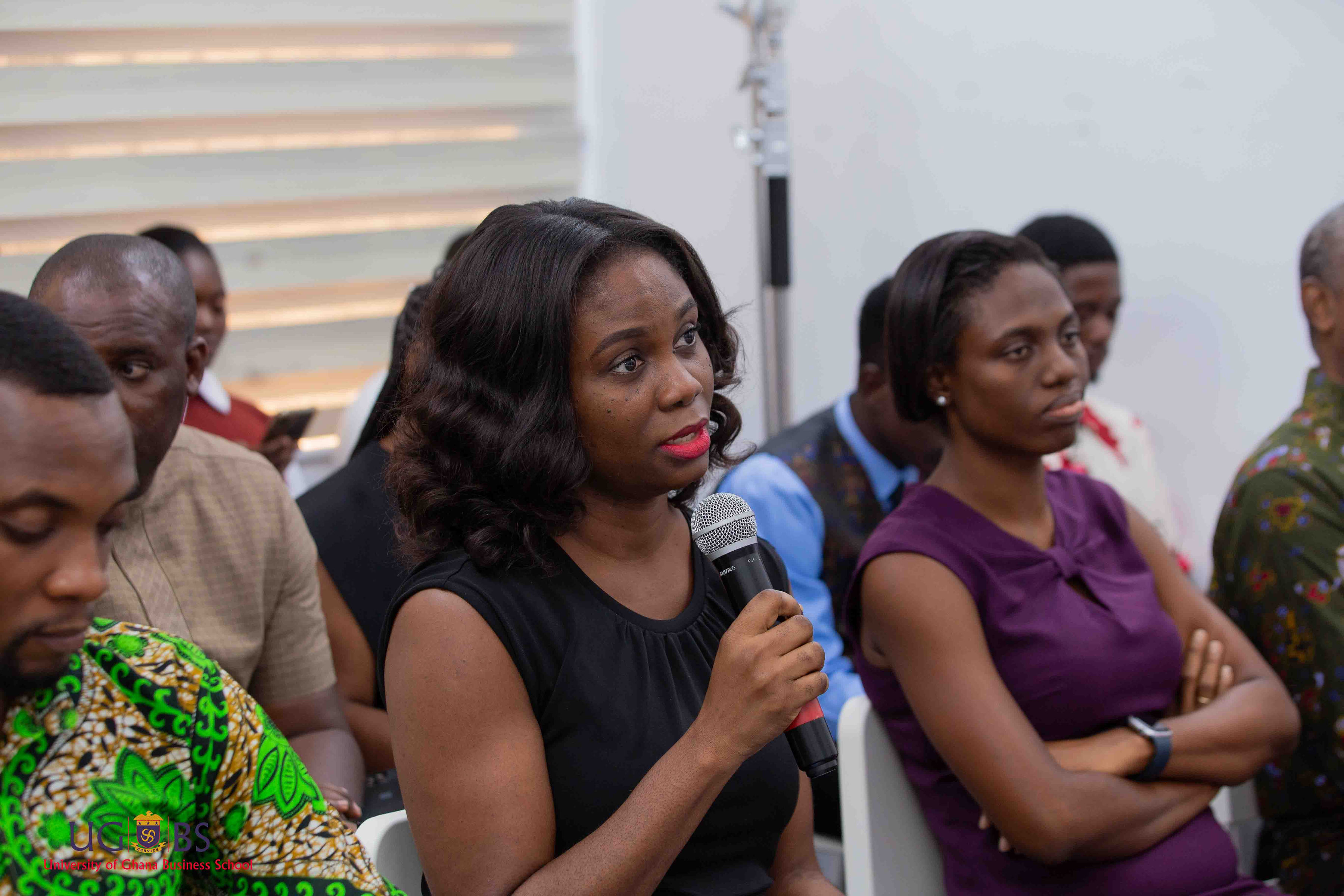
Some participants at the lecture