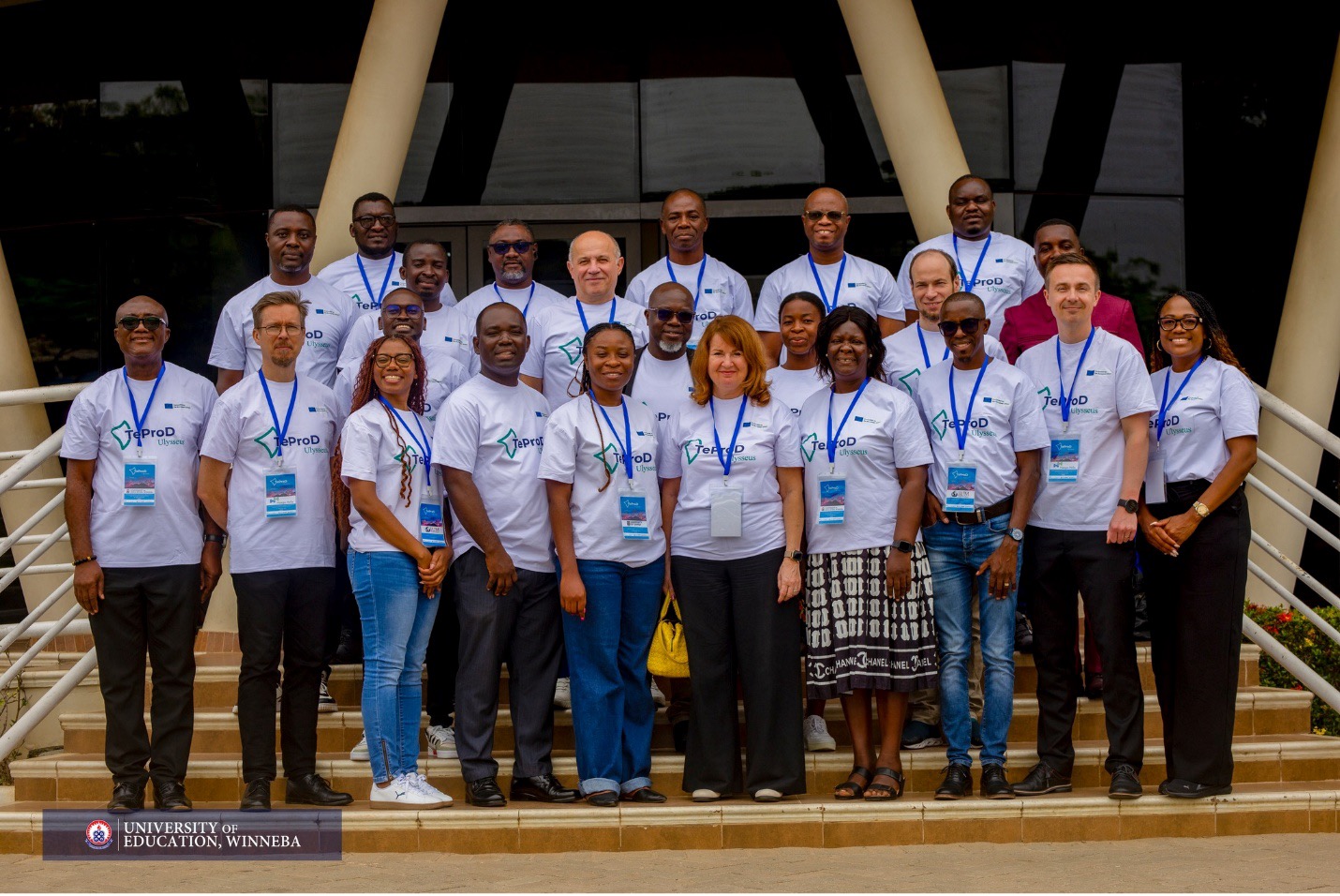
UG TeProD project team attends 3rd TeProD Meeting at UEW
The TeProD Project held its 3rd Project Meeting (TPM) at the University of Education, Winneba (UEW), from 8 to 12 December 2025, with strong participation from all partner institutions, including a delegation from the University of Ghana. The project aims to develop the professional competencies of both Higher Education Institution (HEI) teachers and students in support of the Twin Transition (digital and green transformation).
UEW, a key partner in the project, hosted consortium members at its North Campus Students’ Centre for five days of intensive meetings, workshops, and field activities. The University continues to play a central role in the TeProD Project by leading Work Package 4 (Training and Piloting) and coordinating several critical activities. These include digitalisation and green transition co-creation workshops, the development of personal development roadmaps, stakeholder training, collaborative twin-transition initiatives, and the organisation of webinars and seminars.
Participation at the 3rd TPM reflected broad engagement across the partnership, with three (3) representatives from HHUAS, two (2) from the Technical University of Košice (TUKE), Slovakia, six (6) from the International University of Management (IUM), and four (4) (Prof. Owusu Acheampong, Dr. Samuel Atarah, Dr. Abeeku Sam Edu, Victoria Dzifa Oklu from the University of Ghana (UG). The meeting reviewed progress across project activities, facilitated meaningful interactions among partners, enabled the sharing of new knowledge with students and colleagues, and set strategic directions for the next phase of implementation.
Proceedings officially opened on Monday, 8 December, with welcome remarks from UEW Management, led by Prof. Stephen Jobson Mitchual, alongside contributions from Prof. Enoch Sam, Head of the Directorate of Research, Innovation and Development (DRID). The opening session featured a keynote address by Prof. Delli Kwasi Drake titled “Teaching in the Digital-Green Era: Harnessing the Twin Transition in Teacher Education.” This was followed by presentations from partner institutions reporting on project activities and progress to date. Dr. Samuel Atarah, the Project Manager for the University of Ghana (UG) team, provided updates on the work packages, highlighting both completed and pending activities. The Project Administrator, Ms. Victoria Dzifa Oklu, shared institutional experiences and reported on the team’s overall progress.
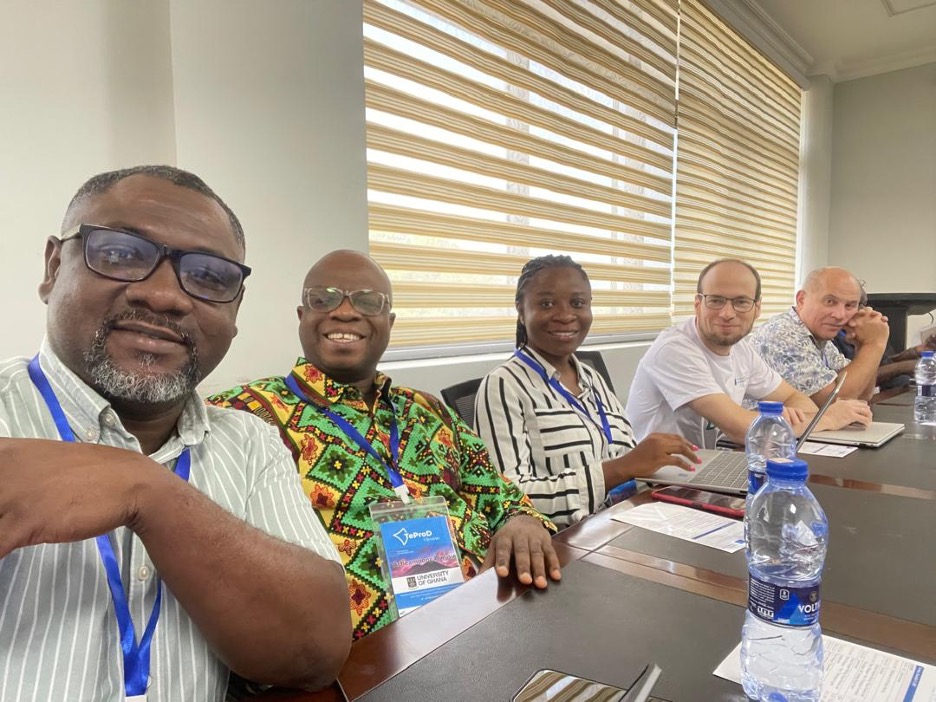
Opening day group selfie by partners
Days Two and Three focused on engagement, capacity building, and strategic coordination. Partners engaged the wider university community through a radio outreach at Windy Bay Radio Station (98.3 fm), followed by reflections on the 2nd TPM, project practices, and work packages. Concurrent hands-on sessions with students covered the ABC Learning Design model and Green Competencies, while partners addressed quality assurance, dissemination, and strategic partnerships. Activities on Day Three centred on Task 3.1: Personal Development Roadmaps implemented across UG, UEW, and IUM to strengthen digital and green competencies. Prof. Owusu Acheampong (Co-PI) led the UG team in presenting outcomes related to curriculum development and the personal development roadmap. Global dissemination activities for the TeProd Project were led by Dr. Abeeku Sam Edu (Co-PI), who also facilitated discussions on writing and publication strategies for the project. The programme concluded with a project managers’ meeting and workshops on AI applications in education and future TeProD publications.
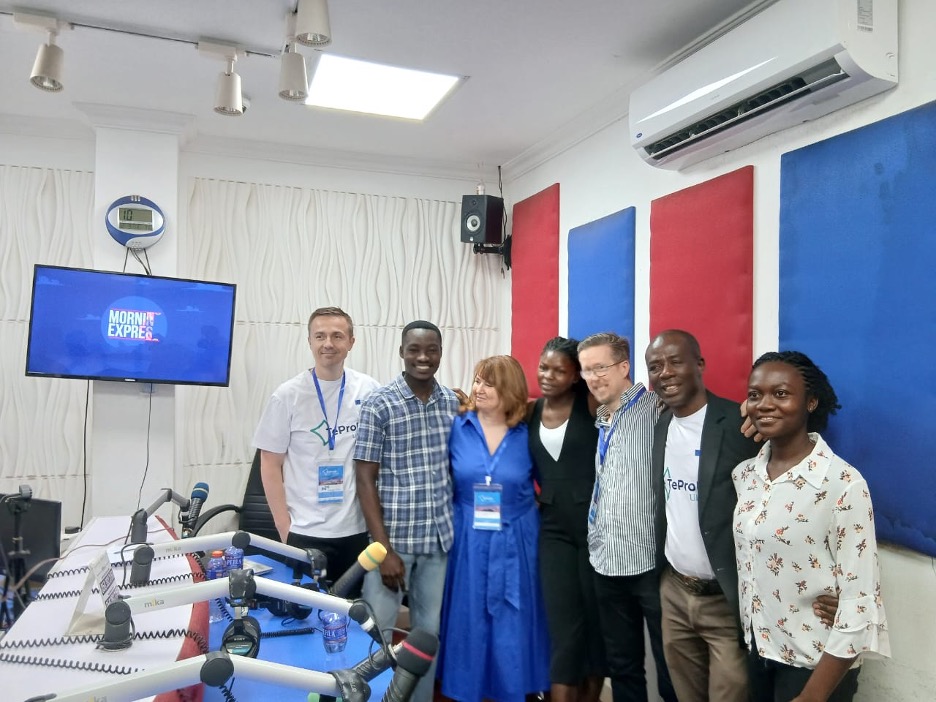
Partners at the Windy Bay Radio Station
Day Four focused on discussions around curriculum development outcomes, the customisation of AI and digital tools for education, evaluation of the 3rd TPM, and planning for the next project meeting at TUKE, Slovakia, followed by a guided campus tour. The meeting concluded on Friday with cultural and historical visits to Kakum National Park and Cape Coast Castle, offering participants experiential insights into Ghana’s natural heritage and slavery-era history.
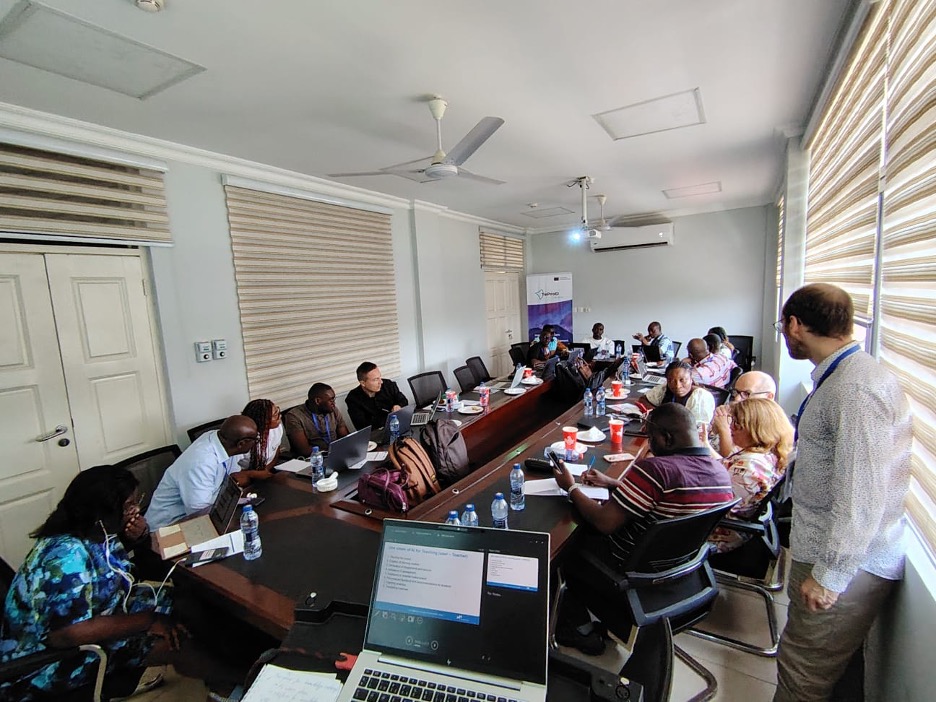
Partners discussed curriculum outcomes
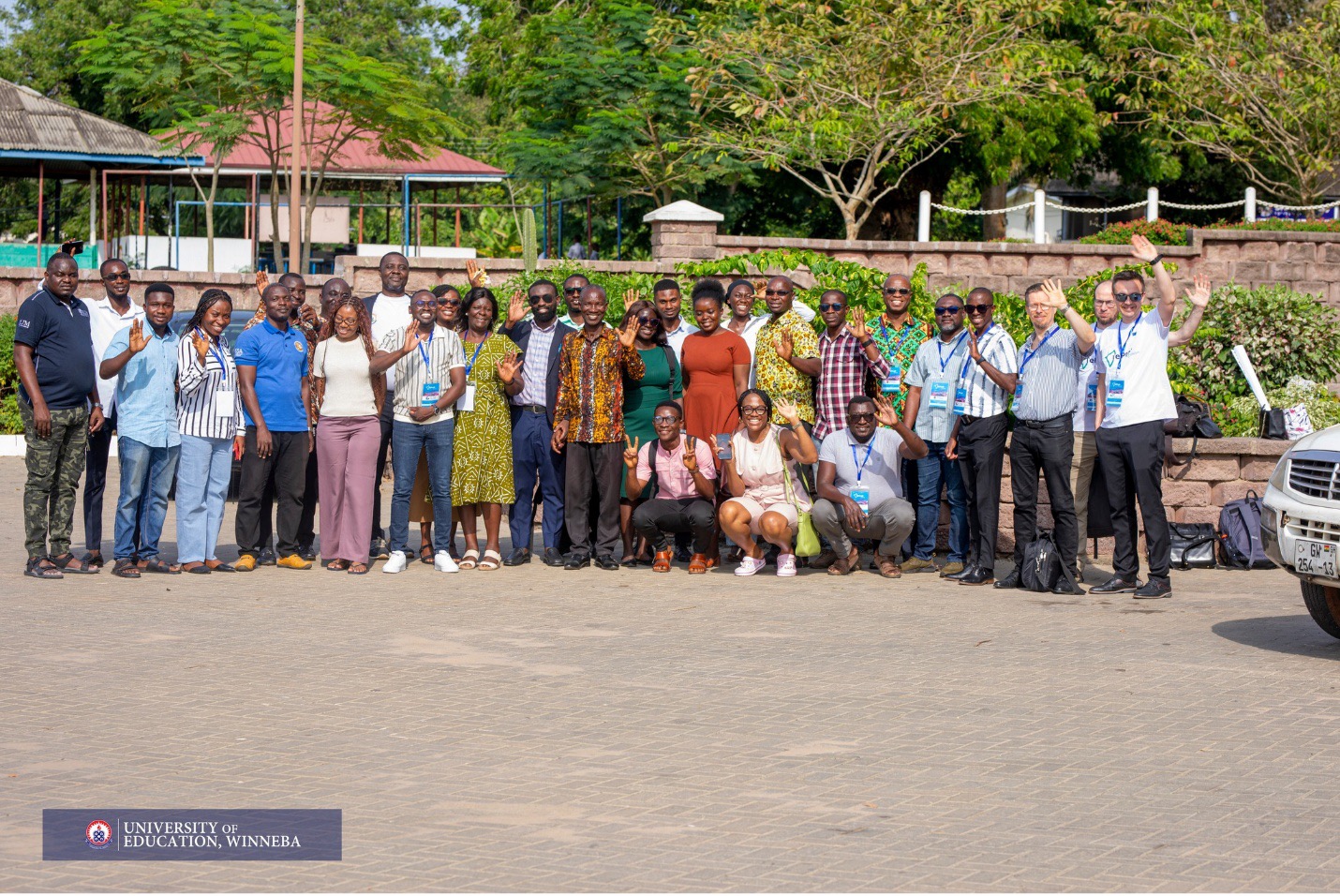
A group photo by partners