UGBS Holds Annual Faculty Retreat at Royal Senchi Resort to Review Academic Priorities, Accreditation and Staff Well-being
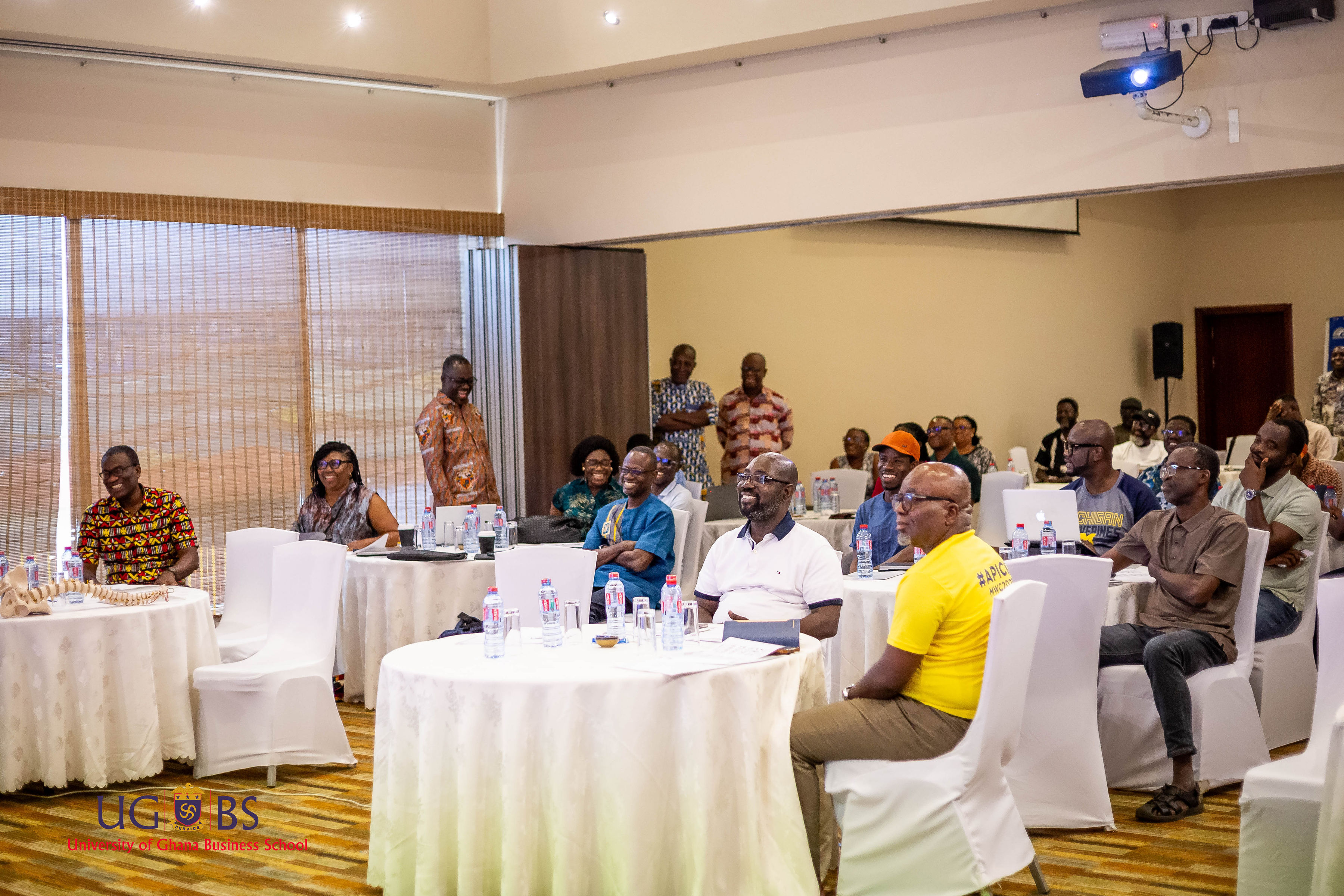
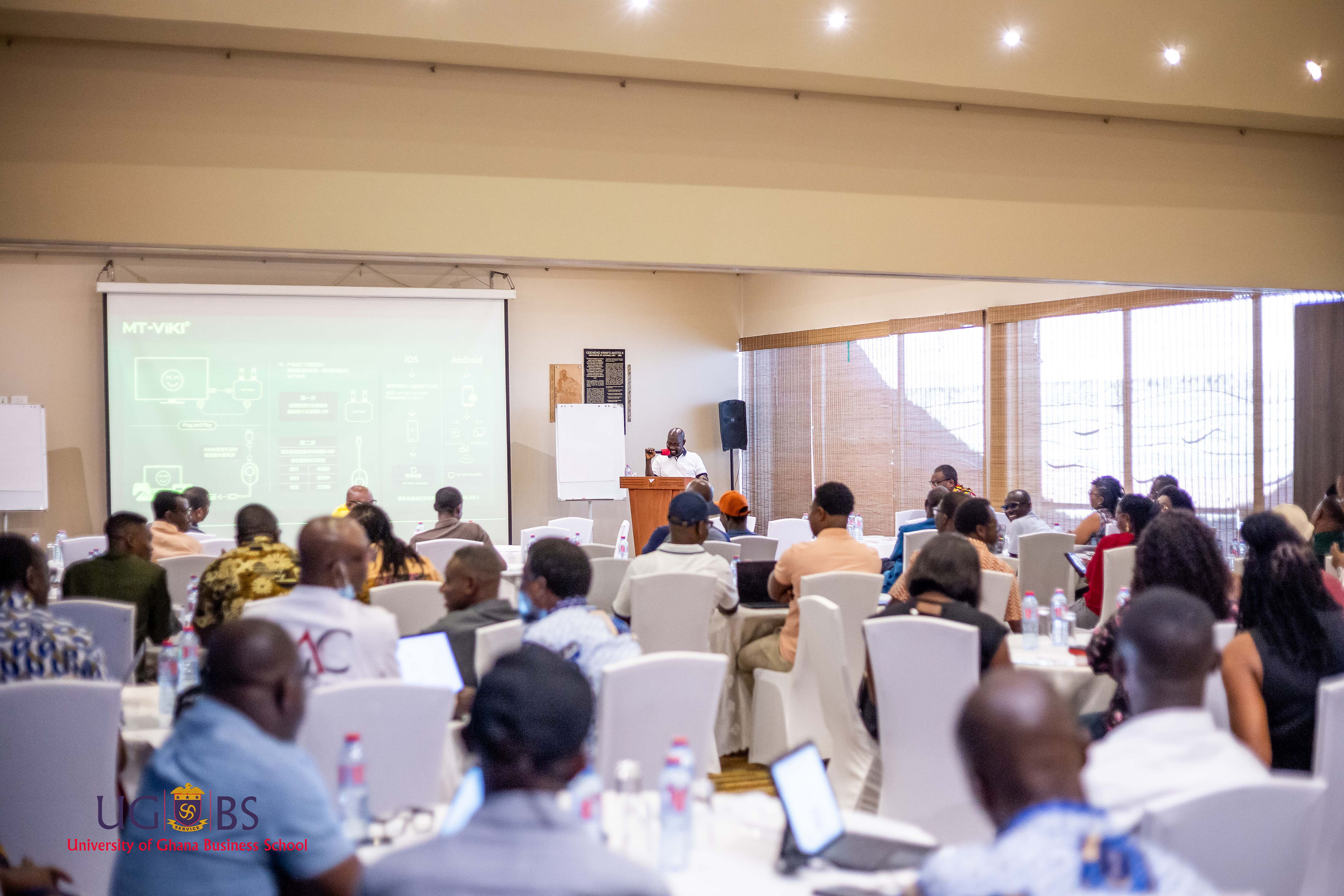
The University of Ghana Business School (UGBS) held its annual faculty retreat from 15th to 18th October 2026, at the Royal Senchi Resort in Akosombo. The retreat brought faculty members together to reflect on the school’s performance, review ongoing activities and discuss areas for improvement in the academic year. It also provided an opportunity for management and faculty members to deliberate on academic responsibilities, infrastructure development, programme delivery, international accreditation and staff well-being.
In his welcome address, the Dean of UGBS, Prof. Ernest Tweneboah-Koduah, acknowledged the hard work of faculty members and expressed appreciation for their contributions to the school. He explained that the retreat was intended to provide an opportunity for faculty members to relax, assess the school’s achievements and challenges, share feedback and identify ways to improve its operations. Prof. Tweneboah-Koduah provided updates on several matters affecting the school’s academic and administrative operations, including teaching responsibilities, admissions, infrastructure development and the provision of resources for faculty members. He commended programme coordinators, Marketing and Communications Unit and other staff members for their contributions to admissions and marketing of programmes. He also encouraged faculty members to continue working together and supporting the school’s development Prof. Tweneboah-Koduah outlined progress on the school’s new building and ongoing renovation works. He explained that work on the new building had encountered challenges involving the roof and sun-shading components, necessitating arrangements with subcontractors to continue the work. He expressed the expectation that the remaining work would be completed by December, subject to the progress of the project.
The Dean also highlighted ongoing improvements to existing facilities, including glazing works, the replacement of doors and ceilings, renovations to the main auditorium, and the provision of additional furniture. He further discussed plans to improve classroom facilities, create additional classroom space and construct an additional exit for the graduate block. Prof. Tweneboah-Koduah also discussed improvements to campus lighting, plans for campus greening and the provision of electric vehicles and motorbikes for official duties and deliveries within the university.
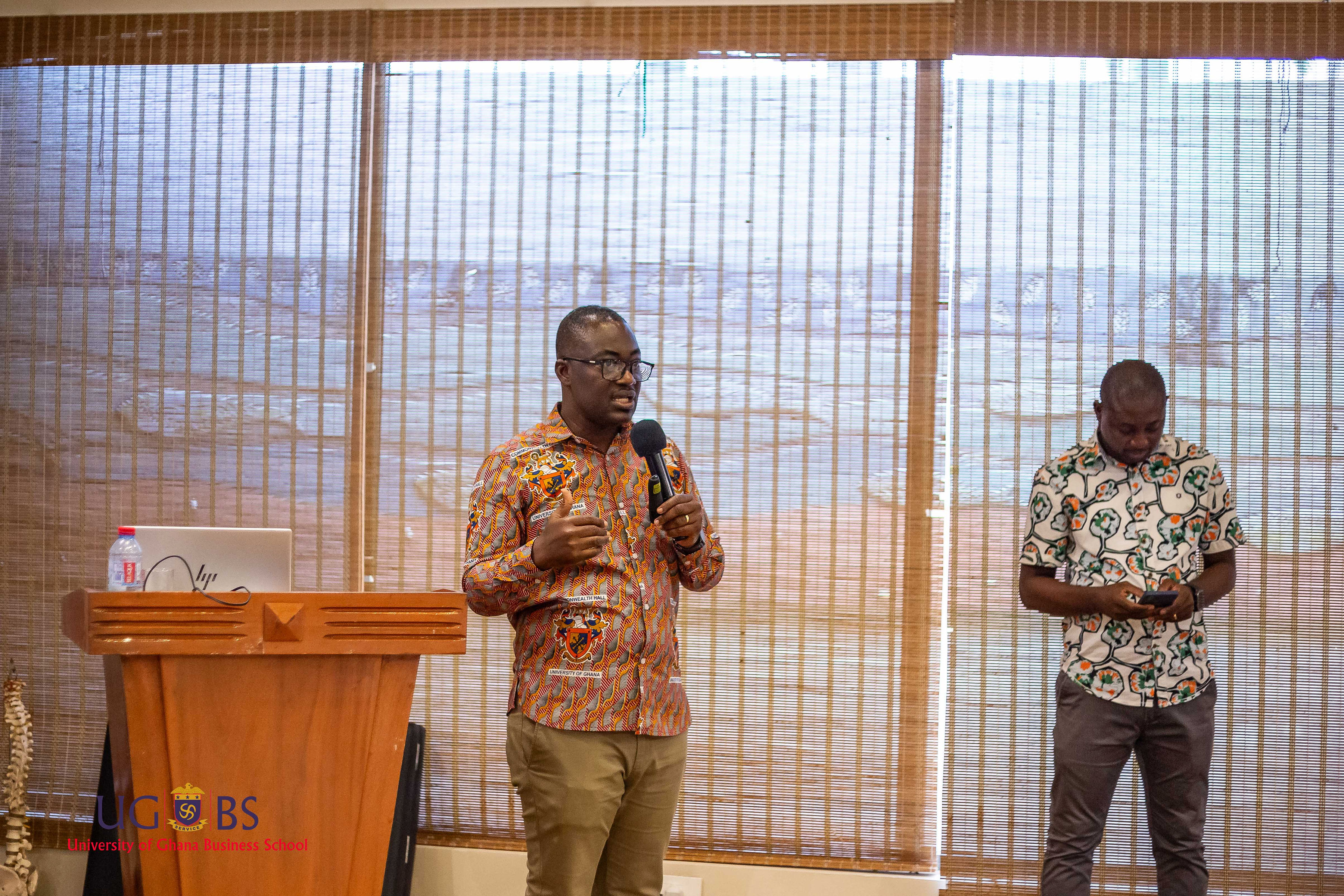
Prof. Nana Yaw Simpson delivering a presentation at the 2026 faculty retreat.
During a presentation on Risk Management: A Shared Responsibility by Prof. Nana Yaw Simpson from the Department of Accounting, he emphasised that effective risk management requires the commitment of the entire university community, from the University Council and management to colleges, schools, centres, and individual units. Key areas of concern include funding, infrastructure, cybersecurity, governance, human behaviour, research compliance, examination security, student welfare, financial controls, data security, facilities, and records management. He added that the University of Ghana is strengthening its focus on risk management to promote a proactive approach to identifying, assessing, and addressing potential risks across the institution. Prof. Simpson further emphasised the importance of the three-line model of risk management, noting that although the Risk Management Unit provides support and Internal Audit offers assurance, staff at the operational level play a crucial role in identifying and mitigating risks.
The University’s risk management policy and risk registers were highlighted as important tools for documenting potential risks, identifying control measures, and reviewing their effectiveness. He also stressed the need to cultivate a culture that encourages early reporting, provides adequate resources, and ensures that unresolved risks are escalated through the appropriate channels. faculty were urged to assess risks based on their likelihood and potential impact, consider experiences beyond their immediate environment, and take appropriate action to transfer, accept, reduce, or avoid risks. He concluded by encouraging everyone to take responsibility for risk management rather than assuming the potential problems will not occur. The retreat also provided an opportunity for discussions relating to the school’s pursuit of international accreditation through the Association to Advance Collegiate Schools of Business (AACSB) as presented by Prof. Edward Aseidu, Prof. Justice Bawole and Prof. Teddy Osei Kwakye.

Prof. Justice N. Bawole addressing faculty at the 2026 faculty retreat.
Prof. Justice N. Bawole, former Dean of UGBS shared insights from his two-year sabbatical at King Fahd University of Petroleum and Minerals in Saudi Arabia, highlighting the importance of systematic documentation and evidence-based quality assurance in achieving and sustaining international accreditation. He observed that the University of Ghana Business School (UGBS) performs strongly in teaching, research, and student development, but could strengthen its record-keeping practices. Drawing on his experience at the institution, which has maintained AACSB accreditation since 2003, he explained that effective quality assurance requires clear strategic objectives, verifiable evidence of performance, and continuous improvement. He highlighted the course file system as a practical tool for documenting course specifications, teaching activities, assessment methods, student attendance, learning outcomes, performance, and feedback. He further emphasised the need for transparent marking rubrics, timely reporting, and documented interventions to address weaknesses in student performance.
Prof. Edward Aseidu reinforced these points by outlining the quality assurance measures expected of UGBS faculty members, particularly the use of the revised course outline, clearly defined learning outcomes, and standardised assessment rubrics. He explained that assessments should be directly linked to the learning outcomes they are intended to measure, enabling the school to determine whether students are acquiring the required knowledge and skills. Rather than complicating assessments. Lecturers were encouraged to develop focused questions, including scenario-based exercises that effectively measure specific outcomes. He also stressed the importance of conducting assessments during the semester, analysing students’ performance promptly, and identifying those who require additional academic support. Where class sizes are large, the proposed approach included randomly selecting a sample of students’ work for grading and retaining assessment scripts as evidence for verification. The discussion further clarified that the quality assurance process must demonstrate how identified weaknesses lead to measurable improvements, a principle commonly described as closing the loop.
It was established that the Quality Assurance Office headed by Prof. Teddy Osei Kwakye will support this process by collecting assessment questions and results, analysing performance, and working with departments to document the actions taken to address identified gaps. Concerns were also raised about aligning internal quality assurance requirements with the assessment standards of professional accreditation bodies, particularly were examination formats influence students’ eligibility for professional exemptions. In response, it was clarified that mid-semester assessments intended to measure learning outcomes can complement, rather than replace final examinations designed to meet professional accreditation requirements. The speakers emphasised that systematic documentation, timely assessment, and evidence-based interventions are essential to strengthening student learning, institutional accountability, and the school’s accreditation efforts.
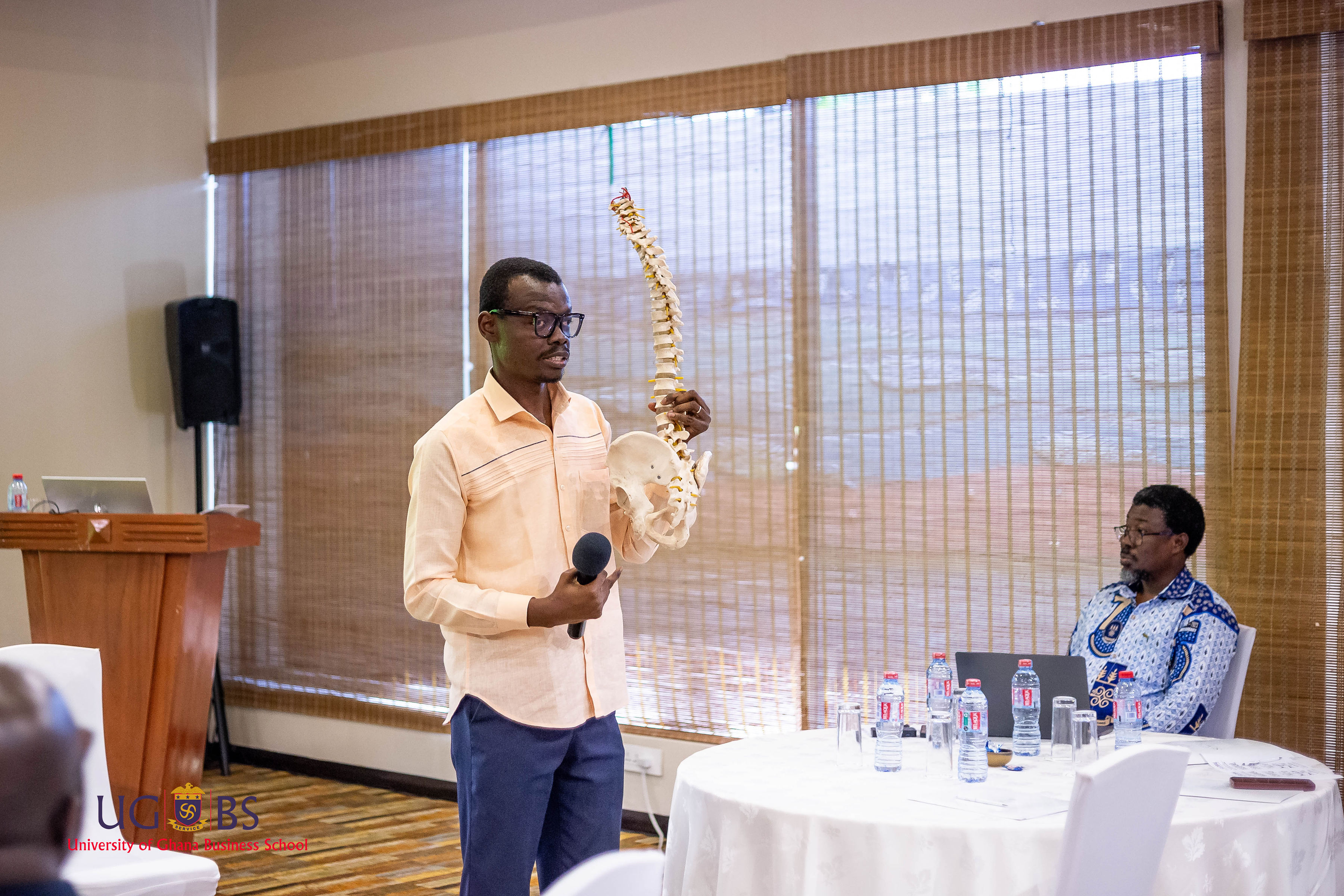
Mr. Daniel Opoku demonstrating how the spine could be protected
Staff well-being also featured in the retreat through a presentation on posture and back care delivered by Mr. Daniel Opoku, a physiotherapist specialising in musculoskeletal disorders. The presentation focused on the effects of prolonged sitting, poor posture and inappropriate workstation arrangements on the body. Participants were guided through proper sitting and standing positions, using appropriate body mechanics and adjusting their workstations. Mr. Opoku explained that prolonged sitting, standing for extended periods without movement, carrying heavy bags on one shoulder and repeatedly bending the waist could contribute to musculoskeletal problems. He explained that selecting a suitable chair should be preceded by an assessment of staff members’ needs and the layout of their workspace. He further noted that an ergonomic chair should not be expected to eliminate existing back pain but should help prevent further deterioration and support effective work. Participants were encouraged to take regular breaks, move around during the working day, maintain good posture and exercise regularly. The presentation also covered appropriate techniques for sitting, lying down and lifting objects, as well as seeking medical assessment when experiencing persistent or severe back pain. During the retreat, participants engaged in various activities, including table tennis, health walk, badminton, live band performances and swimming.