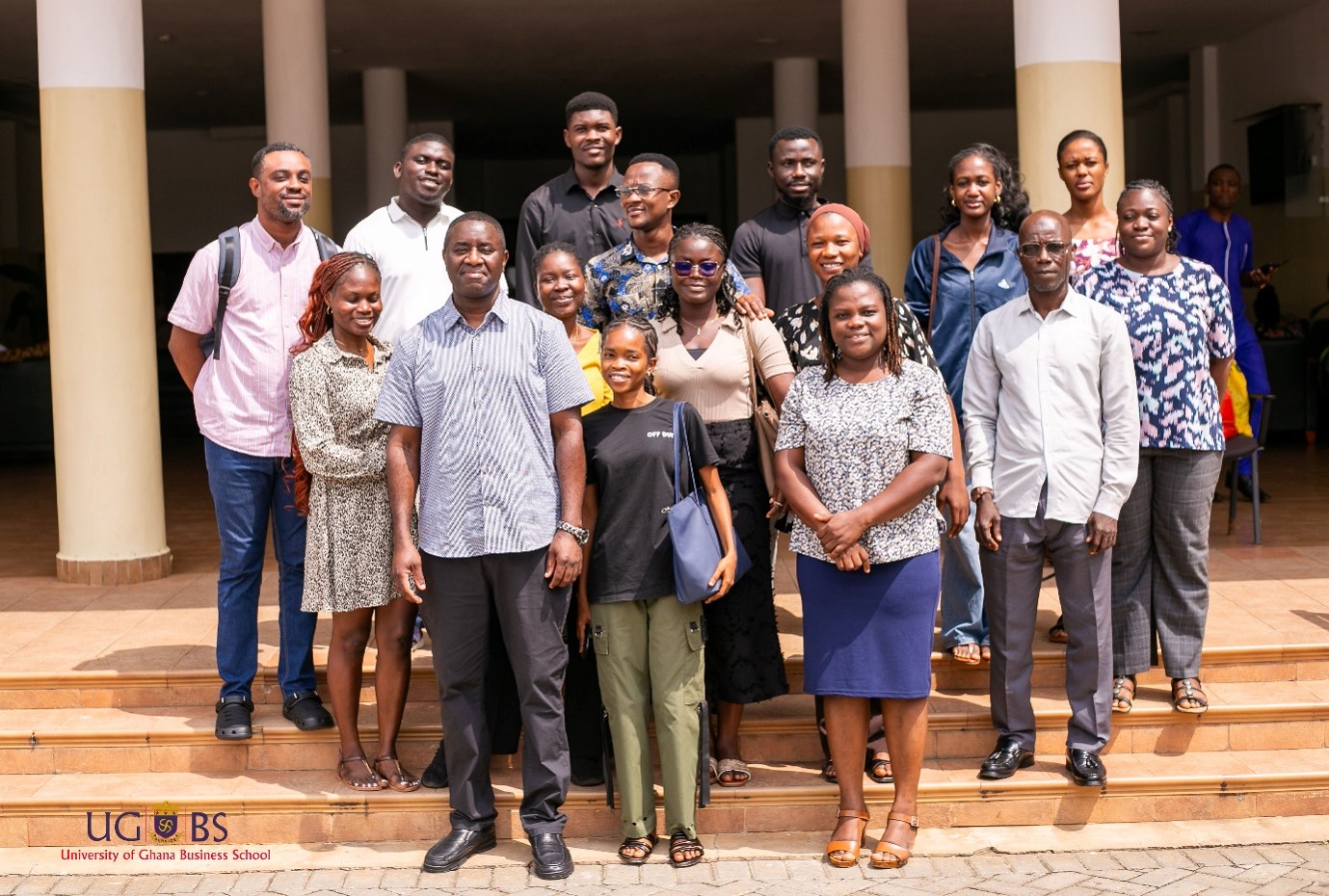
Department of OHRM Organises Thesis and Research Consultation Seminar for Early-Career Researchers
The Department of Organisation and Human Resource Management (OHRM) at the University of Ghana Business School (UGBS) organised a two-day Thesis and Research Consultation Seminar for early-career researchers from 6th to 7th July 2026 at the UGBS Graduate Building. The seminar was facilitated by Prof. Rexford Abaidoo, Professor of Quantitative Analysis and Data Science, who delivered practical guidance on planning, designing and executing high-quality research. His presentation, themed “Thesis/Dissertation: A Strategic Approach”, aimed to equip participants with the knowledge and strategies required to navigate the research process successfully. At the start of the seminar, Prof. Abaidoo explained that his goal was to make participants' thesis journey easier and more strategic by providing practical insights into every stage of the research process.
On the first day, he introduced participants to a holistic approach to thesis and dissertation design and development, stressing the importance of careful planning before embarking on any research project. He encouraged participants to develop a comprehensive STREAM plan, which covers Structure (strategy), Time frame and duration implications, Resource considerations, Execution plan, Appeal (topic relevance), and Management of the research process. Prof. Abaidoo noted that researchers should carefully consider both human and material resources before commencing their work to ensure a smoother research journey. He also explained that certain research terminologies and approaches are specific to quantitative, qualitative or mixed-methods research and should be applied appropriately.
Discussing the appeal and relevance of research topics, Prof. Abaidoo advised participants to identify the interests of their immediate academic audience, particularly their supervisors and dissertation committees, when formulating research topics. He encouraged researchers to align their interests with those of their supervisors where appropriate and to demonstrate the relevance of topics that fall outside their supervisors' research areas through literature and current developments in the field. He reminded participants that a thesis is not only a rigorous academic exercise but also a carefully choreographed presentation before a highly critical academic audience, making effective planning and persuasion essential throughout the research process. Prof. Abaidoo also addressed the effective management of the research journey, describing a thesis as a demanding academic undertaking that becomes more manageable when researchers understand what needs to be done, when it should be done, and how to accomplish it efficiently. He encouraged participants to critically consider how to balance thesis work with other academic and personal responsibilities, manage competing demands, complete required tasks within projected timelines, and identify appropriate stages at which external support may be required.
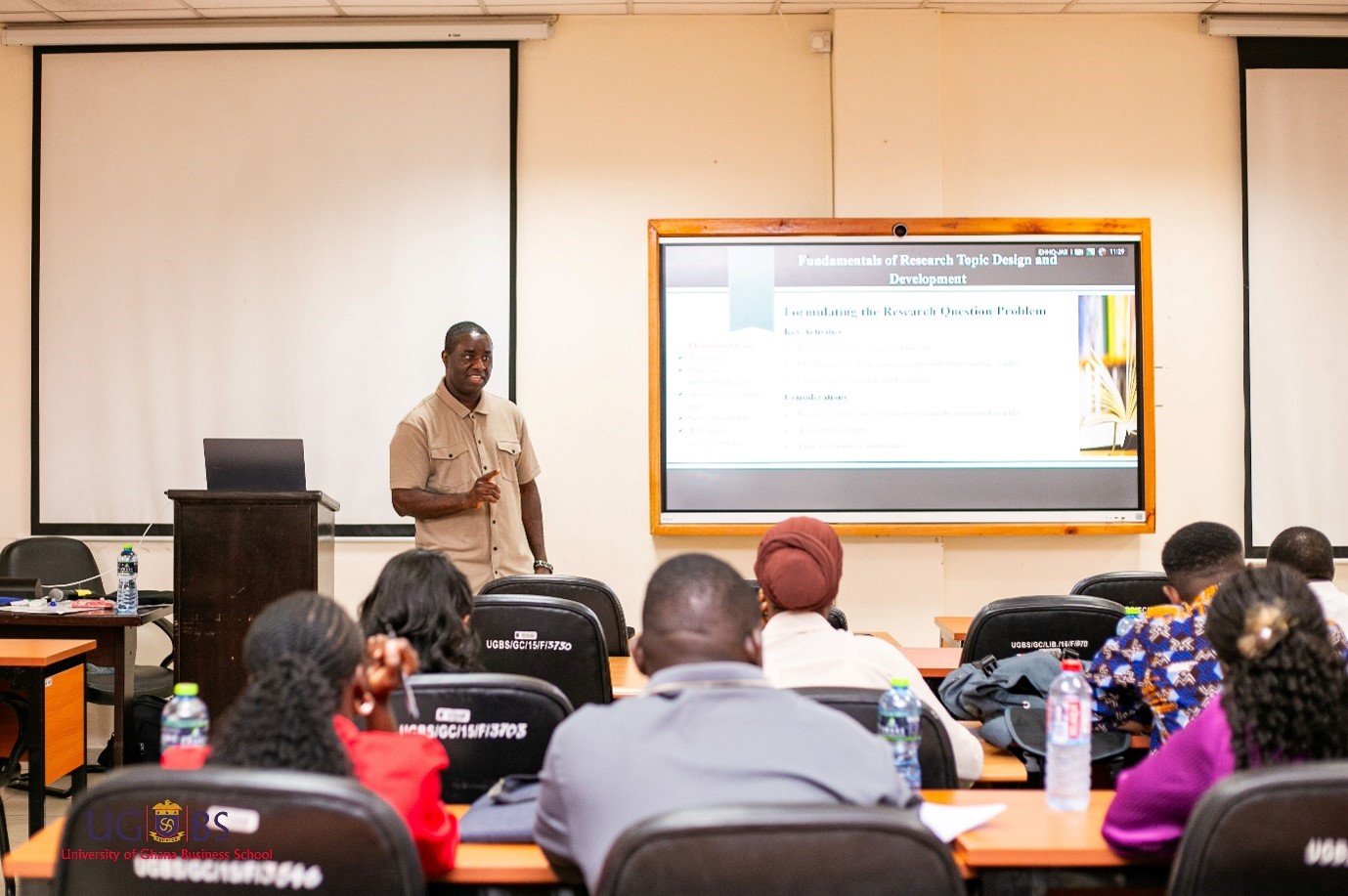
Prof. Rexford Abaidoo engaging early-career researchers at seminar
The seminar also focused extensively on formulating research questions and research problems. Participants were encouraged to conduct comprehensive literature reviews within their areas of interest, identify existing research gaps, and ensure that proposed topics are both relevant and feasible. Prof. Abaidoo highlighted several types of research gaps, including time gaps, methodological gaps, sectoral or regional gaps, conceptual gaps, and inconsistencies in existing studies. He further outlined the characteristics of strong research questions, explaining that they should be clear, concise, focused, researchable, measurable, aligned with the study objectives, and feasible within available resources. Using practical examples, he demonstrated how effective research questions can be developed from identified research gaps. In addition, participants received guidance on the fundamentals of research topic design and development, common mistakes researchers should avoid, and the logical relationship between research topics, research objectives, research questions and hypotheses. The day concluded with a practical session that enabled participants to develop and align these key components of their own research projects.
The second day of the seminar focused on the structure and design of a thesis proposal. Prof. Abaidoo explained the essential components of a proposal, including the introduction, literature review, methodology, implications and limitations of the study. Speaking on data collection and analysis, he strongly advised participants to secure access to the data required for their research before submitting their proposals for approval. According to him, doing so would minimise the risk of having an approved topic become unworkable because of challenges in obtaining the necessary data, thereby preventing researchers from having to develop entirely new research topics. He further encouraged participants to present broader contextual limitations rather than simply citing limited time frames. He also discussed research design, research approaches, study populations, sampling methods and sample size determination, emphasising that research topics, research questions and the nature of available data should determine the appropriate statistical framework or analytical model. He further noted that larger sample sizes generally improve statistical power.
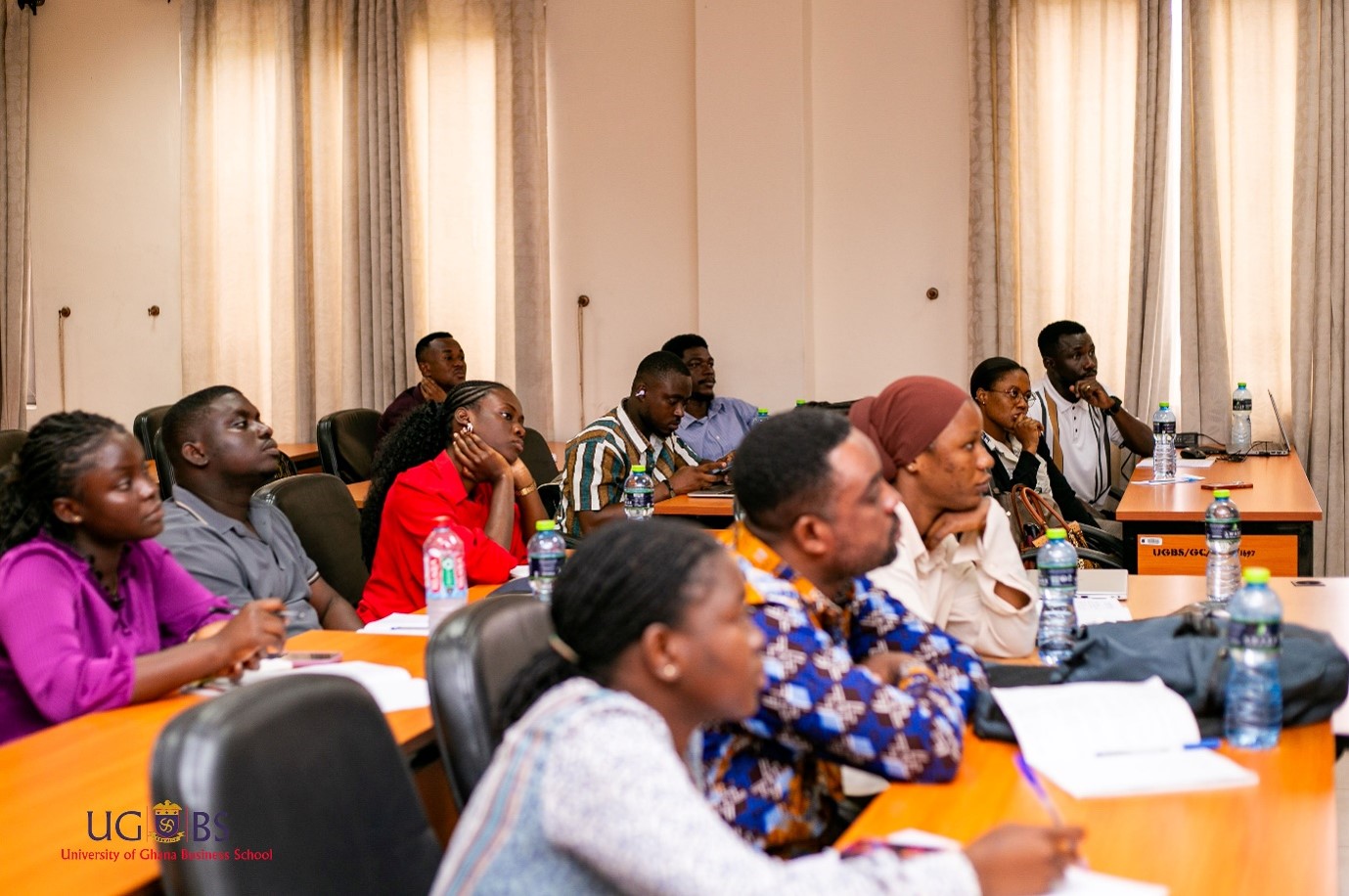
Some participants at the Thesis and Research Consultation Seminar
Participants were also introduced to variables in quantitative research and received a practical demonstration on designing conceptual frameworks. During the exercise, they were guided to formulate core research objectives, develop corresponding research questions and translate these relationships into graphical conceptual frameworks. The seminar concluded with a practical demonstration of statistical analysis using Stata software, where Prof. Abaidoo illustrated how researchers can efficiently analyse quantitative data after data collection.