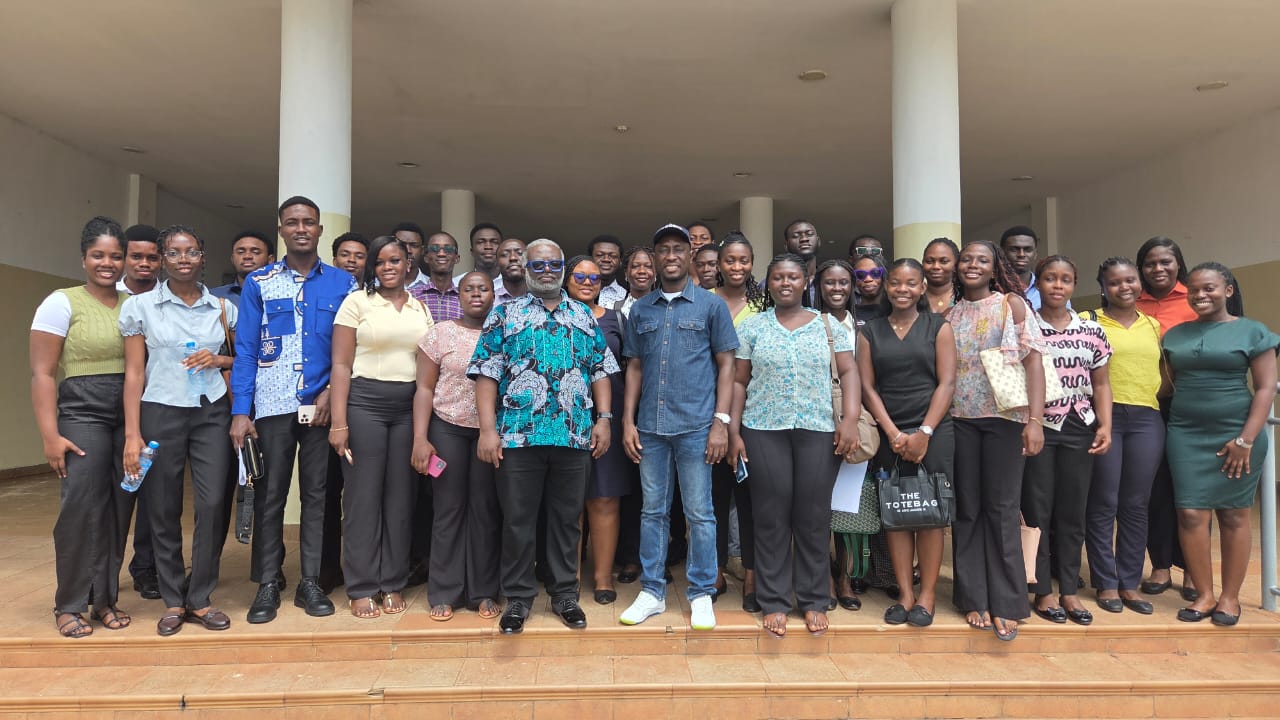
UGBS Department of Accounting Organises an NSS Readiness Seminar to Equip Level 400 Students for National Service and the World of Work
The Department of Accounting at the University of Ghana Business School (UGBS) has organized an NSS Readiness Seminar for Level 400 students, positioning the initiative as a strategic intervention to prepare final-year students for the transition from academia to national service and formal employment. The session was held on Friday, 19th June 2026 at the UGBS Graduate Building, and brought together faculty and final-year accounting students to equip them with the knowledge, professional tools, and mindset required to make a meaningful impact during their National Service and beyond. The training was facilitated by Prof. Richard Boateng of the Operations and Management Information Systems (OMIS) Department.
Welcoming students to the seminar, Prof. Godfred Matthew Yaw Owusu, Head of the Department of Accounting acknowledged that the initiative forms part of the Department's ongoing commitment to ensuring that accounting graduates are not only academically prepared but professionally competitive. He noted that the Department is actively working to ensure that students are equipped with practical software skills, including Excel training models tailored for accounting students before they leave university. He emphasized that the Department's mission is to bridge the gap between classroom learning and workplace demands, such that students enter their national service and first jobs with confidence and competence.
Prof. Richard Boateng led the substantive training session, opening with a compelling charge to students on the importance of intentionality in professional development. He challenged students to commit to doing at least one deliberate career-building activity every single month, whether attending a webinar, earning a free online certificate, running a tutorial session, or publishing content on LinkedIn. He stressed that the job market is highly competitive and that a degree alone is no longer sufficient; students must demonstrate skills, initiative, and consistent growth. "Be intentional," he repeatedly urged students. "Every single month, do something towards your career.
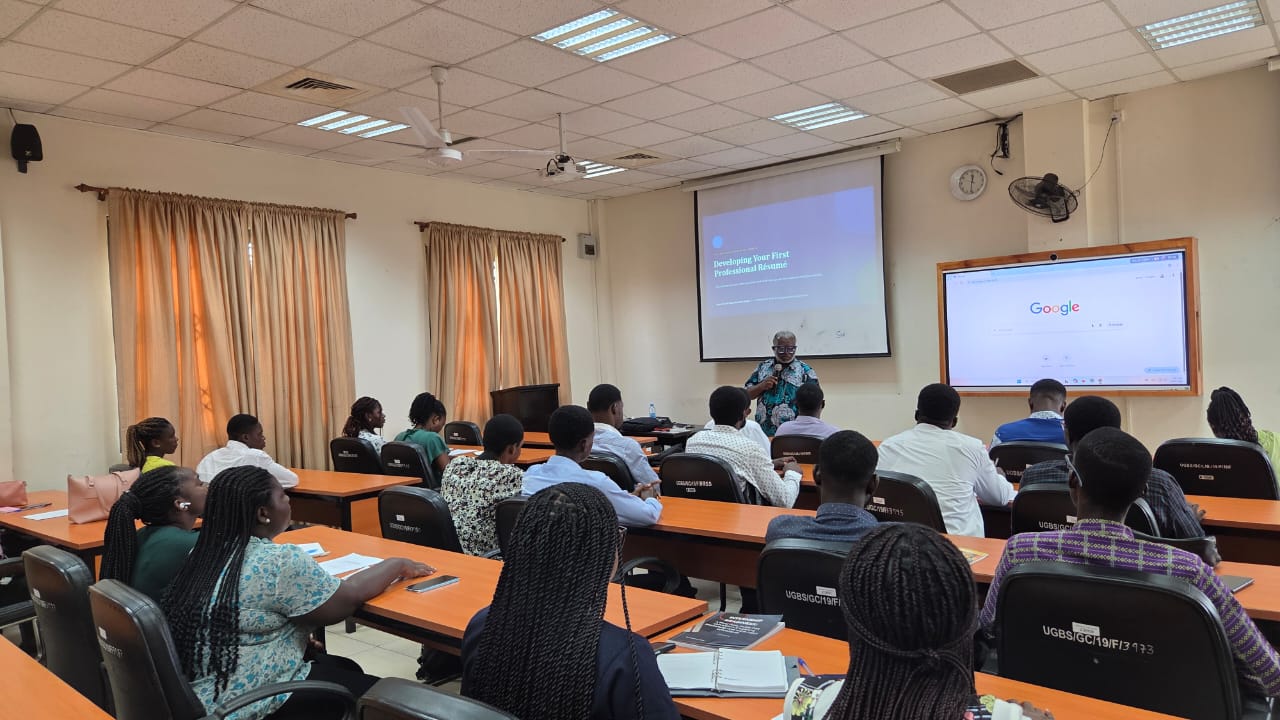
Prof. Richard Boateng, with Participants During the Seminar
A central theme of the session was the concept of turning who you are, what you have, and what you can do into credible, evidence-backed professional narratives. Prof. Boateng explained that every skill a student claims must be supported by concrete proof: certificates, dated LinkedIn posts, photographs of activities, or attestation letters from supervisors. He cautioned against listing skills without evidence, noting that recruiters today are far more discerning and that applicants who cannot substantiate their claims are quickly passed over. Students were also introduced to the STAR framework Situation, Task, Action, Result as a practical tool for writing CV entries that communicate real impact rather than mere duty lists.
A significant portion of the session was dedicated to resume and CV construction. Prof. Boateng outlined the three main resume formats: chronological, functional, and combination and advised students to organise their experience around themes relevant to the roles they are targeting. He emphasised that accounting employers expect to see recent and relevant activity, and that a CV where the most recent entry is from several months prior signals stagnation. Students were therefore encouraged to keep their professional profiles current by continuously adding certifiable activities, volunteer roles, and quantified achievements.
Prof. Boateng drew students' attention to the importance of formalising activities they are already doing informally, such as tutoring peers, managing association funds, or organising group study sessions and documenting these with measurable outcomes. He also encouraged students to leverage platforms such as LinkedIn and personal blogs to communicate their knowledge, explain accounting concepts to wider audiences, and build a visible trail of professional engagement. He pointed out students to free learning resources from platforms such as Coursera, Udemy, IBM, and MIT Open Courseware to upskill in high-demand areas including data analytics, Power BI, and financial technology, noting that technology-related skills are currently among the most sought-after competencies layered on top of accounting expertise.
Students were advised to quantify their achievements wherever possible, citing specific numbers and outcomes, and to tailor their CVs to each application by mirroring the language used in job adverts. Prof. Boateng warned against common pitfalls such as spelling errors, generic objective statements, listing responsibilities instead of achievements, and providing referee details without prior consent. He also stressed the importance of maintaining professional relationships with lecturers and mentors even after graduation, noting that reference letters often become critical gateways to career advancement long after students have left campus.
Closing the session, Prof. Boateng called on students to use the remaining time before their national service postings to close identified skill gaps, build their online professional presence, and approach NSS not as a conclusion to their academic journey but as a launchpad for their careers. The Department of Accounting reaffirmed its commitment to producing graduates who are not only technically proficient, but who possess the professional identity, confidence, and initiative to stand out in a competitive job market.